You only see what your team shows you. And your team only shows what it trusts you with.
This method is part of the BYG Leadership Toolkit: 28 validated instruments for automotive executives navigating the DE-SK-IN matrix.
This page is for leaders in the automotive matrix who want to know what is really happening in their production and development, not the polished version in the status report. Plant managers, R&D directors, Lean managers, and HR directors with attrition problems in offshore hubs.
The Ritual Walk vs. Real Operational Reality
A Gemba Walk is the most powerful diagnostic method a leader has. But only when it is done right. Done wrong, it is a ritual walk: you cross the hall, see green metrics, hear that everything is on plan, and leave with exactly the confirmation bias you brought with you.
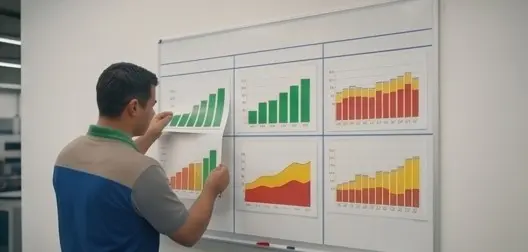
The Ritual Walk: Why Most Gemba Walks Change Nothing
The Hidden Factory and the Polished Surface
The hidden factory is real. In every production, unofficial workarounds and informal adjustments run in parallel to the official process. They are the true source of scrap, rework, and missed SOP dates. A ritual walk never sees them, because it does not look for them, and because no one shows them voluntarily.
The real problem is not a lack of presence. It is a lack of structure and a lack of trust. You get the polished surface because your walk has no hypothesis, because the group is too large, and because your team has learned that honest news can become uncomfortable.
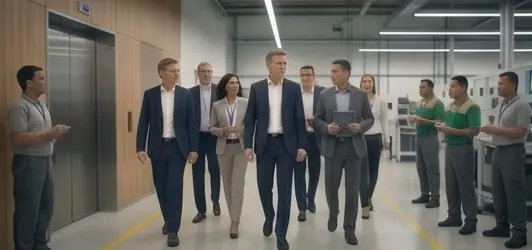
Prievidza, 2020: The Walk That Told Me Nothing.
From Polite Reassurance to Real Quality Escalation
My name is Andy Balbus. Building the electronics department in Prievidza, in the first months I made exactly the mistake I now see in others. I crossed the hall, asked how things were going, received polite answers, and returned to my office reassured. Weeks later a quality issue escalated that had been visible the whole time, to everyone except me.
The lesson was uncomfortable. The team had known the problem. It had simply not told me, because at that point I had not yet proven that an honest red message is safe with me.
In 2021 the difference was fundamental. I went in with a concrete risk hypothesis, in a small group, with system questions instead of blame questions, and above all with a posture the team had tested over months and found reliable.

Do You Suspect Your Gemba Walk Shows You the Polished Version Rather Than Reality?
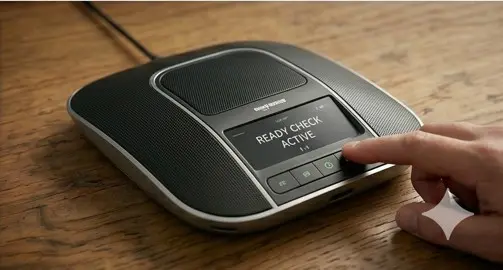
Then let us look at what is really happening behind the curtain. The Gemba Reality Check is a 30-minute diagnostic conversation: zero slides, zero sales pitch, pure operational analysis.
Proven Leadership in Global Automotive Operations
Our methodologies are designed for seamless application across European operations and global offshore hubs. We actively partner with executive teams throughout Germany, Austria, Slovakia, the Czech Republic, and Poland to embed these strategic frameworks into daily practice. Whether operating from Bamberg, Nuremberg, Zapfendorf, Bratislava, or Prievidza, we bridge the gap between executive reporting and shop-floor reality.
FRONT OF THE CURTAIN | The Polished Surface
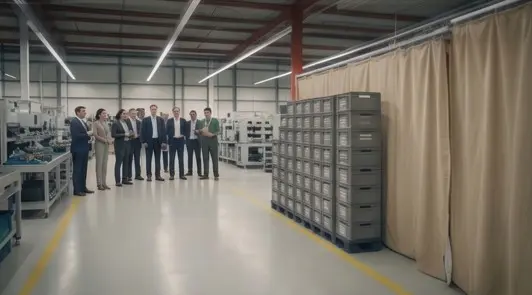
BEHIND THE CURTAIN | The Hidden Factory
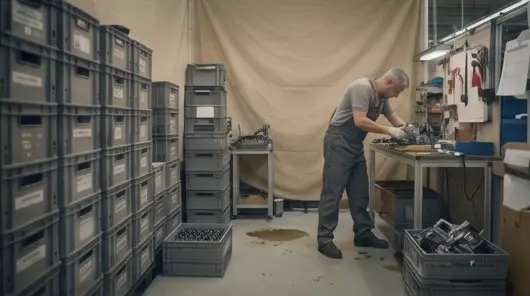
Trust-Based Gemba Walk: You Learn the Real Status Only Without Fear.
The Iceberg of Ignorance: Why 96% of Frontline Problems Stay Hidden
A Gemba Walk can be as well structured as you like, it only delivers the true status if your employees have no hesitation to tell you the situation as it really is, including the uncomfortable part. This is where everything is decided.
The widely cited Iceberg of Ignorance study (Yoshida 1989, conducted at the automotive supplier Calsonic) shows the scale: leaders at the top know only around 4 percent of frontline problems. 96 percent stay below the surface, not because no one knows them, but because no one carries them upward.
Solution Orientation Over Blame: Building an Early-Warning System
This silence is not a character flaw in the employees. It is a rational response to leadership behavior. Anyone who has once experienced an honest status report answered with blame, loss of face, or pressure will report the polished version next time. Trust does not arise from an announcement, but from consistency in leadership posture, every day.
The work sits with you as the plant manager, and it is not delegable. What matters is how you deal with mistakes. Only when you show, clearly and repeatedly, I am solution-oriented and I do not bite, even when it gets demanding, does the team open up. Then it reports problems before you have to ask. Only that posture turns a walk into an early-warning system, and a team into a truly strong team.
How Trust Is Built Concretely on the Shopfloor
Trust is not a mood, but the result of repeated, predictable reactions. Three behaviors build it:
- The system question instead of the blame question: Not who did it, but what in the process made it impossible to succeed today.
- The visible reaction to bad news: Whoever answers an honest red status with thanks and support gets the truth again next time.
- The small group: Working in small setups where no one has to perform for an audience. Consistency over weeks and months beats any one-off announcement.
Three Structural Traps That Devalue Every Gemba Walk
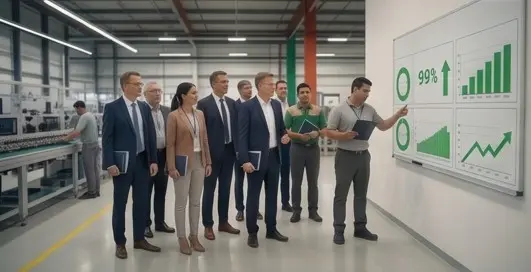
🧠 Self Diagnosis: Does your Gemba Walk function as a precise steering instrument or merely a compliance ritual?
Five targeted questions. Ninety seconds of reflection. Absolute honesty.
Neither data entry nor a sales pitch is required.
1. What primary objective drives you when entering the production floor?
2. How many individuals typically constitute the delegation accompanying you?
3. Upon completing the walk, how are the resulting findings processed?
4. During an acute crisis, such as an SOP risk or an OEM escalation, do you maintain true decision making capacity on the floor?
5. Regarding the reality of daily operations, how transparently do your workers communicate unfiltered problems?
The BYG Framework: Structured Gemba Walk in Four Steps
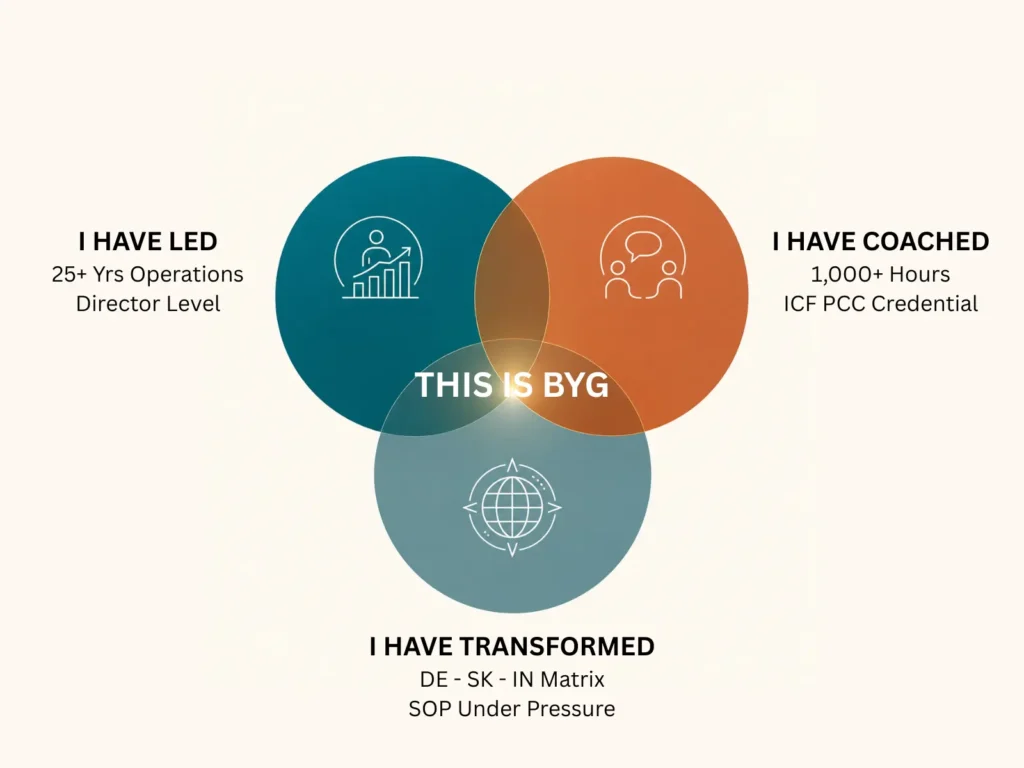
This framework is not Lean theory. It is the operating system that proved itself in 25+ years of operational leadership in automotive, electronics, and R&D environments in the DE-SK-IN matrix.
Cross-Continental Execution for International Decision-Makers:
Translating strategic methodology into real-world impact requires a flexible framework built for global complexity. We support executive leaders across Spain, Europe, the USA, and Mexico, applying our methods both virtually and on site. From dynamic hubs like Barcelona to key industrial centers in Querétaro and Pittsburgh, these tools empower leaders to maintain strategic alignment across borders.

The Measurable ROI of a Real Gemba Walk
These numbers come from research, quality benchmarks, and direct experience from the build in the DE-SK-IN matrix.

Gemba in the DE-SK-IN Matrix and in the SDV Acceleration.
Overcoming Cultural Hierarchy Filters in Global Offshoring
Standard Lean models were built for homogeneous teams in one location. In the matrix they often fail against the Indian Yes on the shopfloor: a "yes, all fine" means respect for the hierarchy, not confirmed status. That is exactly why the trust-based Gemba, combined with active listening, is not a soft extra in Pune and Prievidza, but the precondition for the walk to deliver any information at all.
SDV Acceleration: Managing Hardware-Software-OEM Complexity
In the SDV (Software-Defined Vehicle) transformation this sharpens. Shorter cycles and more interfaces between hardware, software, and OEM create more hidden factory, not less. The structured, trust-based Gemba thereby turns from a Lean ritual into an operational early-warning system that surfaces SOP risks while they are still manageable.

Executive FAQ: Addressing Operational Realities & Implementation Risks
Q1: We already do Gemba Walks. Why do they not work?
Because the walk is not the problem, the missing structure and missing trust behind it are. A walk without a predefined risk hypothesis, with too many people, and without an on-the-spot decision always produces the same result: a polished surface impression. Most companies practice go and see believing they are doing structured on-site problem-solving.
Q2: What is the difference between a Gemba Walk and Management by Walking Around?
Management by Walking Around is opportunistic, reactive, and without a defined question. The structured Gemba Walk is hypothesis-driven, with a small group, a systemic question, and an immediate decision as the goal. MBWA creates a dependency culture, the team waits for the manager. The Gemba Walk creates an escalation culture, the team sees risks before the manager.
Q3: How do I make sure my team tells me the truth on the walk?
Through consistency, not a single announcement. Answer every honest red message with support rather than blame, ask system questions instead of blame questions, and go in small groups. When your team experiences over weeks that the truth is safe, you get it. Before that you get the polished version, and entirely rationally so.
Q4: Is a small group not disrespectful to other leaders who want to join?
No, it is a deliberate design choice for openness. You can share the insights transparently afterward. But the walk itself needs the small group, because above about five people conformity pressure crowds out honest information. Effectiveness before representation.
Q5: How often should I do a Gemba Walk?
Regularly and rhythmically, not occasion-based. A fixed, short rhythm beats rare, long tours. Consistency is decisive, because only the rhythm builds the trust and escalation culture that make the walk effective.
Q6: Does this work in Pune despite the Indian Yes?
Yes, if you factor it in. Do not ask whether something was understood or is fine, have the process explained to you. I led on the ground in Pune for two years: in hierarchical cultures, the small group plus the system question is the key to move from the polite yes to solid reality.
Q7: I have no time for daily walks. How is that supposed to work?
An effective Gemba Walk does not take long, it is focused. A single risk hypothesis, a small group, a decision on the spot. The time you invest in a structured walk you recover many times over, because you avoid SOP surprises and the crisis meetings that follow them.
Q8: How does this differ from a 6S or quality audit?
An audit checks against a standard and documents deviations. The Gemba Walk seeks the systemic cause and makes a decision. An audit asks whether the rule is followed. The Gemba asks what in the system made it impossible to succeed today. 6S is a valuable tool, but it does not replace the problem-solving presence of the leader.
Q9: What is the financial ROI of a structured Gemba Walk?
It sits in the hidden factory. COPQ runs 15 to 20 percent of revenue for typical manufacturers (ASQ / Juran), and an OEM line stoppage costs around 2.3M USD per hour (Siemens). A walk that surfaces an SOP risk four to six weeks earlier refinances the invested leadership time many times over.
Q10: For which leadership level is the method most worthwhile?
Most of all for leaders with direct operational responsibility across sites: plant managers, R&D directors, Lean and program owners. There the distance between official status and reality is largest, and there a trust-based Gemba is the most direct lever.
Q11: Is this only for production or also for R&D?
For both. In production the hidden factory is physical, in development it is procedural: informal workarounds, undocumented assumptions, infrastructure that is not in sync with the projects. The Gemba Walk as a diagnostic instrument works in both worlds, the questions change, the principle stays.
Q12: What is the Reality Check, and how is it different from a discovery call?
A Reality Check is a 30-minute diagnostic conversation. No slides, no program overview, no sales agenda. Andy looks with you at your specific Gemba, at structure and trust, and tells you honestly whether a BYG engagement addresses your highest-cost problem. Not a Discovery Call, not a Chemistry Call, a structured diagnosis with a direct outcome.

Turn Your Walk Into an Early-Warning System
The difference between a ritual walk and a real Gemba Walk is not a question of motivation, but of structure and leadership posture. Both can be built, consistently, over weeks. Let us start with your specific case.
Worldwide Impact for Complex Global Operations
Navigating high-stakes market dynamics demands robust methodologies that deliver consistency across international operations. Supporting executive teams throughout China and India, as well as remote worldwide, our practice ensures that strategic principles translate directly into operational reality. We regularly work on site with clients in Pune, Mumbai, and Shanghai, providing structured guidance wherever your hubs sit.
Use the Reality Check to find out whether your Gemba shows you reality or the polished version: directly with Andy.
Or reach out directly: founder_andybalbus@boost-your-growth.com | WhatsApp: +49 151 4495 7099
Do Not Trust the Theory, Trust the Results
- Academic Foundation:
Diplom-Wirtschaftsingenieur (HFH Hamburg, 20.02.2013). - Certified Coaching Mastery:
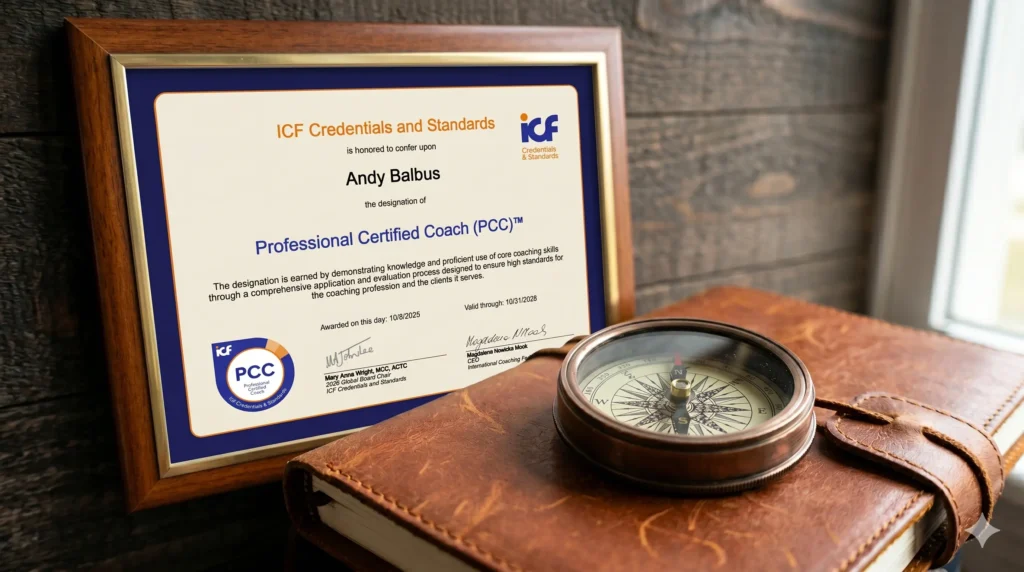
ICF Professional Certified Coach (PCC), Coacharya Level 2 (160 hours) and Level 3 on the MCC track. - Industrial Track Record (Brose Prievidza):
Built the complete electronics R&D department from zero to 40+ engineers, full product responsibility for IFE and POT, 150M € annual revenue steered directly from Prievidza, own laboratory (2M € investment), budget responsibility of 2M € per year direct and 15M € per year project budget. - Executive Leadership (Brose India Pune):
Senior Manager Electronics at Brose India Pune (March 2023 to February 2025), coaching 12 operational leaders. - Global Operational Footprint:
Six countries of direct operational experience: DE, SK, IN, CN, MX, UK.
The Next Stage: Mentoring Matched to Your Leadership Reality
Industrial mentoring is the starting point. Which mentoring stage fits next depends on your situation: the expert becoming a leader, the expat building the bridge, or the greenfield builder who must not be the bottleneck.
Matched Mentoring Tracks by Leadership Level
- Expert to Leader: Transitioning technical specialists into confident people managers.
Explore Expert to Leader Track › - Team Lead Scaling: Moving from a single point of failure to strategic team redundancy.
Explore Team Lead Scaling Track › - Director & Strategic Influence: Navigating cross-border organizational politics and matrix alignment.
Explore Director Track › - Lead Without Authority (LWA): Driving results across lateral networks without formal disciplinary titles.
Explore Lead Without Authority Track ›
Gemba Walk in the BYG Toolkit
The Gemba Walk does not stand alone. When combined with other BYG instruments, it multiplies operational impact across the matrix.
The BYG Programmes That Deploy This Method
Coaching follows ICF credentialing standards exclusively.
- Intercultural Mentoring (Expat & Cross-Border):
The structured programme for expats and leaders crossing DE-SK-IN boundaries to align offshore engineering hubs.Explore Intercultural Mentoring › - Team Charter Workshop:
Aligning leadership posture, decision ownership, and operational transparency across cross-functional matrix teams.Explore Team Charter Workshop › - Accelerate Now (Executive Sparring):
Acute 1:1 problem-solving for immediate SOP crises, quality escalations, and critical project turnarounds.Explore Accelerate Now › - Legacy Programme & Succession Architecture:
Building sustainable operational redundancy so your department carries itself and runs without you.Explore Legacy Programme › - Your Power Within (YPW):
Core leadership posture alignment for senior directors navigating heavy corporate pressure.Explore YPW Programme ›
Explore all 28 methods in the BYG Leadership Toolkit ›
Leadership Growth Is a Continuous System, Not a Single Event.
Follow along for weekly, unvarnished insights on automotive matrix dynamics, cross-cultural delegation, and SDV execution:


