You Were Not Hired to Execute Someone Else’s Mistakes.
Executive sparring for the Slovak leaders who already know the next SOP will not land on their floor.
Prievidza. Žilina. Trnava. The city changes, the pattern does not. You sit between a German strategy and a Slovak floor, translating pressure one way and carrying the friction back the other, until the day you notice your own judgement has gone quiet.
This page is for that judgement, and the seat you read it from barely matters: the plant where next month’s SOP already feels wrong on the line, the office in Bamberg where the reports arrive cleaner than the reality they describe, the hub in Pune where the team goes quiet after every confirmation. One friction, seen from different chairs.
The chair is different, the friction is the same, and either way the conversation begins in the same place.
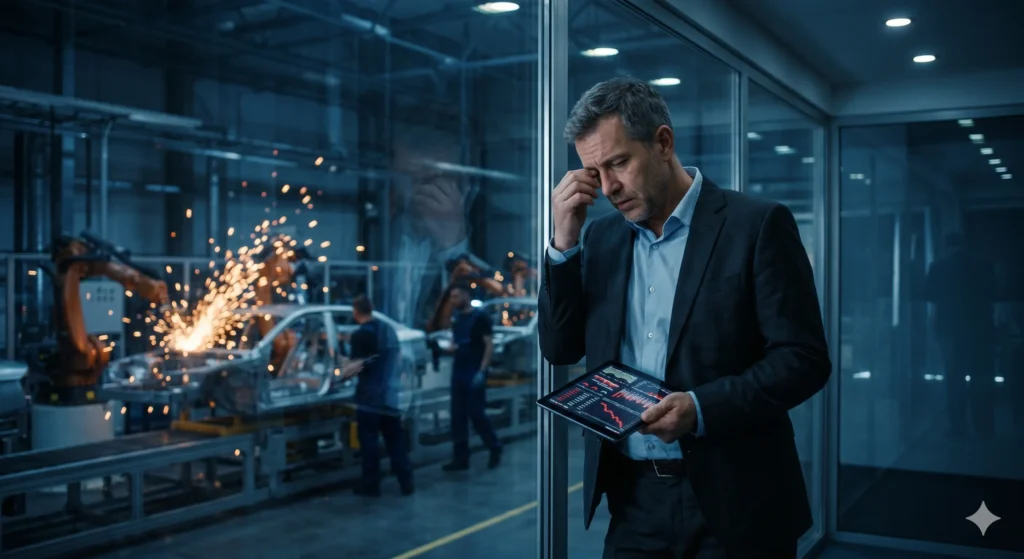
The Dashboard Shows Green. Your Gut Knows Better.
You are in the parking lot after another alignment call with Bamberg. The slides were clean, the KPIs were green, and nobody in the meeting said anything alarming. Walking back to your car, something still does not sit right.
You already know what it is. You just have not said it out loud, not to headquarters, not to your team, maybe not even to yourself.
The green is not the whole picture. Your strongest engineer stopped offering ideas about three months ago. The deviation report was filed correctly, and the root cause was never named. The SOP your team confirmed as understood was confirmed because challenging it felt politically unsafe, not because anyone actually agreed.
This is not incompetence. It is the green-melon effect: green skin, deep red inside. And it is not a Slovak trait, it is a matrix pattern, one the matrix never sees, because the dashboard keeps reporting green.
Your team’s silence is not laziness. It is self-protection. When challenging headquarters carries a political price, the safe move is to nod, confirm, and quietly manage the fallout alone. That silence has a name, malicious obedience, and it costs more than any single line stoppage.
You Know This Already. You Live It.
Invisible was never the job. Someone hired you because they believed you could build something real, lead people who are not easy to lead, and bridge a gap that most executives only ever cross in a business-class seat once a quarter.
The matrix has a way of grinding that belief down into compliance. Not in one dramatic moment, but across a hundred small ones. A meeting where your objection never made it into the slide. A deadline you accepted because saying no felt impossible. An engineer who resigned, and you had known the real reason for months.
I know that silence. I lived inside it.

Four Years in Prievidza. Not a Consultant Visit. A Life Built From Zero.
In 2019, my former manager told me plainly that the R&D role in Slovakia would fail. The technical complexity was too high, the team did not exist yet, the cultural distance was too wide. He was not trying to discourage me. He genuinely believed the mission was impossible.
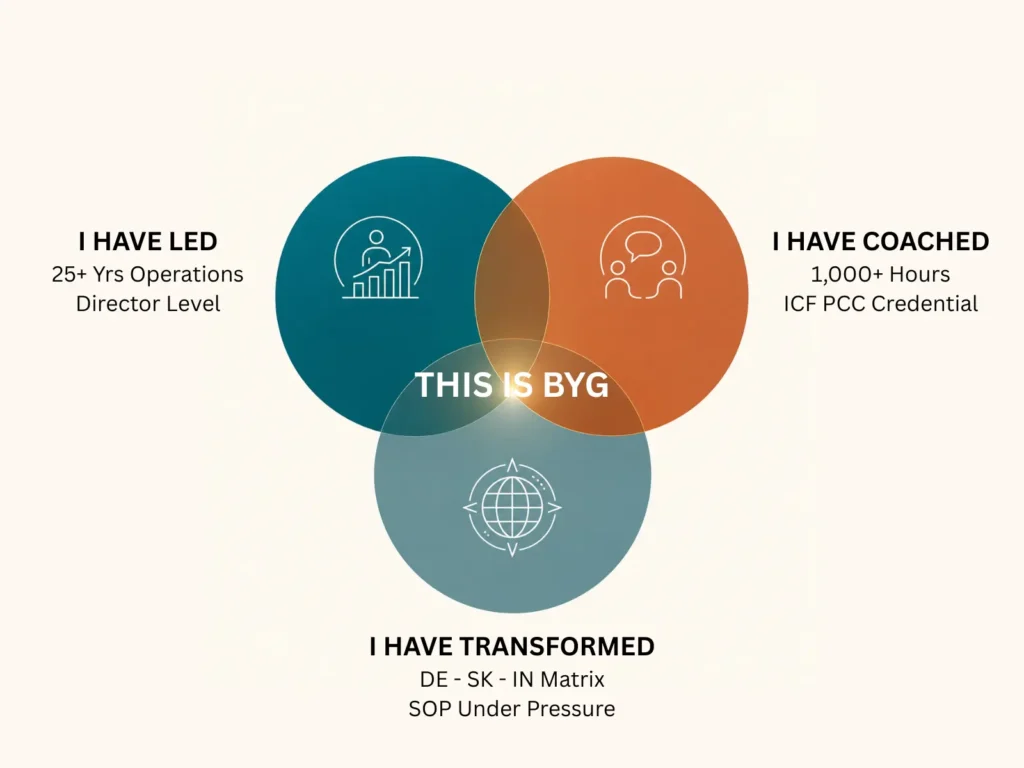
I took it anyway. I moved to Prievidza, not for a rotation but for real life: driving Slovak roads at eight in the morning, learning the rhythm of a place that was not mine yet. Over four years I built the Brose electronics R&D department from zero to 40+ engineers, set up a two-million-euro technical laboratory, and carried full product responsibility for two core lines.
That department still runs today, and it still performs, now under Maik B. When my move to India was decided, headquarters chose Maik, who already led engine development in Prievidza, to take both departments and build the synergies between engine and electronics. I did not hand him a folder and leave. My last months went into sitting down with every single team member, and then with Maik, person by person, documenting what had been agreed, which development plans were running, which promises were still open. Each person on that team mattered to me, and not one of them was going to lose the future we had agreed on just because I was moving. That is what a real handover looks like.
What Livia Taught Me on My Last Day
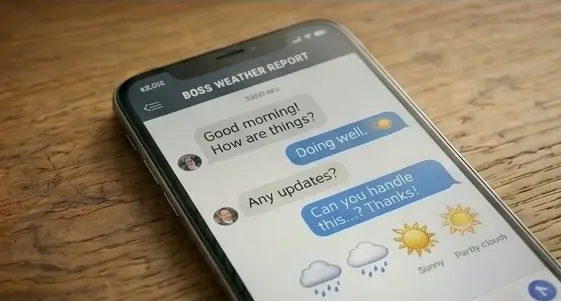
On the day I left Prievidza, my assistant Livia told me something I have never forgotten. The team kept a private group chat with a single purpose: to warn each other when I was in a bad mood. For years I had believed I kept my emotions under control. I was wrong. They read me before I read myself, every single time.
The lesson was not that I had failed as a leader. The lesson was that the people who work closest to you already know, even when you are certain you are hiding it. Your emotional state is always visible. Be honest about it, or it will be honest for you.
Nemáme. The Word That Taught Me More Than Any Leadership Book.
“Nemáme.” We don’t have it. That was the phrase I heard most in my first weeks. Things I had taken for granted in Germany were simply not there, and I had to relearn what was possible and what was not, from the ground up.
In that same stretch of months, I learned something no briefing document had ever prepared me for.
Slovaks Are Hard Coconuts.
You will not crack the shell in a week, a month, maybe not in a year. People will be professional, reliable, genuinely pleasant, and completely closed to you. Arrive with a process framework and a stack of quarterly KPI slides and you will get compliance. You will get green reports. The extra mile, though, you will never get.
Do the real work, show up with honesty, consistency, and a genuine interest in who people are and not only in what they deliver, and something shifts. When it shifts, it shifts for good.
I am still close with the friends I made in Prievidza. I drive over once or twice a year to see them, and they come to us. That is not a professional network. That is what years of showing up as a human being first, and a manager second, actually build.
In leadership terms, a Slovak team that trusts you does not simply meet your expectations. It looks for ways to exceed them without being asked. That is the team every German operations director wants, and almost none know how to build, because they are trying to manage from a distance a bond that only forms up close.
This is not a cultural stereotype. It is four years of lived experience, still active today.
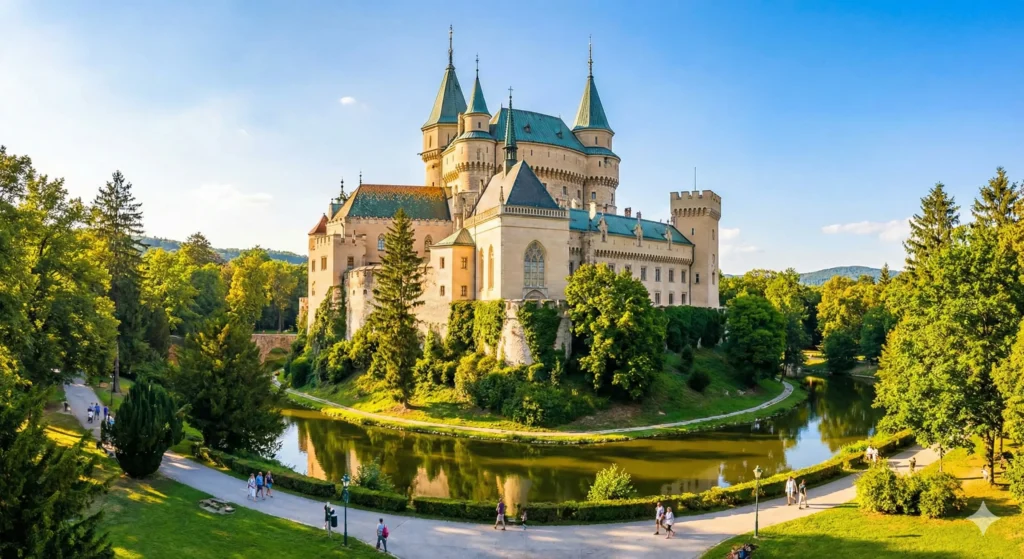
The Last Day, and the Moment I Could Not Hold Back.
When I knew I was leaving, I expected a professional goodbye. A few handshakes, maybe a small gathering. Most of my team worked remotely by then, and I did not expect them all to come in.
They all came in. Every single person formed a line, and one by one they shook my hand and said something personal, something that had never come up in any meeting and had nothing to do with KPIs or project status.
I could not hold back the tears, and I was not ashamed of them.
Then Michal, one of my three team leads, looked at me and said:
That sentence is the most honest evaluation of four years of leadership I have ever received. Not a performance review, not a KPI report. A team built on values they chose themselves, rules they committed to on day one, and a leader who was demanding but never a stranger.
That team was built through a Team Charter Workshop. Not a theory session, a full day of real work: warmups that made people think and laugh, then values cards, then how we wanted to treat each other, then what must never happen between us. We sorted it together, prioritised it together, and landed on five rules. Not mine. Ours.
Every new member heard those five rules from me on day one, and every one of them was asked, do you agree to this. Not as a formality, as a real commitment.
The result was a team known across the company for what it delivered, and for how it stood by each other when the work got hard.
If you are wondering whether this is repeatable in your Slovak team, it is. But only if you are willing to show up as a human being first.
Andy Balbus BYG Consulting operates remotely and works across every time zone you do. The firm accepts mandates and supports clients throughout Germany, Austria, Slovakia, the Czech Republic, Poland, Spain, and across Europe, as well as the USA, Mexico, China, and India. Wherever your headquarters, your plants, or your hubs sit, our consulting travels with you.
The Slovakia You Lead Today Is Not the Slovakia of Ten Years Ago.
The low-cost era is over. Wages are climbing, the talent pool is thinning, and your best engineers have offers from Vienna, Prague, and further west. Some have already gone. At the same time you are running two worlds at once, keeping the combustion lines at full volume while ramping EV platforms nobody has run before.
Here is what your matrix is actually carrying right now:
None of this is news to you. What is missing is not awareness, it is a structure to deal with it that does not leave you fighting the matrix alone.

Brain Drain: Why Your Best Slovak Talent Leaves, and How Leadership Keeps Them
The Hidden Cost of Slovakia’s Engineering Brain Drain
This is the part the dashboard never shows. Slovakia is living through a steady brain drain, and your best young engineers and IT specialists are exactly its target. They leave for the Czech Republic, for Austria, for Germany, drawn by higher pay and faster careers, and the most capable of them rarely come back. Around seven in ten Slovaks who study abroad go to the Czech Republic, and the strongest tend to stay there after graduation. (Blue Europe, Slovakia’s Brain Drain, 2024) For the companies left behind the effect is blunt: the departure of specialists makes quality people genuinely hard to find on the Slovak labour market. (AmCham Slovakia) One estimate puts the lifetime cost to the economy of losing a single university-educated person at roughly 2.8 million euros. (Blue Europe, 2024)
Why Salary Alone Will Not Stop Talent Attrition
For your plant, the brain drain is not really a pay problem, because you will not out-bid Munich or Vienna and you do not need to. People at this level walk when they feel like a pair of hands instead of a strategic partner, when the work gives them no voice and the culture gives them no safety. Talent retention in this market is a leadership question long before it is a salary question, and the strongest employer brand is not a campaign, it is how your leaders actually lead.
Building Psychological Safety to Retain Top Engineering Talent
This is the part I lived. The team I built in Prievidza did not drift away and did not quietly comply, it over-delivered, because the culture gave people psychological safety and a real say in how the work was done. That is what modern, binding leadership, New Work in the honest sense and not the poster version, actually buys you, a place people do not want to leave. The mechanism is concrete: a Team Charter Workshop is where it starts, the shared rules a team writes and commits to, the rules that make staying the obvious choice. When the pressure is already on, Accelerate Now builds the same leadership muscle faster.
Closing the Gap Between German HQ and Slovak Plant Operations
If you are the production manager, your line is running and the KPIs are acceptable, and you already know the next SOP from headquarters will not land cleanly on your floor. You are not in a crisis yet. You are about three weeks from one, which is exactly the right moment to act.
If you are leading from the German headquarters, or running the Slovak team from Pune or Bangalore, the green reports reaching you are not the full picture. Your Slovak team is shielding you from information you need to decide well. That is not disloyalty, it is self-protection inside a matrix that made honesty politically expensive. This page exists to change that, for both sides.

What Is Remote R&D Costing Your Plant?
Slovakia stopped being a pure production country a while ago. Some of the strongest suppliers have put full development centres next to their Slovak lines, precisely because the feedback loop between design, prototype, and production is worth it. The move up the value chain is real, and it is accelerating.
On the floor in Prievidza I lived the reason. An R&D team sitting at the production site, owning the products made there, is worth its weight in gold. When a line had a problem, my engineers were physically there in minutes, carrying knowledge straight into the plant. Across hours of driving, or over a remote call, that simply does not happen at the same speed.
The gap is no longer production versus development. It runs between the sites that already have that product brain on the floor and the ones where it still sits hours away. This calculator does not measure abstract friction. In five questions it puts a number on two things: the recurring monthly cost your line carries when the product knowledge is not on-site, and the exposure you take on every time a product weakness surfaces after SOP and forces new tooling, line rework, and requalification.

BYG Plant Calculator
What is remote R&D costing your plant?
Five questions, ninety seconds. See the monthly range your line pays today because the product knowledge sits somewhere else, and what a late design change really exposes you to.
Michaela leads in exactly this matrix. If you are a woman carrying it and tired of carrying it quietly, there is a room built for that: Female Executive Coaching, or the Your Power Within programme.

What the Silence Is Actually Costing You
The matrix does not measure invisible friction. It measures delivery KPIs, and those look fine right up to the week they don’t.
One week of SOP delay, avoided, pays for a full engagement. This is not a coaching budget line, it is operational risk mitigation.
What Executive Sparring for Slovak Leaders Actually Is
This is not coaching in the usual sense. It is not a training programme, a team-building day, or a fifty-page process report. It is a direct, one-to-one sparring relationship between you and someone who has sat exactly where you sit.
Where it goes from there follows your seat. A director who keeps watching a strong team’s future get decided elsewhere will recognise the deeper track in Director Mentoring. A senior leader or founder carrying the whole matrix has the same honest room, agenda-free, in CEO and Senior Leader Coaching.
The BYG Strategic Focus Radar: Four Phases

The Engagement Formats
Depending on urgency and context, we work in one of three formats:
Team Charter Workshop
For the broader leadership team. One full day, one binding operating agreement that gives your German, Slovak, and Indian people a shared working language and a small set of rules that actually stick. See the Team Charter Workshop in full.
Executive Sparring, ongoing
One-to-one sessions with you as the focal leader. We locate the exact friction points in your matrix, build the tactical moves to address them, and track progress over six to twelve weeks.
What is your Path, explore here more.
Accelerate Now, rapid stabilisation
If an SOP is failing or a cross-border conflict is escalating right now, a stabilisation protocol across three focused sessions. Results in days, not months. See how Accelerate Now works.
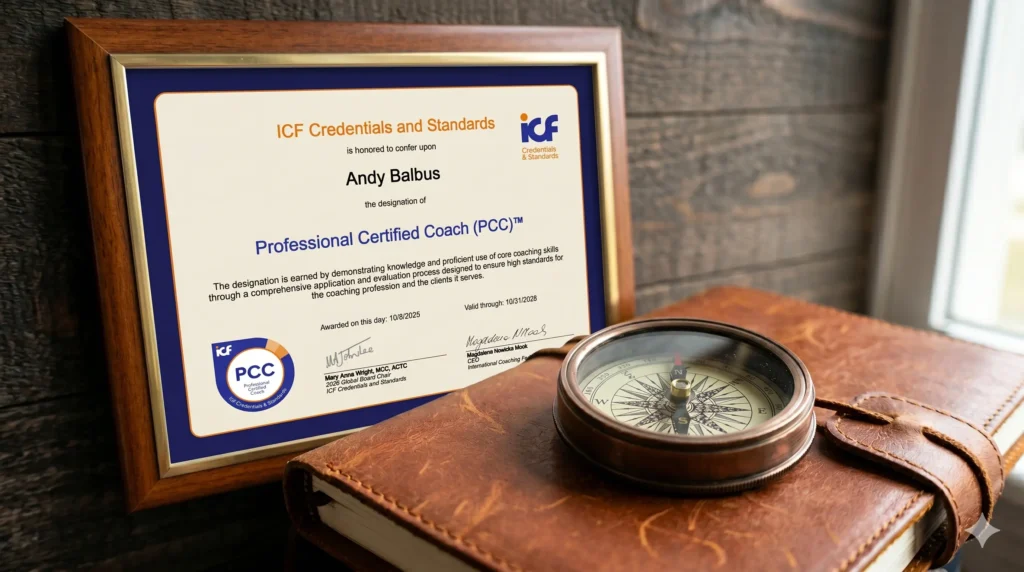
What Actually Changes Within 90 Days
Not theory, not a framework on a slide. Concrete shifts in your working week:
- Your status reports to headquarters show the full picture, because your team now has a safe structure to escalate honestly, and you have the language to carry it upward without a political cost.
- The SOP conversation that has been avoided for months has happened. Not as a crisis, as a structured intervention. The rework loop is broken.
- Your best engineer, the one who went quiet three months ago, is back in the room. You know why they went quiet, and you addressed it before a resignation letter landed.
- You are no longer the only person who understands three critical systems. Delegation has stopped being a concept and started being real.
- Your team lead owns their area with genuine accountability. You manage the system instead of fighting daily fires.
- Your strongest engineer is not quietly updating a CV. Talent retention has become something you can see in the room, because the culture now gives your best people a reason to stay.
What Leaders Across This Triangle Say

FAQ: Clear Answers to the Hardest Cross-Border Matrix Questions
Q1: Is this only for large companies with a big German headquarters?
No. The friction I work on appears wherever a German strategy meets a Slovak floor, whether that headquarters has five thousand people or fifty. Smaller suppliers often feel it more sharply, because there is no internal buffer to absorb the misalignment.
Q2: I have worked with consultants before. Why is this different?
Most consultants fly in, run a diagnostic, leave a report, and fly out. I lived in Prievidza for four years and built a department from zero. This is sparring, not a deliverable: a thinking partner who has made the mistakes you are trying to avoid, not a slide deck.
Q3: I do not have time for a long engagement. What if I just need fast stabilisation?
That is exactly what Accelerate Now is for. If an SOP is failing or a cross-border conflict is escalating, we work in three focused sessions and stabilise within days, with no long ramp.
Q4: My company might pay for this. How do I position it internally?
As operational risk mitigation, not coaching. One week of avoided SOP delay covers a full engagement. I can help you frame the business case in the language your finance and operations leaders already use.
Q5: What if I am the German operations director trying to understand what is happening in Slovakia?
Then you are on the right page. The green reports reaching you are filtered. We build the structure that lets your Slovak team tell you the truth early, while it is still cheap to act on.
Q6: Why Slovakia in particular? Is this not a generic leadership problem?
The pattern is general, the texture is local. Four years on the ground taught me how Slovak teams actually decide, escalate, and go silent, and how that interacts with German headquarters and Indian hubs. Generic leadership advice misses exactly that texture.
Q7: I am a German operations director. Is this relevant for me, or only for the Slovak leaders?
Both sides sit in the same friction from opposite ends. I work with leaders at either end of the axis, and the fastest progress often comes when both ends engage at once.
Q8: My Slovak team is performing well. Why would I need sparring now?
Because the best moment to act is before the crisis, not during it. A team that performs while staying silent is the green-melon pattern. Strong delivery and hidden red can sit in the same dashboard.
Q9: Can this be done fully remotely, or does it require on-site presence?
Both work. Sparring runs well remotely. For a Team Charter Workshop or an acute stabilisation, on-site presence is often worth it, and I travel for that.
Q10: I am a team lead, not a plant manager or R&D director. Is this relevant for me?
Yes. You do not need a title to start this conversation, and you often see the green-melon dynamic earlier than anyone, because you sit closest to it. If you recognise your director in this page, forwarding it is the most useful thing you can do. And if you want to build the influence to lead before you hold the title, that is what the mentoring for team leads is built for.
Q11: How does this work if my company has not approved the budget yet?
Start with a Reality Check. It costs nothing and gives you something concrete to take internally, whether or not we work together afterwards. Many engagements begin with one leader booking that call before any budget conversation.
Q12: My real problem is keeping people, not the matrix. Can you help with talent retention and the brain drain?
Yes, and the two are the same problem seen from different ends. Retention in Slovakia is a leadership and culture question before it is a salary one. The structure that makes honest escalation safe, the Team Charter, the upward communication, the psychological safety, is exactly what makes your strongest people stay. I built a team in Prievidza that did not leave, in the middle of the same brain drain you are facing now. That is the work, and it starts with a Reality Check.

Go Deeper: Short Field Notes From the Matrix
These short videos were recorded for leaders who are tired of theory. Each runs under ten minutes and takes on one friction pattern from the Slovak, German, and Indian axis.
The Next Step Is a 30-Minute Reality Check. No Commitment. No Sales Pitch.
You have managed invisible friction long enough to know what it costs. The question is not whether the problem is real, your own audit told you that. The real question is whether you deal with it now, or wait until the next SOP crisis forces the conversation for you.
You do not need to be based in Slovakia to book this call. If you lead from Bamberg and cannot get honest escalation out of Prievidza, start here. If you lead from Pune and have felt your Slovak team go quiet after every confirmation, you are part of this conversation too. The Reality Check works for every seat in the triangle.
In thirty minutes we find the one or two friction points in your specific matrix that are costing you the most right now. That is it. If there is a fit, we talk about next steps. If there is not, you still leave with something you can use.
Or Directly: founder_andybalbus@boost-your-growth.com | WhatsApp: +49 151 4495 7099

Regularly on site: Bamberg, Nuremberg, Zapfendorf, Bratislava, Prievidza, Barcelona, Pune, Mumbai, Shanghai, Querétaro, and Pittsburgh.
Stay Ahead of the Matrix
Join my network of global automotive executives and plant managers. I regularly share unvarnished insights, data-backed case studies, and practical strategies for navigating cross-cultural friction across Germany, Slovakia, and India.


