You are good at what you do. Something is still not moving. And the people around you cannot tell you why.
This is BYG Consulting, and this is automotive leadership coaching built for the people who carry the load. I am Andy Balbus: German industrial engineer, former Director of Electronics at Brose, ICF PCC certified coach, and intercultural bridge builder across Germany, Slovakia, India, China, Mexico, and the UK. Whether you lead an R&D department, run a company, are the woman who keeps delivering without advancing, are deciding who carries what you built, or are one level away from the role you want, this page does one thing. It finds where you are and points you to the exact work that closes your specific gap.
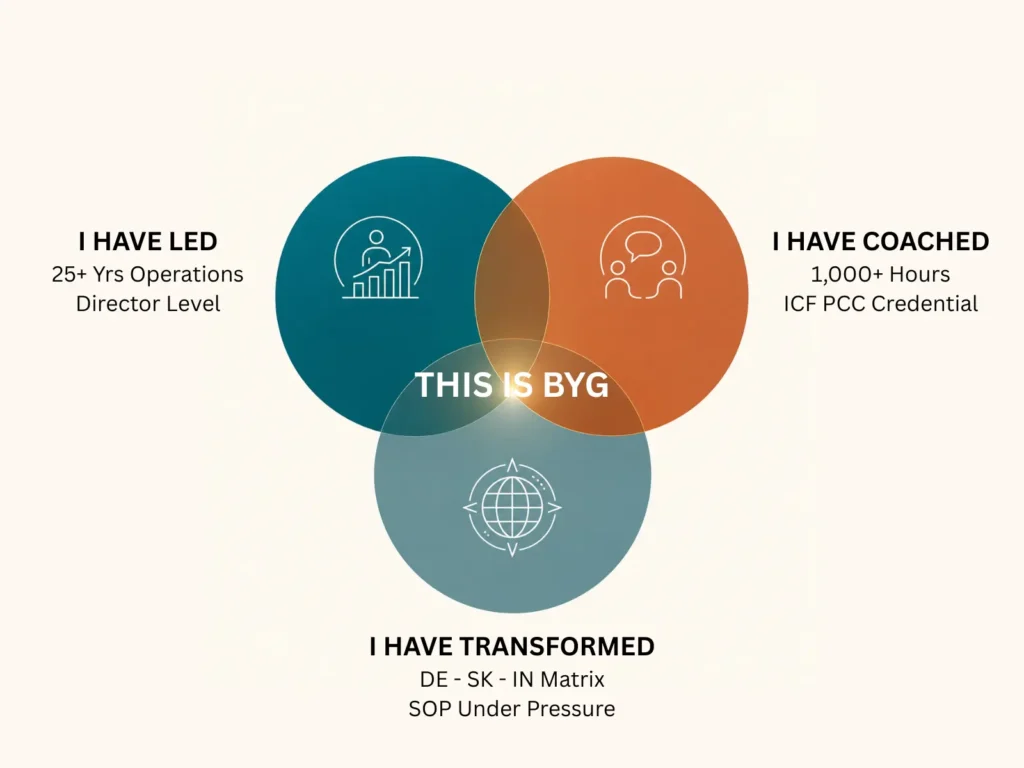
BYG Pathfinder
Eleven paths. One is built for exactly your situation.
Coaching and Mentoring fan out to your exact role. The four programs resolve in a single tap. Ninety seconds, no email. If more than one fits, the last option shows you the way.
The Gap Is Rarely Technical
It is the distance between what you are capable of and how the system around you responds to it. That distance has a cost, and it compounds quietly: strategic time you never get back, decisions no one challenged in time, talented people who left without telling you the real reason. The longer it stays unnamed, the more expensive it becomes.

The Six Situations. Read the One That Is Yours.
Each path below names one structural challenge in precise detail. If the widget pointed you here, you already know which one to read. If you skipped it, scan the openers and stop at the one that reads like a description of your own week.
Executive Coaching for Directors and R&D Leaders: Every Escalation Still Lands on Your Desk.
Your team has quietly learned that waiting for your answer is faster than deciding for themselves. The strategic work you were actually hired to do keeps sliding to next week. This is not a time problem and it is not a motivation problem. It is the Expert Paradox: the technical excellence that built your career is now the exact behavior blocking your next level of impact. Every problem you solve personally teaches your team to bring you the next one. The work here closes that structural gap with precision, from someone who built an R&D department of 40+ engineers from zero and then had to learn how to leave the room.

CEO and Founder Sparring: The Question Nobody Around You Has the Distance to Ask.
The organization runs. The numbers hold. And a question keeps growing in the space behind all of it. Everyone in your orbit has too much at stake to be fully honest: direct reports need your approval, board members carry their own accountability, peers are inside their own version of the same matrix. Slowly, honest input narrows at exactly the moment the decisions get harder. You do not need a consultant who confirms what you already think. You need one person who asks the questions your team will not, with no stake in the answer.

Female Executive Coaching: Your Output Is Unassailable. The Advancement Is Going Somewhere Else.
Your projects land. The work itself is not in question. And in the rooms where careers are decided, someone else keeps being named. The informal rules of visibility, sponsorship, and influence in this system were written before you were in it. Assert yourself directly and you are told you are aggressive. Soften your approach and you are told you lack conviction. The feedback does not add up because the standard was never written down and was not designed for you. The work is not to change who you are. It is to give you the operational map of the system you are already operating in, through one-to-one coaching or the Your Power Within program.

Business Owner and Succession Planning: You Built It. Now You Have to Secure It.
When every critical decision still runs through you, the company cannot grow beyond what you can personally supervise, and it cannot outlast you either. The work has two layers. First, build the leadership layer that runs your locations as self-sufficient units, so you lead strategically instead of firefighting daily. Second, if succession is the real question, transfer what you built deliberately rather than by accident. The Legacy Program was made for the founder who has created something that deserves to continue.

Team Lead and Expert Mentoring: One Level Away, and the Path Is Not Technical.
Technical competence is what got you here. Leadership fluency is what takes you further. Maybe you run the project but do not own the people. Maybe you are deeply competent and structurally invisible, the Expert Paradox in its earliest form, where no one in the matrix is presenting your work as strategic. The gap closes with structured mentoring built on real industrial experience: the leadership language, the cross-cultural confidence, and the presence that holds under pressure. If you need movement fast, Accelerate Now is the short, intensive track.

HR and Talent Leaders: R&D Attrition Is Not a Recruitment Problem.
High attrition in your best engineering teams is not a pay problem and it is not a hiring problem. It is a leadership architecture problem. Your top people leave because the system treats them as executors rather than contributors, and that distinction shows up nowhere on the standard dashboard until they are already gone. When the leadership culture is rebuilt deliberately, the best people stop leaving, and you have a measurable story to take to the board.
25+ Years Inside the Matrix. Not Studying It. Living It.
Whichever of those six situations you recognised, the next question is a fair one: why this person, and not the dozens of generalist consultants who would happily take the call? The answer is not a methodology. It is 25+ years of having stood exactly where you are standing now.
When we started building the electronics department in Prievidza, everything was new at once: the team, the products, the location.
We built from zero.
In the early years our software deliveries were painful, not because people lacked ability, but because knowledge has to be earned before it can be applied, and there is no shortcut for that. What changed it was Markus. After several careful conversations beforehand, he agreed to come with us to Slovakia, a highly experienced developer who worked shoulder to shoulder with the new engineers and transferred exactly the knowledge the software teams needed, at exactly the moment they needed it. Without him I could not have built the programming teams the way I did. His experience was the right push at the right time, and the foundation he helped lay is the one the department still stands on today.
That experience taught me something I carry into every engagement. When boards and HR functions talk about headcount and restructuring, they are talking about numbers. But numbers walk out of the building and take knowledge with them. The leaders who understand that retention, stability, and real investment in people are not soft priorities are the ones who build organizations that actually last. Better leadership creates better workplaces, and better workplaces deliver better results. That is the whole thesis, and I have watched it hold under real pressure for 25+ years.
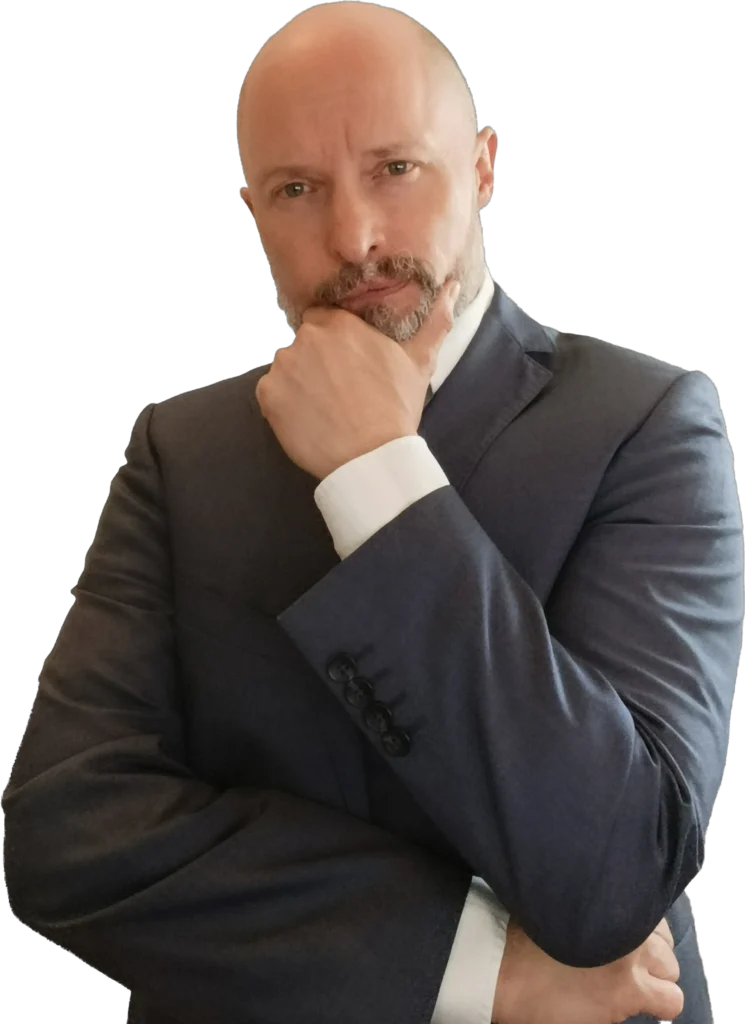
Between 2019 and 2023 I built the complete electronics R&D department at Brose Prievidza from scratch.
From zero to 40+ engineers, a 2 million euro technical laboratory, and full product responsibility for window regulator electronics and power-operated tailgate systems. That department still delivers today, under my successor. Afterwards, from 2023 to 2025 I spent two years on the ground in Pune at Brose India, not as a visitor with a workshop agenda, but as the person inside the alignment calls that went nowhere, coaching 12 leaders through a critical growth phase and building the Brose Training Academy from the ground up. What I know about Germany, Slovakia, and India is not from a textbook. It is from four years living in Prievidza, two years living in Pune, and decisions made under real OEM pressure with my name on the outcome.
More about Andy Balbus:
Meet Andy Balbus, the full story ›
The 3 BYG Principles:
The BYG Code, three principles, zero compromise ›
Your direct way towards your Reality Check:
Verified Credentials
“Hard profits require soft skills.”
This is not a coaching slogan. It is the financial reality of every global SOP I have ever rescued.
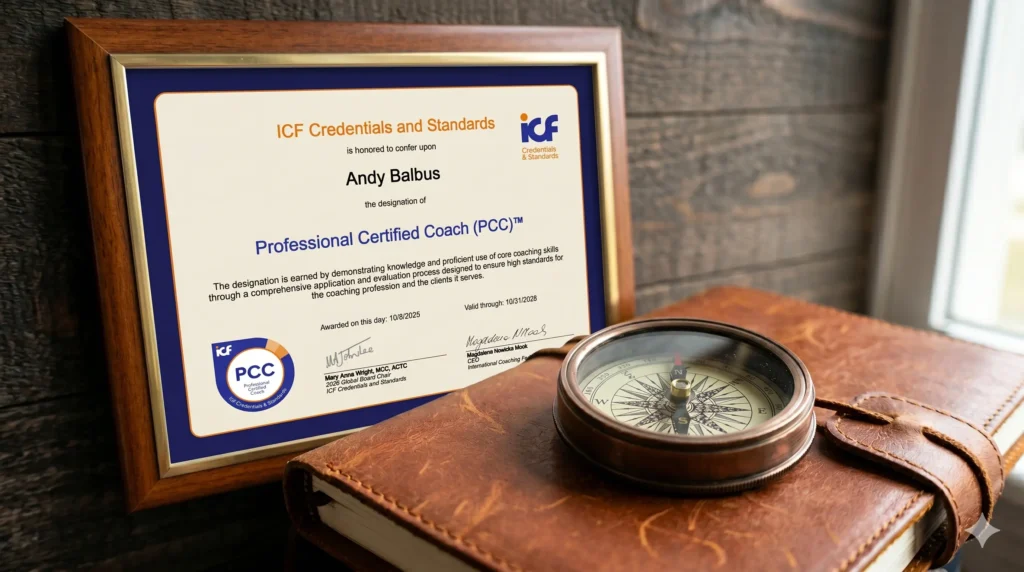
Confidentiality: All sessions under the ICF Code of Ethics.
Documented by official reference letters from Brose Prievidza and Brose India Automotive Systems Pvt. Ltd.
For the leaders in this matrix whose pain is operational, here is the mechanism in detail. Intercultural misalignment is not a soft HR topic. It is a financial risk that sits outside the standard risk register, right up until it lands on your critical path. The pattern is consistent across the automotive matrix. A German headquarters runs on explicit milestones and fixed timelines, assuming a technically sound process works everywhere. When an Indian R&D hub receives a brief, a yes typically signals that the message was received, not that delivery is guaranteed. The Slovak plant, caught between western process expectations and a leadership structure still developing its own authority, tends to absorb pressure rather than escalate it.
There is a deeper layer.
A leader who grew up in one environment and never lived in another has rarely had to learn a different way of seeing. Think about what it takes to explain the colour yellow to someone blind from birth. You cannot use the language you know. You have to find an entirely different way to communicate. The same is true across cultures. English connects the world linguistically, but language is not context, and context is not culture. The leader who has only known one environment keeps explaining yellow the same way, louder and more precisely, and still wonders why it does not land. Finally, the one who has lived on both sides of the triangle had to relearn how to communicate from the ground up. That is the difference.

What Miscommunication Actually Costs.
Four friction points, each with a documented operational and financial impact.
Eliminating a single week of SOP delay pays for the entire engagement. This is not coaching, it is high-stakes operational risk mitigation.
The Triangle Has Three Sides. Each One Has a Different Pain, the Same Root Cause.
That cost is not abstract, and it does not spread evenly. It lands differently on each side of the triangle. Generic intercultural training misses this completely because it has no industrial context: it teaches cultural dos and don'ts to people managing real SOP deadlines, real attrition, and real EBIT pressure. What works instead is location-specific sparring built on years of hands-on operational work inside the same triangle. If you recognise your own site below, that is your entry point.
Germany, the Engine.
German HQ leadership runs on explicit communication and structured planning, on the assumption that a technically correct process works the same everywhere. It does not. The silence from Pune is not agreement. Also the green report from Prievidza is not always the complete picture. If your dashboard shows green and your gut says otherwise, that tension is the most expensive feeling in the automotive matrix.

Slovakia, the Hub.
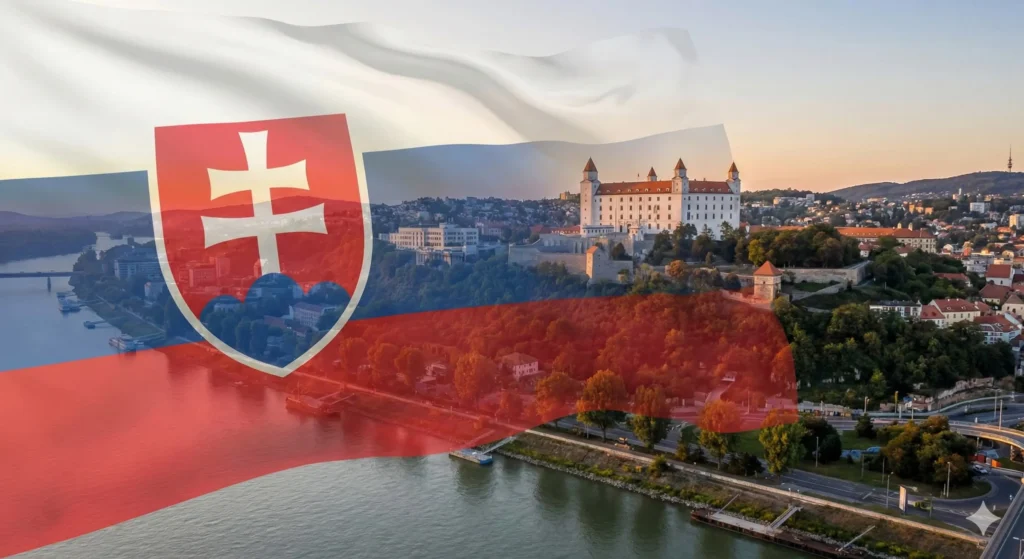
The Country Slovakia connects western process discipline with a workforce that is technically exceptional, deeply loyal, and systematically excluded from strategic participation. Having built the complete electronics R&D department at Brose Prievidza from zero, I know what it takes to move a Slovak location from an executing unit to one that develops, owns, and leads. The Translation Tax, the Green-Melon Effect, the Extended Workbench Syndrome: these are not theories. They are the daily reality I lived for four years in Prievidza.
India, the GDC.
In Indian Global Delivery Centers, deeply embedded hierarchy means problems are often absorbed rather than escalated. When a partner in Pune says yes, it typically signals that the message was received, not that delivery is guaranteed. And when engineers leave a market-competitive employer, it is rarely about salary. It is about growth: the ability to learn, to advance in title, to build skills their family can see, and to belong to a team with real connection, because India is a deeply relationship-oriented culture. The leader who understands this, who never criticises a team member in public, who builds trust before authority, keeps the best people. Ultimately, the one who does not loses them quietly, and never knows why.

The BYG Framework: 28 Methods, Built on the Shop Floor, Not in a Textbook.
Three sides, three pains, one root cause. Naming the gap is one thing. Closing it takes an instrument. Most of the formats below draw from the BYG Framework, a system of 28 proprietary methods developed over 25+ years on shop floors, in R&D hubs, and across three continents. These are not coaching theories imported from a textbook. They are tools built from real decisions made under real OEM pressure, and refined through every engagement since. The framework is structured across four phases.
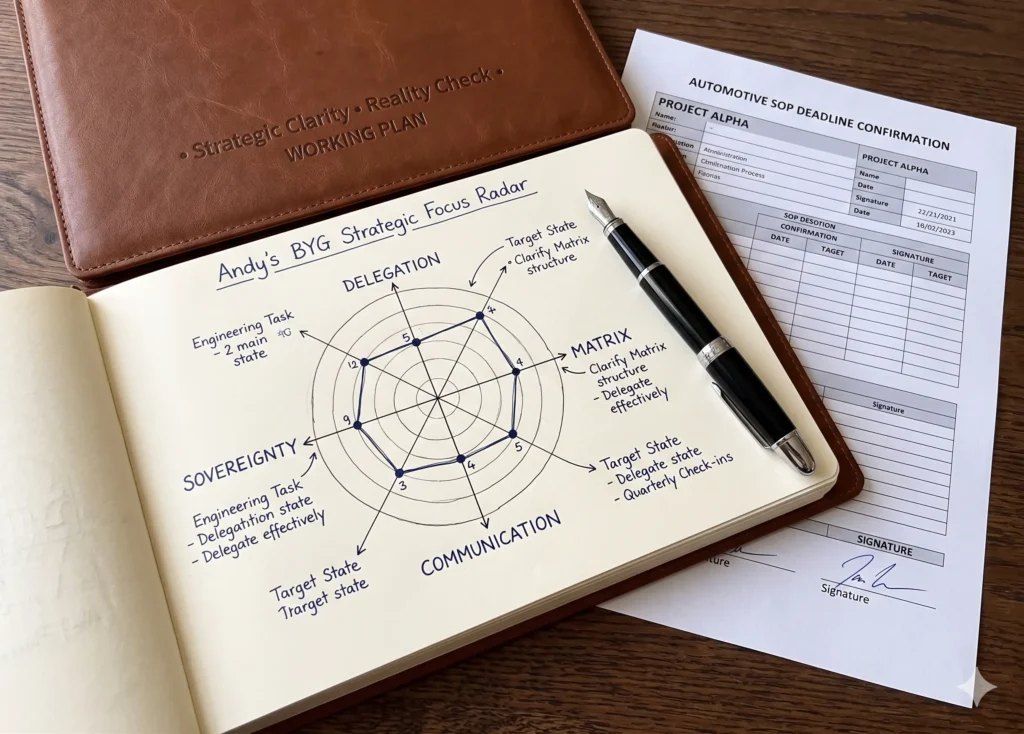
Nine of these methods are available as standalone deep-dives, from Active Listening and the Eisenhower priority filter to the Gemba Walk, GROW, conflict architecture, and uncompromising delegation. The 26-part Global Automotive Engine Masterclass applies the full framework to the most expensive friction patterns in the matrix, free, on YouTube, under 10 minutes each.
➀ Delegation and Execution:
break the chief-firefighter cycle and transfer real accountability without losing standards.
➁ Matrix and Cross-Cultural Dynamics:
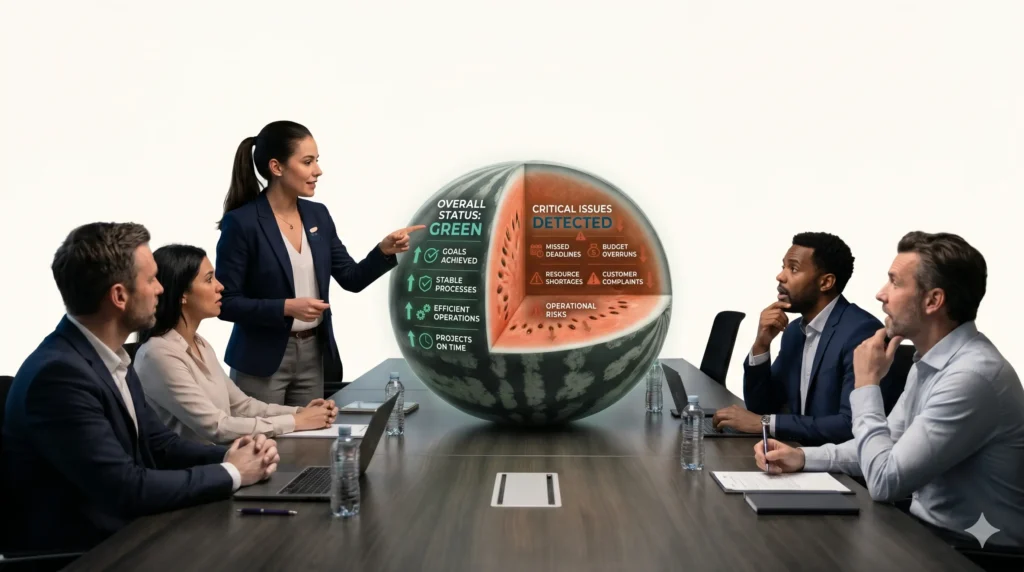
name the Green-Melon Effect, the Translation Tax, and the Indian Yes before they reach your critical path.
➂ Communication and Conflict Resolution:
build the escalation culture that makes honest, early escalation professionally safe.
➃ Strategic and Mental Sovereignty:
reclaim your schedule and move from operational bottleneck to architect of a scalable organization.
Six Formats. One Principle: Surgical Precision, Not Generic Programs.
The methods are the framework. These are the formats through which the work is delivered. Not every situation needs the same intervention. The format is matched to your pressure level, timeline, and objective.
Executive Coaching: systemic, ICF PCC certified. Resolves individual leadership blocks. Focused on mental clarity and sharp decision-making under pressure.
Industrial Mentoring: direct transfer of 25+ years of industrial experience. Operational shortcuts from building R&D hubs in Slovakia and India, not from a textbook.
Accelerate Now: fast-track sparring for leaders who need results immediately. If an SOP is failing or a conflict is escalating right now, stabilization within three targeted sessions.
Team Charter Workshop: one full day. One binding operating agreement that gives your German, Slovak, and Indian teams a shared working language, and three rules that hold under pressure.
The Legacy Program: for the founder who has built something real and needs to know it survives them. Structured succession, with values transferred deliberately, not by accident.
Your Power Within: the female leadership program co-created for women in technical environments. More on it directly below.
Your Power Within: The Most Underestimated Investment in Your Organization.
I want to be direct about something I have observed in every organization I have worked in. Women are a massively undervalued resource in the automotive industry. Not for any lack of competence or drive, quite the opposite. The environment is rarely structured to hear them, promote them, or give them the space to implement their ideas.
Every team I ever led that achieved something exceptional had one thing in common: a healthy mix of people, men and women, different personalities, different approaches. That creates tension sometimes. Managed well, that tension produces better decisions, stronger products, and more resilient teams. Leaders who do not see this are not just missing a diversity metric. They are leaving real capability and competitive advantage on the table.
Your Power Within is the program I co-created specifically for female leaders in technical environments, with Lucica Ibanescu (ICF ACC). Six weeks, grounded in Positive Intelligence and strict ICF coaching standards. It identifies the invisible barriers that keep talented women from claiming the space they have already earned: perfectionism, imposter syndrome, the inability to set a professional boundary without guilt. And it removes them, with the same precision you would apply to a critical constraint on the assembly line.
The program runs online, in English, in cohorts of maximum 8 participants. Investment: 500 euros per participant. Corporate group rate: 3,000 euros for 6 participants.
ICF benchmark ROI: 788%.
A note for HR Directors: documented pre and post impact measurement is included. At this price point, it is the highest-leverage leadership development investment for your female talent pipeline.

Direct Answers for Leaders Across the Matrix.
Q1: How do I know which of the six situations is mine?
The widget near the top of this page identifies it in three questions. If you want the direct version: every escalation landing on your desk is the Director path. The question nobody around you will ask is the CEO path. Output that does not translate into advancement is the Female Executive path. Needing to know what you built survives you is the Business Owner path. One level away from the next role is the Team Lead path. Attrition you cannot explain is the HR path. If you see yourself in more than one, the Reality Check is the right next step.
Q2: What is the difference between coaching, mentoring, and sparring?
Coaching is a structured ICF process that builds your own awareness and insight through questions. The coach does not advise or transfer experience. Mentoring is different: I share what worked, what failed, and what I would do in your exact situation. Sparring is the fast, direct format for a leader who needs to pressure-test a decision now. All three are rigorous disciplines. The Reality Check identifies which one fits your situation, so you do not pay for the wrong format.
Q3: What is ICF certification and why does it matter for me?
The International Coaching Federation is the global professional standard for executive coaching, covering ethics, methodology, and documented hours. ICF PCC requires a minimum of 500 documented client hours, mentor coaching, and a rigorous performance evaluation. I hold PCC and am on the path to MCC, the highest ICF designation. For you this matters for one concrete reason: the ICF Code of Ethics is the framework that protects your confidentiality. Nothing discussed in a session is shared without your explicit consent.
Q4: Do you only work with the automotive industry?
Automotive and industrial is where I built 25+ years of operational depth, so the examples are sharpest there. But the structural problems, the chief-firefighter trap, the isolation at the top, output that does not convert into advancement, succession without a plan, are not industry-specific. The work transfers wherever capable leaders meet a system that does not respond to them as it should.
Q5: Why is the Germany, Slovakia, India triangle your specific area of expertise?
Generic intercultural trainers teach lists of dos and don'ts. I lived the reality of building a 40+ engineer hub in Prievidza and stabilizing teams in Pune under real deadline pressure. This specific triangle is the operational backbone of many major automotive suppliers, so I focus on the exact friction points, the Indian Yes, the Slovak ownership gap, that generalist consultants simply do not see.
Q6: My local managers in India and Slovakia say everything is on track. Why should I be concerned?
In many cultures, reporting bad news to headquarters is associated with personal failure, so problems stay hidden until they are too large to manage quietly. If your dashboard shows green but your instinct says otherwise, there is a communication gap. The sparring process surfaces these hidden risks by creating the psychological safety required for honest, early escalation.
Q7: Can soft skills really prevent million-euro penalties and line stoppages?
In the automotive world, communication is a technical specification. If a critical error in a Global Delivery Center is not escalated because of hierarchy fear, the result is a recall or a line stop. Escalation culture and structured feedback are your most effective insurance policy against EBIT-damaging crises.
Q8: How much time do I personally need to invest?
No feel-good workshops that consume your calendar. The work happens in focused, surgical sessions, typically 90 minutes. The most important part happens between sessions, as you apply the new protocols in your actual daily meetings. High-performance leadership needs focus, not volume of hours.
Q9: Who is not a good fit for BYG Consulting?
I only work with leaders ready for direct, honest conversations and genuine self-reflection. If you are looking for someone to fix everyone else while you stay unchanged, I am not your partner. The work is built for people who recognise that the most significant bottleneck in any organization is usually found at the top.
Q10: What languages is this available in, and is it remote?
English and German. Remote, worldwide. For specific formats, such as a Gemba audit, I walk the floor with you on-site in Pune or Prievidza, because seeing the actual line is essential to unfiltered feedback.
Q11: What happens after the engagement? Are we left with a sustainable system?
My goal is to make myself unnecessary. By implementing the methods, we build a leadership architecture that functions without ongoing external support. You are left with a stabilized team, a clear communication protocol, and the internal capability to bridge future gaps independently.
Q12: What happens in the 30-minute Reality Check?
A direct diagnostic conversation about the specific challenge you are facing now. No slides, no methodology presentation, no sales agenda. By the end, you will have identified at least one structural gap you could not see from inside your own system. I tell you directly whether and how the work addresses it. No commitment required.

These are the questions I hear most often from HR Directors, Business Owners, and Senior Executives before they start working with me.
You Are the One the Board Looks At. Do Not Face the Matrix Alone.
Whatever your situation on this page, the structural gap costing you time, influence, decisions, or your best people is almost never visible from inside the system producing it. That is the entire reason an outside partner exists. By the end of a first conversation, you stop guessing. You have a concrete next step, whether we work together or not.
Every week without alignment, the invisible cost keeps running. Each misread signal, each unescalated problem, each yes that was never a commitment, these are not hypothetical. The only variable is whether you surface them before or after it becomes a crisis.
Availability note: I work with a focused number of active clients at any given time. If you are considering working together, the right moment to start the conversation is now, not after the next cycle has already slipped.
Or reach out directly: founder_andybalbus@boost-your-growth.com | WhatsApp: +49 151 4495 7099
Free. No pitch. No obligation. In 30 minutes we identify your single most expensive friction point, and you leave with a concrete next step. Every engagement includes a 4-week cancellation window. No long-term lock-in. 100% confidential.
Zero fluff: 25+ years of documented industrial experience. Result-focused: we identify your most expensive friction point immediately.

New insights
-
✴︎
-
✴︎
-
✴︎
-
✴︎
-
✴︎
Systemic leadership does not end after one call.
Follow for unfiltered insights and straight-talk strategies:


