
You have achieved everything you set out to achieve. So why does it feel like something is missing?
The company runs. Numbers are where they should be. The team delivers. From the outside, everything looks exactly as it should. From the inside, a quieter question has been growing for longer than you have admitted to anyone: is this what it was all for?
That question does not make you ungrateful. It does not make you weak. It makes you the kind of leader who has outgrown the metrics that used to be enough. And it almost never gets asked out loud, because there is no one in your orbit with the distance to ask it and the operational experience to sit with the answer.
CEO coaching and executive sparring built on 25+ years inside the industrial machine. ICF PCC certified. The agenda-free room where the real question gets asked. Remote. Confidential. Worldwide.

The Room at the Top Has No Mirror.
There is a specific kind of silence that exists only at the very top of an organization. Not the silence of a meeting that has gone well. The silence that comes from everyone around you being either too dependent on your decisions, too invested in your approval, or too cautious about delivering the news that does not fit the narrative.
That impairment is not a personal failing. It is a structural consequence of the position, and it has a P&L cost that most boards never explicitly measure. The most dangerous decisions you will make as a CEO are not the ones where you have too little information. They are the ones where you had no one who would tell you what they actually thought before you made them.
I Have Been in That Room. Without a Title. With Full Accountability.
In most conversations about executive coaching, the coach describes the pressure from the outside. They have studied it, observed it, built frameworks around it. What they have not done is carry it.
I was placed into a taskforce leadership role with no formal authority over the people I was coordinating, during a production crisis with financial and reputational consequences across three countries. No title. Full accountability. In one session, a senior developer looked at me and said: I forgot. He had missed a critical deliverable in the crisis chain. I said: that happens. What do we need to do in the next two hours? Within days, everyone in that taskforce had internalized something no memo could produce: that honest acknowledgment of a problem was safer than hiding it.
That moment is not a story I tell to prove empathy. It describes the precise dynamic that CEO coaching addresses: the room where honest information is structurally expensive, and the specific leadership behavior that makes it structurally safe again.
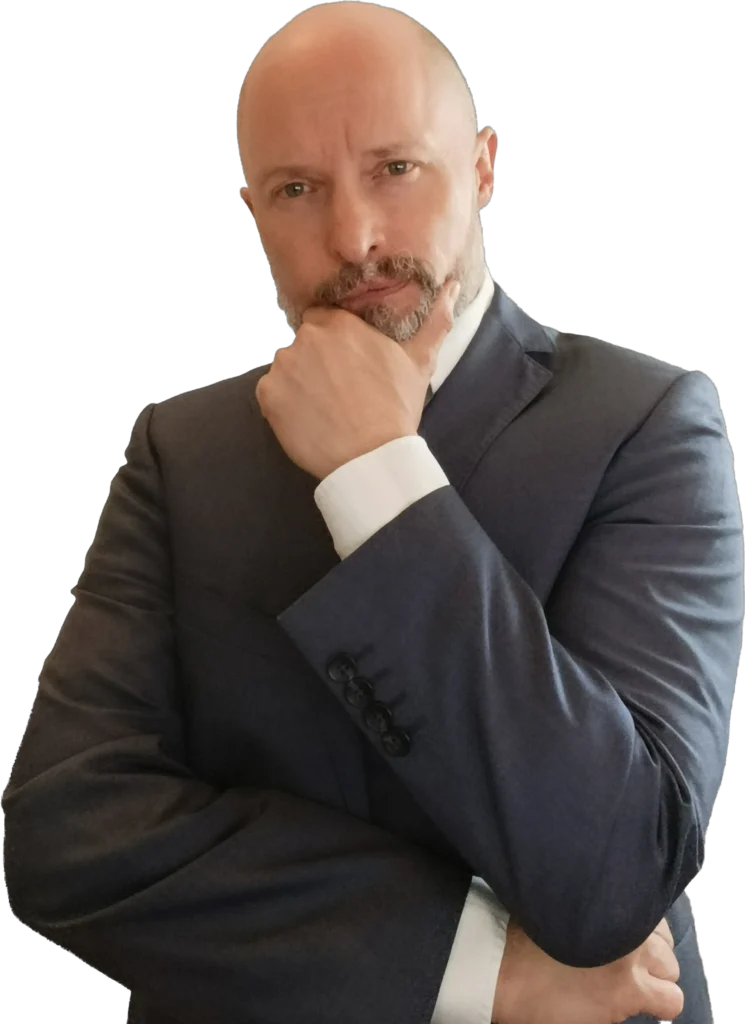
January 15, 2024. The Day the Question Became Personal.
On January 15, 2024, I came close to dying. A blood clot. The kind of event that does not give you time to prepare a response, only to recognize what is actually important in the seconds after the doctor speaks.
I had been leading, building, and performing for 25 years. In that moment, none of it was what came to mind. What came to mind was a walk around a lake in Austria with my partner. Not a milestone. Not a metric. A walk.
David Brooks writes about the Second Mountain: the recognition, often triggered by a moment of loss or crisis, that the first mountain, built on achievement, status, and external validation, was real and worth climbing, but it was not the final destination. The second mountain is built on something different: contribution, alignment, the question of what actually matters when the title is not in the room.
I now exercise every day without exception. Not because I am motivated to. Because I understand the difference between motivation and purpose. Motivation is what gets you to the gym when you feel like it. Purpose is what gets you there when you do not. I bring this into the CEO coaching work not as a lesson, but as a proof. I know that room from the inside.

Why Every Internal Sounding Board Fails at the Top.
A sounding board is useful only if the person holding the board has no stake in the outcome and enough context to ask a question that changes the frame. Both conditions are structurally impossible to satisfy inside your own organization.
Direct reports need your approval and continued investment in their careers. Board members carry fiduciary accountability that makes genuine challenge expensive. Peers are navigating their own versions of the same matrix. Advisors and consultants bring agendas attached to their recommendations.
CEO coaching positioned as executive sparring operates outside this structure entirely. No equity position, no board seat, no organizational reporting line, no agenda attached to the outcome. The only interest in the session is the precision of the next question. That structural independence is not a coaching style preference. It is the precondition for the conversation that actually changes something.

The Questions That Change the Room.
At a certain point in a senior leader’s career, the conversations stop going deep. Not because the people around you are incapable of depth, but because everyone in your orbit is managing their relationship with you while they speak. That leaves a specific kind of question unasked.
The Four Circles: Ikigai as a Map, Not a Mantra.
Ikigai is not a wellness slogan here, and it is not a guru’s mantra. Used as a coaching lens, the four circles map something concrete: what you genuinely love doing, what you are built for, what the people and organizations around you actually need from someone with your specific capabilities, and what sustains you. For a CEO or founder who has already proved competence and built security, the intersection of those four is not the start of a career. It is where energy, creative force, and a clear vision come back, the map for the second mountain and the power to climb it.
The session that tends to open the most is built around a deceptively simple question: the last time you completely lost track of time, not through exhaustion, not through distraction, but in the state where you were so fully inside what you were doing that an hour passed like ten minutes, what were you doing? For many CEOs, the honest answer is that it has been years. The work has become management of the work. The Flow State that once drove the hunger to build has been replaced by the discipline to sustain. That is not failure. It is information. And it points precisely to where the second mountain begins.

Structural Sovereignty: The Difference Between a Job and an Asset.
An organization that requires your daily presence to function is a job. An organization that produces results independent of whether you are in the building on a given Tuesday is an asset. The gap between those two definitions is not a management problem. It is a leadership architecture problem.
Succession planning is among the most searched and most avoided conversations in leadership. Leaders avoid it because it sounds like the end of something. Coaching reframes it as structural sovereignty: the point at which what you built no longer depends on you to keep running.
Three things are almost always required: leadership systems that operate without your judgment on every decision, cultural DNA that is documented and transferable rather than implicit and personal, and a successor developed through genuine coaching investment rather than observation. The coaching builds all three, deliberately and without stopping the machine while it runs.
When the Organization Runs on Your Judgment
The most common structural risk in a CEO’s organization is not competitive or financial. It is architectural: the organization has become so dependent on the CEO’s judgment that it cannot produce reliable outputs when that judgment is unavailable. This is the inverse of structural sovereignty. Instead of an asset that runs independently, it is a mechanism that requires the founder’s presence to generate momentum.
Coaching addresses this not by removing the CEO from the organization, but by building the specific leadership development architecture that distributes judgment. Senior leaders who understand what decisions to make and what decisions to delegate, who have coached their direct reports to the level where they can carry real strategic decisions, and who have built the succession depth that makes their absence manageable, have achieved structural sovereignty. That architecture does not build itself. It requires deliberate work over time.
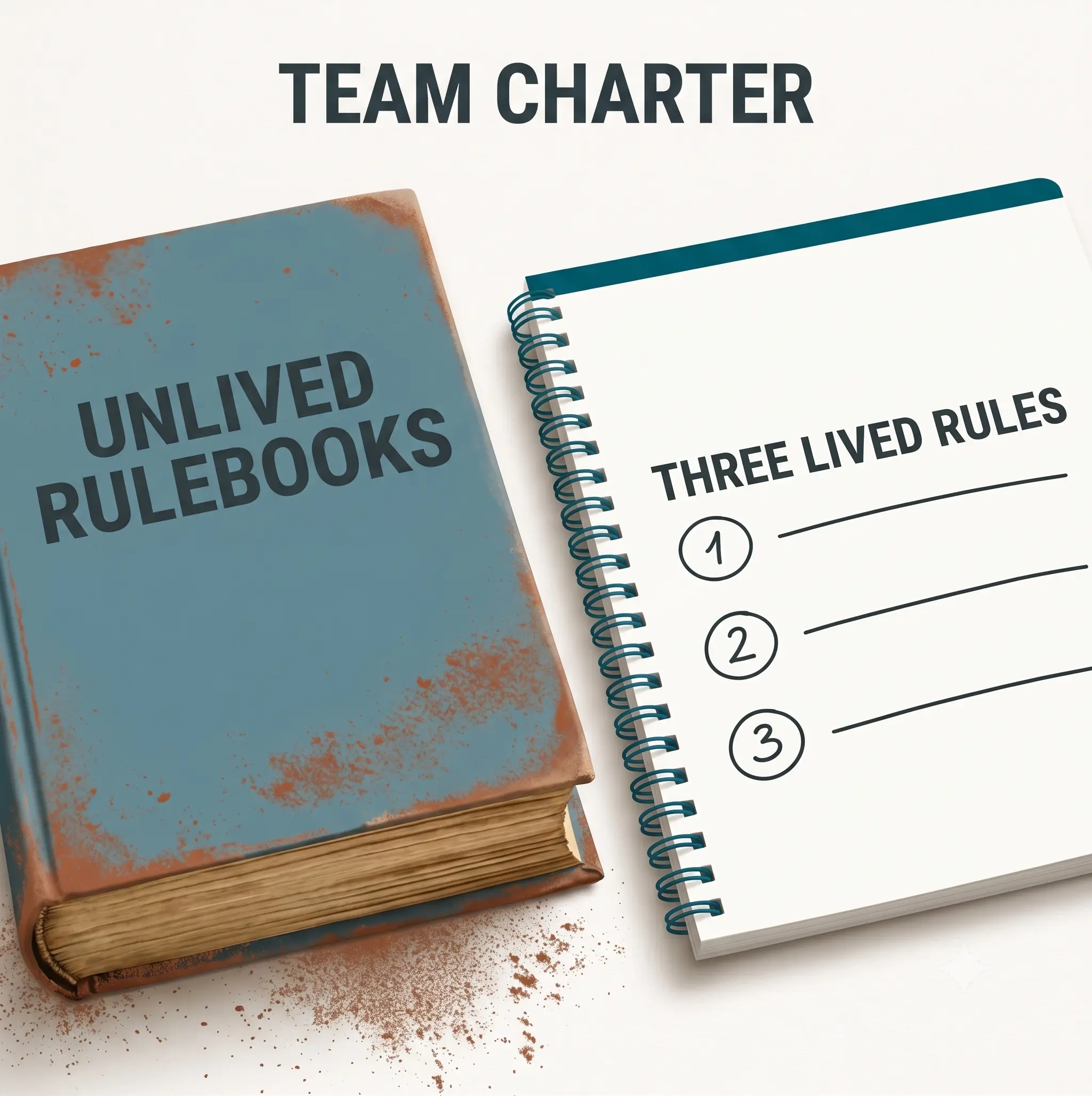
Two concrete starting points: a binding Team Charter that fixes how your leadership team operates, and the Accelerate Now programme that builds the decision-making capacity of the layer beneath you.
The Reality Check is remote and works across every time zone you operate in. The
practice supports CEOs, founders, and presidents throughout Germany, Austria,
Slovakia, the Czech Republic, Poland, Spain, and across Europe, as well as the USA,
Mexico, China, and India. Wherever your headquarters, your plants, or your hubs sit,
the room travels with you.
Where Are You Right Now?
Five questions, two minutes, a clearer picture of where the actual gap is.
1 of 5: When you sit in the car after the most recent board meeting or quarterly review, what is the dominant feeling?
2 of 5: How often do you have a conversation where you can say what is actually true, without filtering for the relationship?
3 of 5: When did you last completely lose track of time in your work, from genuine engagement, not exhaustion?
4 of 5: If you were genuinely unreachable for three weeks, what would happen to your organization?
5 of 5: How self-sustaining is your professional network and reputation, independent of your current title?
Three Situations. One Fundamental Question.
An Executive Sparring Partner Who Has Been Inside the Machine.
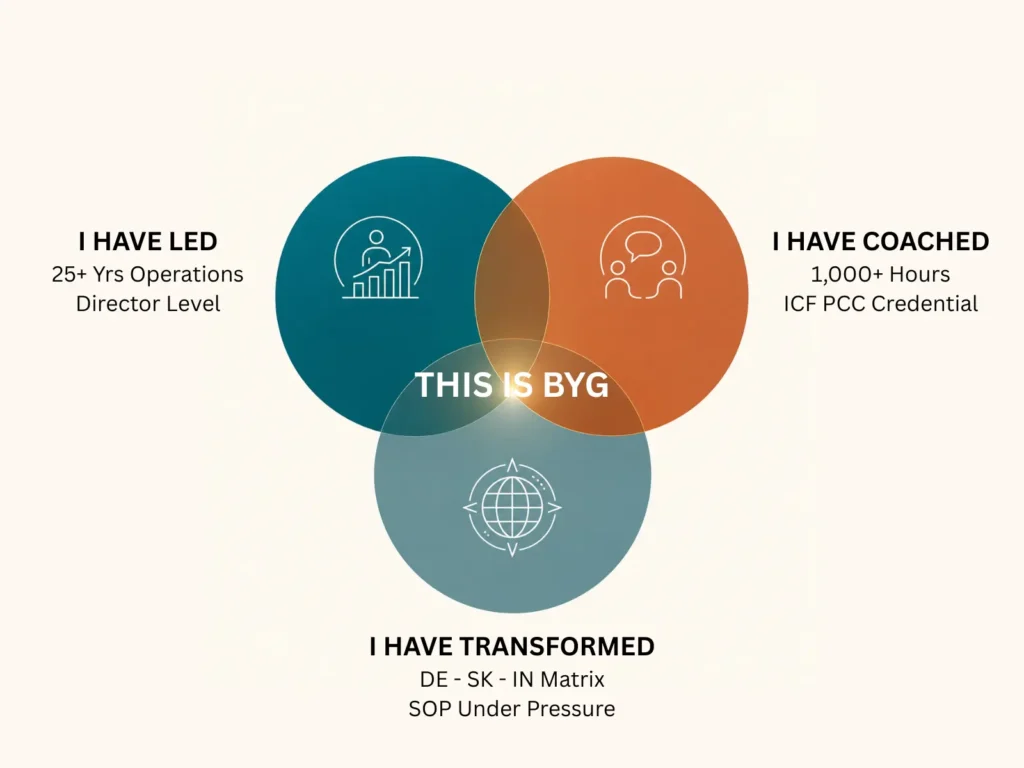
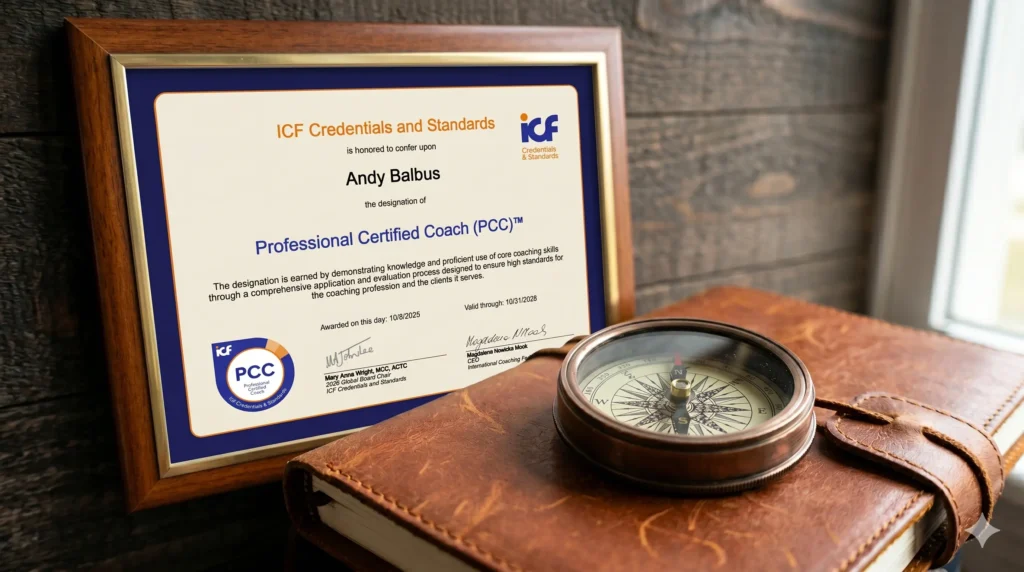
ICF PCC certified, awarded 2025, valid through 2028. On the path to the Master Certified Coach designation. 250+ hours of accredited coach education. 1,000+ documented coaching hours with real leaders under real operational pressure.
Available: Remote, worldwide. English and German. All sessions under the ICF Code of Ethics. Nothing leaves the room.
Verified Results.
FAQ: Direct Answers.
Q1: What is CEO coaching and how is it different from a business advisor?
A business advisor brings recommendations with an agenda attached. CEO coaching brings questions. At the level of complexity a CEO operates in, the problem is rarely a deficit of information. It is a deficit of honest space to think. The coaching creates that space. The decisions remain entirely yours.
Q2: Why call it executive sparring rather than coaching?
In many European and industrial contexts, coaching carries connotations of deficit. Executive sparring is the accurate description: a structured, challenging, agenda-free conversation that sharpens thinking under pressure. Both terms describe the same engagement.
Q3: Is this relevant for founders as well as corporate CEOs?
Yes. Founders carry the additional weight of organizational identity, the fact that the company is an extension of themselves. Corporate CEOs carry the weight of inherited structures and board accountability. Both produce the same structural gap: the absence of an agenda-free room where the real question gets asked.
Q4: What is the Second Mountain and how does it apply?
David Brooks' concept describes the recognition that the first mountain, achievement, status, and external success, was real and worth climbing, but not the final destination. The second mountain is built on contribution, alignment, and purpose. Coaching helps map it: what does leadership look like when built on what actually matters.
Q5: What is structural sovereignty?
The state in which your organization produces results independently of your daily presence. Coaching builds the architecture for the transition: delegation systems, cultural transfer, leadership development, and succession preparation.
Q6: What is the ROI of CEO coaching?
The ICF documents a median ROI of 7:1 for structured executive coaching. For CEOs, the return materializes in decision quality and strategic time recovered. 71% of CEOs who sought peer support reported improved company performance as a direct result. Source: Harvard Business Review.
Q7: Does this address burnout?
Yes, with a specific distinction. What CEOs more commonly experience is cognitive depletion from the absence of a private processing space. The 2024 data is stark: 55% of CEOs reported mental health issues, a jump of 24 percentage points from the prior year. Coaching is that processing space, regularly and confidentially, with someone who has no stake in the outcome.
Q8: What happens in the 30-minute Reality Check?
A direct diagnostic conversation. Not a sales call, not a methodology presentation. By the end, you will have at least one question you have not been asked before. No commitment required.
Q9: Is everything confidential?
Fully and contractually. All sessions under the ICF Code of Ethics. Nothing discussed is shared without your explicit agreement.
Q10: What languages?
English and German. Remote. Worldwide.
Q11: Can you work with a CEO and their leadership team separately?
Individual coaching is fully confidential and structurally separate from any organizational work. For organizational interventions, the Accelerate Now programme and Team Charter Workshop are the appropriate formats.
Q12: How is this different from a board advisor or executive mentor?
A board advisor brings fiduciary accountability. A mentor brings experience and advice. An executive sparring partner brings structural independence: the precondition for asking the question nobody else in your orbit can ask without a cost attached.

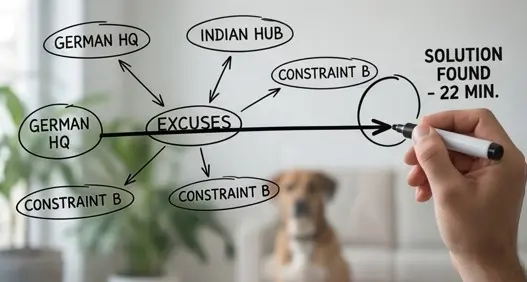
The 22-Minute Session.
The testimonial at the top of this page is not a marketing claim. It is a real session outcome, verified by the client and shared with their permission. A founder with three active companies had been carrying a strategic challenge for months. The challenge was not a lack of analysis or information. It was the absence of a structured space to think through what the analysis was actually telling him.
In 22 minutes, the precise location of the gap became clear. Not through advice or recommendations. Through a question that only someone who had been inside a similar situation could ask. The clarity that followed did not require more data. It required a different frame.
This is what executive sparring actually does at the senior level. It does not provide answers. It provides the question that makes the answer your own organization is already producing suddenly legible.
The Question That Has Not Been Asked Yet.
There is one question underneath the operational picture that nobody in your organization has the structural independence to ask. The 30-minute Reality Check is where it gets asked. Confidential. No commitment. Remote. English or German.
Or directly: founder_andybalbus@boost-your-growth.com | WhatsApp: +49 151 4495 7099
Not the Right Fit?
If the challenge is the transition from technical expert to leader:
Engineering Leadership Coaching: The Expert Paradox ›
If you are a female director navigating the structural visibility gap:

Regularly on site: Bamberg, Nuremberg, Zapfendorf, Bratislava, Prievidza, Barcelona,
Pune, Mumbai, Shanghai, Querétaro, and Pittsburgh.
Systemic leadership does not end after one call.
Follow for unfiltered insights and straight-talk strategies:


