
Three Evenings on the Schematic. The Headcount Conversation Did Not Happen.
Budget meeting next week. Headcount still on a list somewhere. And last night you were solving a technical problem because it felt more productive than anything else on the calendar.
That is the director’s trap. The technical work pulls you in because you are genuinely good at it and because the strategic work: the network conversations, alignment meetings, and opinion-forming before the agenda opens: feels slower, less concrete, harder to measure. But the resources that build your department do not come from the technical solution. They come from the conversations you are not yet having enough of.
The quality of your technical judgment does not hold back the department you want to build. What stalls your headcount, mandate, and strategic weight is the absence of conversations that carry your judgment into the actual decision-making rooms. Yet, every evening, you let the schematic replace those conversations.

How I Won Strategic Influence When Headquarters Said No.
Prievidza, Slovakia. HQ was skeptical. They said we were taking their work away.
When I was building the Electronics R&D department in Prievidza, the reaction from headquarters in Germany was not enthusiasm. The initial framing was that Slovakia was taking work away from Germany. From a purely technical standpoint, the case for the Prievidza team was clear. From a political standpoint, I was losing.
The shift did not come from a better presentation or a more detailed business case. It came from a single reframe in a single conversation. I stopped arguing for the Slovakia team and started showing what the Slovakia team meant for Germany. Two product lines fully owned and delivered by Prievidza freed German engineers for work only they could do. Not competition: capacity.
The resistance shifted within weeks. The resources followed. And the lesson transfers directly to your situation: you do not win resource conversations by defending your position. You win them by understanding what your position means for the person who decides.
That reframe is not a communication technique. It is a structural shift in how a director understands their role in the matrix. You are not fighting for your department. You are offering something the matrix needs. That understanding changes every resource conversation you will ever have.

The Informal Network Decides, Not the Better Business Case.
Technical education teaches precision. Management training teaches frameworks. Neither teaches the specific skill that determines whether a director gets what they need to build something real: the ability to build and invest in a network before you need it.
In every organization, the most important meeting is the one that happens before the important meeting. Budget decisions, headcount approvals, and strategic mandates are almost never made in the formal meeting where they appear on the agenda. They are made in the conversations that precede it: the corridor exchange, the bilateral lunch, the informal alignment between two senior leaders before the committee assembles.
The director who understands this architecture and invests in it does not have a political advantage.
They have a structural advantage. They are participating in the decision-making process at the level where decisions are actually formed, rather than at the level where they are formally confirmed.
The leaders who receive budget, headcount, and strategic mandate are not necessarily the most technically precise.
They are the ones who had the right conversations before the formal decision was made. The corridor conversation, the informal lunch, the side discussion that shaped what the committee would hear before the agenda was published. That is not political maneuvering. It is the operational reality of how organizations allocate resources.

Where Is Your Time Going?
Five questions, two minutes. A clear picture of where your time and your impact have come apart.
1 of 5: In the last month, how many hours did you spend on strategic stakeholder conversations versus technical problem-solving?
2 of 5: How would you describe your access to the informal decision-making process in your organization?
3 of 5: When you need budget or headcount approved, how does the conversation typically go?
4 of 5: How many genuine peer relationships do you maintain with people who influence resource decisions?
5 of 5: How does your organization perceive your role, as a senior technical expert or as a strategic leader?
Mentoring or Coaching: Why Mentoring Closes the Resource Gap Faster.
Coaching builds your own awareness about the problem. Mentoring transfers the operational shortcuts that close the gap directly. For the director's resource challenge, the question is rarely about self-awareness. It is about knowing the specific moves that work in your specific organizational context. That is mentoring territory.
What you get from this specific mentor:
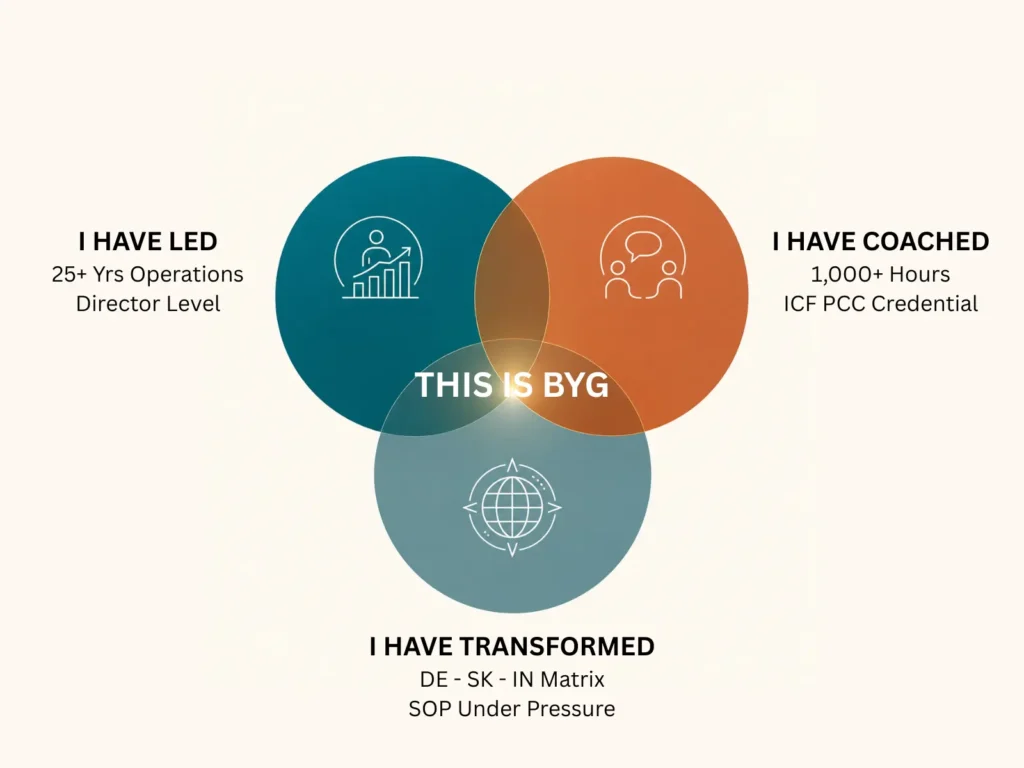
- Operational Reframing: The reframe that opened an entire R&D department in Slovakia when headquarters said no.
- Network Architecture: The stakeholder network strategy that survived a competitor recruiting half a team.
- Multi-Country Execution: The budget conversation sequence built across six countries and three continents.
Not as stories from the past, but as transferable methods applied to your exact organizational context in every session.
What the Mentoring Builds for Directors.
The Director's Calendar: Time for Strategy, Not Only Technical Work
A calendar dominated by technical firefighting signals that you are operating below director level. Reclaiming strategic time creates organizational credibility and relationship capital.
- Executive Visibility: Positioned in the rooms where decisions form rather than where they are confirmed.
- Protected Strategic Hours: Reserving 2 to 3 hours weekly for stakeholder alignment and strategic thinking.
The Director's Real Time Math
Directors stuck in operational work feel they lack time for informal network building. In reality, skipping stakeholder alignment costs far more time in formal escalations and rejected budget requests.
- Cost of Delay: Trading months of budget disputes for proactive pre-meeting consensus.
- Friction Reduction: Absorbing organizational friction early through informal corridor touchpoints.
Intercultural Leadership in the DE-SK-IN Matrix
Resource conversations across German headquarters, Slovakian engineering hubs, and Indian R&D centers require distinct cultural scripts to build lasting trust and momentum.
- Cross-Border Approvals: Securing informal consensus across multi-site international matrices.
- Contextual Intelligence: Navigating direct challenge in Germany versus deference dynamics in Asia.

What Changes After the Mentoring. Specifically.
A director reading this page deserves a concrete answer: what is different after six months of structured mentoring?

What a Leader Says About the Mentoring.

Director Mentoring FAQ: Direct Answers on Influence, Resources, and Matrix Dynamics
Clear, unfiltered guidance on navigating organizational politics, securing headcount, and mastering cross-border matrix alignment.
Q1: I am technically strong. Why do I need mentoring for the political side?
Because the political side is a learnable discipline, not a personality trait. Apply the same rigor you used to master your technical domain. What has been missing is a development plan for this specific competency. That is exactly what the mentoring provides.
Q2: I do not want to become political. I want to lead with substance.
Leading with substance is the goal. Network and alignment work does not replace substance: it ensures your substance reaches the people who need to act on it. Without the network, the best technical judgment stays inside your own department.
Q3: My organization runs entirely through formal processes. Does informal network still matter?
Formal processes are the visible layer. Every organization also has a layer of pre-meetings, aligned positions, and established trust that shapes what the formal process produces. Understanding that invisible layer is the director-level competency we develop.
Q4: How long before I see results in terms of actual resources?
What changes quickly, within the first two to three months, is the quality and frequency of the right conversations. Resource outcomes typically follow within one to two budget cycles when the groundwork is in place.
Q5: Is this only relevant for new directors?
No. Directors who have been in role for several years often carry patterns from their technical career that continue to limit their impact. The mentoring is as relevant for someone three years into the role as for someone entering it.
Q6: What about the intercultural dimension in a DE-SK-IN matrix?
The network and alignment work looks fundamentally different in Germany, Slovakia, and India. Trust is built differently, decisions are signaled differently, and pre-meeting dynamics operate on different rules. The mentoring addresses all three contexts from direct operational experience.
Q7: What is the difference between a mentor and an executive coach for this challenge?
Coaching builds your own awareness about the problem. Mentoring transfers the operational shortcuts that close the gap directly. For the director's resource challenge, the question is rarely about self-awareness. It is about knowing the specific moves that work in your specific organizational context. The Reality Check clarifies which fits.
Q8: How does this work if my organization has a very flat hierarchy?
Flat hierarchies have informal influence structures too. The absence of formal titles does not eliminate the dynamics of who gets heard, who has access to the decision-makers, and who is sponsored for the next opportunity. The mentoring maps whatever informal structure is actually operating.
Q9: Can this help with getting headcount approved specifically?
Yes. Headcount approval is one of the most specific and concrete applications of the resource-framing methodology. The mentoring builds the specific framing, timing, and relational groundwork for headcount conversations in your organizational context.
Q10: Is the mentoring confidential?
Yes. All mentoring engagements operate under strict confidentiality. What is discussed in sessions stays in sessions. This is a professional standard, not a preference.
Q11: What happens in the Reality Check?
Thirty minutes. I ask about your current situation, the patterns you are navigating, and the outcomes that matter most. At the end, I tell you directly whether this track fits and what the engagement would look like. No commitment required.

The Resources Come From Conversations You Have Not Had Yet.
That is the direct truth of this transition. Your department's expansion is possible. The path to it runs through a different use of your time than the one you are currently making. Let the schematic wait: the conversation that opens the headcount line cannot.
Direct Contact: founder_andybalbus@boost-your-growth.com | WhatsApp: +49 151 4495 7099
Related Methods
- Active Listening in the DE-SK-IN Matrix: Cross-border communication and alignment scripts.
- Conflict Architecture: Resolving structural matrix friction before budget escalations.
- SMART Goal Architecture: Translating executive mandates into concrete departmental key results.
Other Mentoring Tracks
- If the challenge is building team redundancy and distributed ownership:
Team Lead Mentoring › - If the challenge is the transition from technical expert to first leadership role:
Expert to Leader Mentoring › - You lead projects or coordinate departments:
Mentoring for Leaders with "Natural" Authority ›

Systemic leadership does not end after one call.
Follow for unfiltered matrix insights, strategic influence frameworks, and straight-talk director guidance:


