
Monday. 7:42. The Phone Rings. There Is No One Else.
The Single Point of Failure: When You Are the Only Backup Plan
Your key engineer’s child is sick. The project review is at ten. And the system you built has exactly one backup plan: you.
That moment, the one where the load transfers directly and entirely to you because no one else can carry it, is not a crisis. It is a diagnosis. The structure was never built for this. You were never supposed to be the permanent backstop for every decision, every escalation, every technical judgment call your team encounters.
You Are Not Failing: The Structural Transition Nobody Warned You About
In reality you are caught in the role transition from expert to leader, a first leadership role nobody warned you about. The technical excellence that built your career has become the exact behavior that blocks the next level.
Every problem you solve personally teaches your team to bring you the next one. Every calendar slot you fill with technical work is a slot that does not exist for the leadership work the role actually requires.
This role transition from expert to leader has a name, a structural cause, and a precise solution. The mentoring transfers it directly, from someone who lived it from the inside, whether in automotive, tech, or pharma.

The Day My Manager Took Me Outside.
The production hall had concrete bumpers on the outside where trucks would load. You could sit on them. My manager sat me down there and told me something that changed everything.
The Micro-Management Trap: Trying to Do Two Jobs at Once
When I first moved from software developer into a coordination role, I did not let go. I knew the codebase better than anyone. I had written most of it. The new engineers were doing things differently than I would have done them, and every difference felt like a risk.
So I watched everything. I commented on everything. I corrected things that did not need correcting. The friction this created was not just external. Trying to do two jobs at once, I was doing neither of them well. The burnout was not coming from volume. It was coming from the impossibility of the position I had put myself in.
The Ultimatum: Choose Developer or Leader, You Cannot Be Both
We sat on those concrete bumpers and he said, with complete calm: Andy, you have a choice. You can go back into the software developer role. That is a good role and there is no shame in it. Or you can take the leadership role. But you have to choose now, today, and you can only choose one.
The clarity of that moment was extraordinary. I had not understood that I was making the choice by default every day by refusing to make it explicitly. The moment I chose leadership, I had to let go of the software. Not gradually. Completely.
What happened next surprised me. The software got better. The engineers who were free to solve problems without my oversight grew faster than I had expected. The products they built had solutions I would not have found. The department became stronger because I had stepped back, not weaker.
That is the transition. Not the absence of expertise. The decision to trust other people with it.

Fifty Circles on a Piece of Paper.
In one of my first mentoring sessions with an engineer who had just stepped into a large leadership role, I asked him to draw his current team on a sheet of paper. A few circles around him, each one a person. He drew them quickly, no hesitation.
Then I asked him to multiply. Ten circles. Twenty. Fifty. The sheet was getting crowded.
The Scaling Paradox: Smartest in the Room vs. Building the Room
I asked one question: can you ever be the technical expert for every single one of those circles?
He looked at the paper for a long moment. Then he said no.
That was the moment the shift happened. Not because he heard a concept. Because he saw it, in front of him, as his own drawing. At scale, the leader’s job is not to be the smartest person in the room. It is to build the room that does not need you to be.
The Identity Shift: Why Letting Go Feels Like Grief
The most common reaction to this exercise is not relief. It is a kind of grief. The technical identity is real. It was built over years of hard work and it produced genuine results. Letting go of it does not feel like a promotion. It feels like a loss.

The Structural and Financial Reality of the Role Transition.
The Expert Paradox is not a personal failure. It is the most documented and most expensive leadership transition in technical organizations worldwide.
The True Cost of “Protection with a Leadership Title”
The laptop at 23:00 is not a sign of dedication. It is a sign that the transition has not yet happened. The system is running on one person’s willingness to absorb what the structure is not carrying. That is not sustainable, and it is not leadership. It is protection with a leadership title.
Every escalation that lands on your desk because your team has learned to wait for your answer is a measurable cost. Every engineer who disengages because their development is blocked by a leader who absorbs everything is a retention risk with a calculable price tag.

Where Are You in the Transition?
Five questions, two minutes, a clear picture of where the pattern is active.
1 of 5: When a critical technical problem lands on your desk, what is your first response?
2 of 5: How clear is the answer to this question: why do you want to lead?
3 of 5: When a team member produces work that is different from how you would have done it, but functionally correct, how do you react?
4 of 5: Think about Monday morning at 7:42. A key team member calls in sick. The project review is at ten. What happens?
5 of 5: How would your team describe your leadership style if they were completely honest?
What Nobody Tells You Before Your First Leadership Role Begins.
The Relationship You Skip Is the One You Will Need in a Crisis.
In the first weeks of a new leadership role, the to-do list is overwhelming. Process knowledge. Stakeholder mapping. Project status. Tooling. Reporting lines. The human contact with your own team members, the one-to-one conversations that have no deliverable, no action item, no outcome to log, feel like they can wait.
They cannot. The relationship you do not build in the first ninety days is the one that will not carry weight when a project burns in month seven. The team member who does not know whether you are genuinely interested in them as a person will not tell you the real problem. They will tell you what they think you want to hear. And you will get the Green-Melon Effect before you understand how it works.
The investment in personal contact is not a soft priority. It is the structural foundation for every hard conversation, every difficult delegation, every moment where you need someone to go the extra mile because the situation is genuinely critical.
Your Team Is Watching How You Handle the First Mistake.
Before your first direct report makes a visible error, your team has already formed a hypothesis about what will happen when one does. They are watching everything: how you react to near-misses, how you speak about problems in team meetings, how you respond when someone brings you a partial answer.
The first significant mistake somebody makes on your watch is not primarily a technical event. It is a cultural calibration moment for the whole team. If you step back in and fix it yourself, the lesson is clear: ownership was provisional. If you respond with genuine curiosity about what was learned, the lesson is different. The team that trusts you will always outperform the team that fears you, particularly in the moment when the project is already on fire.
The Silent Period Is Not Absence. It Is Pressure.
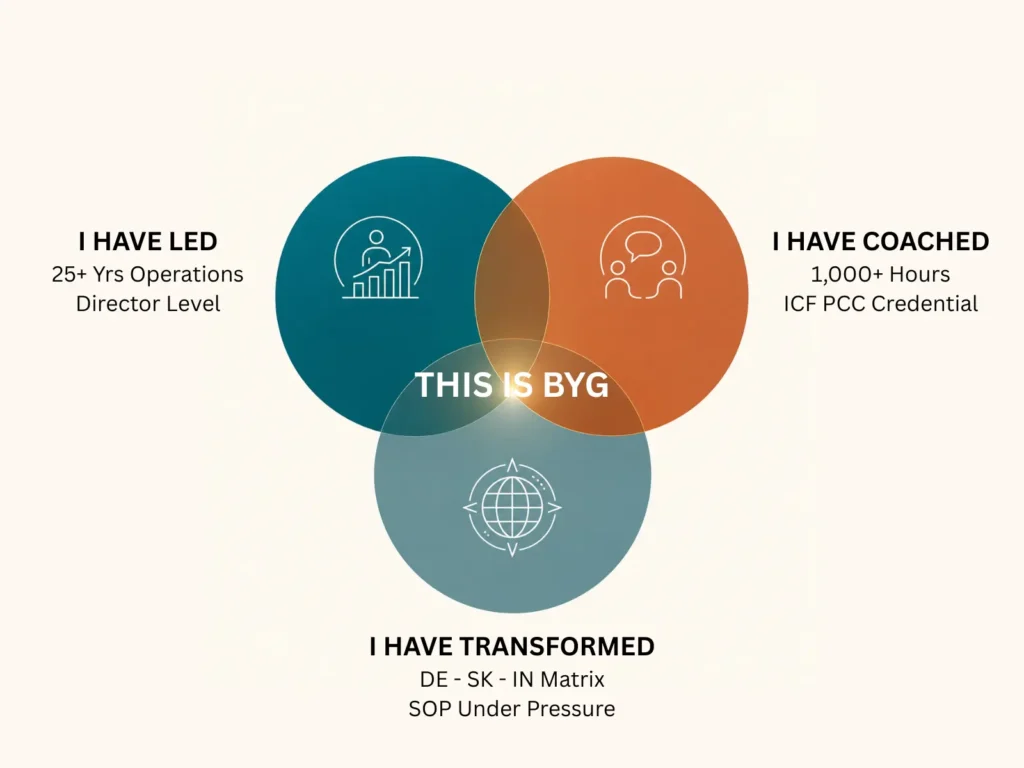
When a German engineer goes quiet in a meeting where something is being decided, it is rarely indifference. It is often disagreement processed internally, a reservation that has not found the form to become a statement. The new team lead who misreads this silence as consent will discover the problem three weeks later when the implementation reveals the gap.
Learning to read your team's specific silence patterns is one of the earliest and most practical skills the mentoring addresses. Every team has them. And in a DE-SK-IN matrix, silence means structurally different things in each cultural context.
Learning to Delegate: It Starts With the Person, Not the Task.
The first time you delegate something that matters to you, the instinct is to make the handover as clean as possible. Precise brief. Clear deadline. Defined output. All correct, and not sufficient.
What the mentoring adds to that checklist is the conversation before the checklist: do you know whether this person has done something like this before, what they find genuinely difficult, what their relationship to failure is. Delegation without that knowledge is task assignment. With it, it becomes development. The outcomes diverge significantly within weeks.
Your Technical Opinion Will Be Heard Differently Now.
Before the leadership role, your technical judgment was one voice among several. After the role, it carries positional weight even when you do not intend it to. A comment like 'I would have done it differently' lands differently when it comes from the person who controls someone's project assignment and performance review.
Many first-time leaders lose team members' intellectual initiative within the first six months without understanding why. The engineers have not become less capable. They have learned, quite rationally, that bringing a non-standard solution is risky. The mentoring builds the specific language patterns and meeting behaviors that reinvite genuine technical input from people who have started self-censoring.

The Loneliness of Leadership: From 'I Am Alone' to Knowing Who to Reach Out To.
First-Time Manager Isolation: The Pressure You Cannot Share Up or Down
Here is something nobody says out loud before the first leadership role: as a leader, you often feel alone. The responsibility, the pressure, the decisions, all of it converges on one point, on you. You cannot show the team every worry, and you cannot show your own manager every doubt. The old phrase, it is lonely at the top, describes something real, and it begins long before the top, in the very first leadership role.
I know this feeling from my own experience. What I learned, and what the leaders who worked with me learned, is simple and changes everything: you are not meant to carry it alone. There are peers who know the same pressure. There are mentors who have walked the path ahead of you. That is exactly what I do today.
Confidential Leadership Sparring: From Isolation to Strategic Clarity
The moment you understand that reflection space and a confidential sparring partner are not a weakness but a tool, something shifts. 'I am alone' becomes 'I know who to reach out to in order to move forward.' Your perspective widens, your capability grows, and decisions get clearer. The mentoring is exactly that space: an external, confidential place to think out loud, with someone who knows the position from the inside.
The Right Instrument for This Transition.
Why Pure Coaching Is Not Enough for Operational Transitions
Coaching builds your own awareness about the problem. It follows your problem through questions and helps you find your own answer. That is genuinely valuable for certain kinds of challenges.
The Expert-to-Leader transition is different. It is not primarily a self-awareness challenge. It is an operational one: you need the specific sequence of behavioral changes, the delegation architecture, the team development framework, and the cultural intelligence that makes the transition work in your exact context. That is not something questions reveal. That is something experience transfers.
Industrial Mentoring: Direct Experience Transfer Over Questions
Industrial Mentoring is direct transfer. I share what worked, what failed, and what I would do differently if I were in your exact position today. I give specific guidance and define concrete next steps. For this transition, that direct operational transfer is the shortcut that makes the difference between a six-month stumble and a structured path forward.
What the Mentoring Builds for Your First Leadership Role.
The Decision, Made Explicitly: Leaving the Half-Step Behind
Most engineers who move into leadership make the transition by half-steps. They keep one foot in the technical role because it feels safer, more familiar, less exposed. The mentoring begins with making the choice explicit, not as a permanent loss of technical identity but as a structural commitment to a different kind of contribution. That clarity alone changes the behavioral pattern, often within weeks.
The Decider-Mentor-Coach Framework: Choosing the Right Response
Not every situation requires the same leadership response. Some decisions belong to you. Others belong to your team, with you in a mentoring role. Others need only a question that helps the engineer find their own answer. The framework gives you a deliberate structure for choosing the response that develops the team rather than the one that solves the problem fastest.
Applied consistently, it rebuilds the team's relationship to problem-solving within months. The engineers begin to bring you their thinking, not their problems. That is the behavioral shift the transition requires.
Structured Delegation: Transferring Accountability, Not Just Tasks
Delegation is not assigning tasks. It is transferring ownership in a way that the person can genuinely carry it. The mentoring transfers the specific delegation architecture built on the experience of taking a department from zero to forty engineers without becoming its permanent technical bottleneck.
The most common delegation failure in the Expert-to-Leader transition is not a failure to delegate tasks. It is a failure to delegate accountability. The leader assigns the task but retains the decision-making authority, the quality judgment, and the right to override. The team member executes without owning. When the result differs from what the leader would have produced, the leader steps back in and corrects it. The lesson the team member absorbs is that their ownership was provisional.
Building real delegation requires one additional element: the explicit transfer of the right to be wrong within defined parameters. The team member who knows they have genuine authority to make a suboptimal decision and learn from it builds capability at a fundamentally different rate.

The Development Conversation: GROW for Engineering Teams
Status Updates vs. Developmental Growth: The GROW Framework
The specific skill that converts the Expert-to-Leader transition from aspiration into operational reality is the development conversation: the regular, structured interaction with each team member that builds their capability without removing their ownership of the problem.
Most technical leaders who try to have development conversations end up having status update conversations instead. The questions default to: where are you with this, what are the blockers, how can I help. These are useful, but they are managerial questions, not developmental ones. The developmental question is: what would you do if I were not available, and why?
The GROW model, applied to engineering development conversations, provides a specific structure. The Goal question establishes what the engineer is trying to achieve. The Reality question surfaces where they actually are. The Options question opens space for their own problem-solving rather than your answer. The Will question closes with a specific commitment they own.
Applied consistently, this structure does two things over time: it builds the engineer’s autonomous decision-making capability, and it changes their relationship to escalation. When the Monday 7:42 call does not happen because the engineer knows how to handle the situation themselves, that is the GROW framework operating at scale.
The Cross-Cultural Dimension: Leading in the DE-SK-IN Matrix
The delegation architecture looks different in each cultural context of the DE-SK-IN matrix. German engineers typically require clear technical standards and explicit quality criteria before they accept full ownership. Indian engineers often need the relationship established before they will operate with genuine autonomy. Slovak teams typically respond well to explicit accountability frameworks and clear escalation protocols.
The mentoring transfers the specific delegation language and framework for each context, calibrated from direct operational experience in all three. The goal is not to override cultural dynamics but to work within them while building the distributed ownership the transition requires.

When the Team Makes a Mistake.
The Instinct to Intervene vs. The Developmental Response
The moment that defines whether the Expert-to-Leader transition holds or collapses is the first significant mistake made by someone you delegated to. The technically precise leader’s instinct is to step back in, correct the mistake, and ensure it does not happen again by resuming direct oversight. This response feels responsible. It is structurally counterproductive.
The developmental response is different. It begins with one question: what did they learn from this, and how do I structure the conversation so that learning is durable? It continues with accountability: this was your decision to make, this was the outcome, what would you do differently next time? Ultimately, it closes with continued confidence in the mandate: you still own this workstream, and I still expect you to make the decisions.
Executive Judgment: Knowing When to Tolerate and When to Intervene
This response is harder than stepping back in. It requires tolerating a suboptimal outcome in the short term to build a more capable team in the medium term.
The mentoring builds the specific judgment for when to tolerate and when to intervene. Not every mistake should be left to stand. The judgment about which mistakes are developmental and which require intervention is the director-level skill that separates leaders who build strong teams from leaders who build dependent ones.

FAQ: Frequently Asked Questions: Clarity Before You Begin Your Transition.
Q1: I have been told I am too technical. Is this the same problem?
Often yes. Being told you are too technical in a leadership role usually means the transition is already visible from the outside. The mentoring addresses the structural and behavioral patterns underneath that feedback, not just the surface symptom.
Q2: My team is technically weaker than I am. How do I delegate if they cannot do it as well?
This is the most common objection. The team's capability does not develop while you are covering for it. Delegation builds the capability that justifies itself over time. The mentoring builds the specific development architecture that makes this work, including how to handle the suboptimal result that will come in the first weeks.
Q3: How do I build relationships in the first 90 days when everything is on fire?
You do not wait for quiet. There is no quiet in the first year. The investment is small but deliberate: fifteen minutes per week per person, focused on them as a person rather than as a project resource. The structural return on that investment, in the form of honest escalations, genuine ownership, and loyalty under pressure, begins to show within sixty days.
Q4: From peer to manager: how do I handle the shift in authority?
This is one of the most specific challenges of the first-time leader, and it has no generic answer. The transition from peer to leader requires a deliberate conversation with each person, an explicit acknowledgment of what changes and what does not. The mentoring builds the specific language for that conversation in your team's cultural context.
Q5: I am not yet in my first leadership role. Am I too early?
No. Leaders who begin this work before entering the role make the transition significantly faster. The patterns form early and addressing them before the formal responsibility begins is the most efficient path.
Q6: What happens when the team makes a mistake because I delegated?
Mistakes are the cost of building capability. The mentoring addresses exactly how to handle them: the specific conversation, the accountability structure, and the decision about whether to let the consequence stand or intervene. The judgment about which mistakes are developmental and which require intervention is the skill we build together.
Q7: How do I know when I have completed the role transition?
The clearest signal is behavioral, not emotional. The Monday 7:42 call either does not happen or it is handled by someone else before it reaches you. Escalations decrease not because problems decrease, but because the team has built the habit of deciding. And your calendar starts to carry a different kind of work.
Q8: How is mentoring different from a leadership course for the first leadership role?
A course gives you frameworks for the generic case. Mentoring gives you those frameworks applied to your specific people, your specific technical domain, and the specific moment you are currently in. The transfer is direct, not conceptual.
Q9: As a technical expert, what if I do not want to give up the technical work entirely?
The transition is not about giving up technical expertise. It is about changing how that expertise is applied. Senior technical leaders maintain and develop their domain knowledge while changing how they contribute it, from direct problem-solving to enabling and developing others. The mentoring helps design that specific balance for your situation.
Q10: How is the DE-SK-IN cultural dimension relevant to this transition?
The Expert-to-Leader transition looks different in each cultural context. German engineers typically expect precise technical standards from their leaders. Indian engineers often navigate a more indirect relationship to authority. Slovak teams operate with their own specific dynamics around escalation and initiative. The mentoring addresses all three from direct operational experience in each country.
Q11: What does the Reality Check involve?
Thirty minutes. I ask about your current situation, the patterns you are navigating, and the outcomes that matter most. At the end, I tell you directly whether this track fits your situation. No commitment required.
Q12: What are the priorities for the first 90 days as a new leader?
The first 90 days shape how your team, your peers, and your leadership perceive you. The most common mistake is to start changing things before you understand them. In the mentoring we build your specific plan: listen and read your team's patterns, build the right relationships first, secure early visible results, and make the choice between the technical and the leadership role explicit before the calendar makes it for you.
Q13: As a leader, I often feel alone. Is that normal?
Yes, and you are not alone in feeling it. The loneliness of leadership comes from responsibility and pressure converging on one point, on you, and from not being able to show the team or your own manager every doubt. The decisive step is understanding that you are not meant to carry it alone: there are peers who know the same pressure, and mentors who have walked the path ahead of you. That confidential reflection space is exactly what the mentoring builds. 'I am alone' becomes 'I know who to reach out to in order to move forward.'

The Team That Runs Without You Is the Goal.
Not because you are not needed. Because you have built something that carries itself, and that frees you to do the work that only a leader can do: developing people, building the network, and creating the conditions for the next transition.
The concrete bumpers outside the production hall pointed toward that. Ultimately, your situation has its own version of that conversation waiting. The 30-minute Reality Check identifies precisely where you are in the transition and what the first structural move is.
Or reach out directly: founder_andybalbus@boost-your-growth.com | WhatsApp: +49 151 4495 7099
Go deeper: Active Listening, Uncompromising Delegation, Conflict Architecture, Intercultural Mentoring, Case studies
Where This Programme Runs: Global Matrix Reach
I built this work along the Germany, Slovakia, and India axis, in Prievidza and Bratislava, in Pune and Mumbai, and across the German industrial belt around Bamberg, Nuremberg, and Zapfendorf, where I made this shift myself.
From there the reach extends on purpose: across Europe into Austria, Spain with Barcelona, the Czech Republic, and Poland, and beyond the continent into China with Shanghai, Mexico with Querétaro, and the USA with Pittsburgh. Because the programme runs live online and worldwide, the cohort holds wherever your matrix sits, and for on-site delivery I come to you, including the Bangalore on-site with Ruchikka Kar.

DEEP DIVE METHODOLOGIES
- Uncompromising Delegation Architecture: Transfer ownership safely without losing technical quality control.
Delegation Method › - Active Listening in Cross-Cultural Matrices: Uncover hidden friction and unspoken reservations across DE-SK-IN teams.
Active Listening Framework › - Conflict Architecture & Resolution: Navigate organizational friction without political damage.
Conflict Architecture › - SMART Goal & Capability Architecture: Align technical deliverables with long-term team capability building.
SMART Goal Architecture ›
TAILORED MENTORING TRACKS BY ROLE & SCOPE
- Director Mentoring Track: For experienced leaders scaling departments, building redundancy, and managing multiple team leads.
Explore Director Track › - First-Time Team Leader Mentoring: For technical experts stepping into their first formal people management responsibility.
Explore Team Leader Track › - Mentoring for Leaders with "Natural" Authority: For senior engineers, architects, and coordinators leading without formal disciplinary title.
Explore Natural Authority Track ›
Leadership Growth Is a System, Not a Single Event.
Get weekly, unfiltered execution strategies on engineering leadership and matrix dynamics:


