
Summary
Leading a Task Force: A single phone call can turn green into red, putting your production and millions of dollars at risk. In a crisis, the first 72 hours dictate whether you manage the situation or chase it. Reacting under acute stress guarantees poor decisions. Master the crisis protocol: take a moment to clear your head, assess the reality on site, map the actors, and turn intentions into accountability through binding, written decision protocols.
One call. Green turns red. And suddenly every eye is on you.
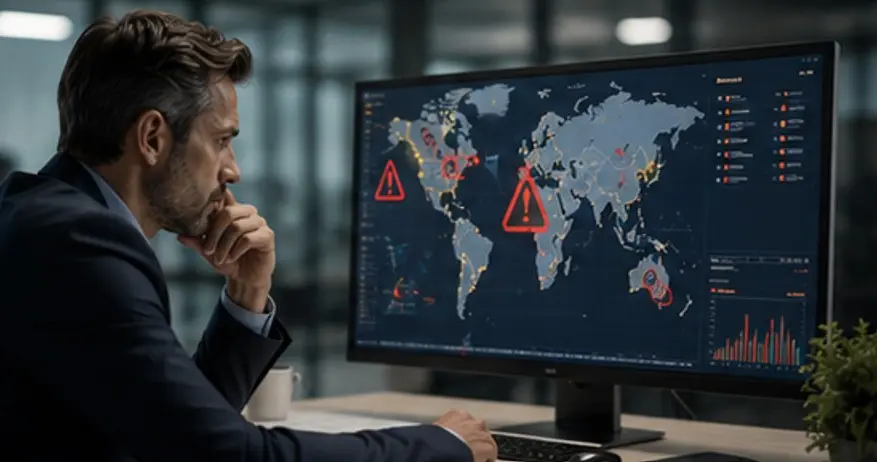
This post is written for leaders who did not see a crisis coming and still have to decide in the next few hours. For the project lead whose supplier fails without warning. For the site leader whose line stands still while the clock runs. And for anyone who knows that the first hours of a task force decide whether the crisis becomes a manageable situation or a wildfire.
Why the first 72 hours decide everything
In a crisis, time is not a neutral backdrop but the most expensive factor of all. Every hour without clear leadership costs money, trust, and room to maneuver, and the longer nobody takes structured charge, the more options fall away. The first 72 hours are the window in which it is decided. Whether a task force orders the situation or chases after it. And the most important switch in that window is not thrown at the end but in the first minutes, in the head of the person who leads.
When green turned red in a single phone call
The call nobody expected
My name is Andy Balbus. In my time as a test-engineering coordinator I was, among other things, responsible for procuring inspection and test systems for our sites. I have touched on one of these cases before in the post on SOP delay. A supplier did not inform us on its own, and only when I asked whether the delivery was on its way did it emerge that there was a delay and nothing was finished. In a single phone call the situation flipped from green to red.

The shock and the anger
What happened in that moment is familiar to anyone who has ever taken such a call. First I had to digest the new situation at all, because I had not expected it. Once the shock minutes were over, I felt an incredible anger, because it borders on malice for a supplier to let the customer, in this case me, hit the wall like that. Yet none of that helped the matter, and that was exactly my first and most important lesson.
Get a coffee and become clear again
In precisely these situations only one thing truly helps: take the message, get a coffee, enjoy it in peace for 15 minutes, and become clear-headed again first. Everything I do before that moment is reaction and emotion, and both are unspeakably unnecessary and wrong in a crisis. It sounds easier than it is, and I too had to learn it. But I did learn it, and it helps me to this day in every difficult situation.

From reacting to acting
Only once I was calm myself did I begin to act. At the time I worked for internal customers, it concerned their test benches, so I announced an on-site visit at the supplier, if possible the very next day. A situation like this can be judged far better with real impressions of the test machine’s progress than over the phone. On site I assessed the actual situation, built a realistic project plan on that basis, and brought in purchasing to raise the pressure and signal clearly to the supplier that this was now a priority. And with all this groundwork done, I informed my internal customers, created clarity, and checked fallback options, up to renting external lab space and equipment.
You are in such a situation right now, or want to be ready for the next one? Then let us look together at your crisis protocol for the first hours. The Reality Check is a 30-minute diagnostic conversation, no slides, no sales pitch.

What the numbers say about the crisis clock

2.3 million per hour: what standstill really costs
Why the first hours are so expensive shows up in a look at standstill. The “True Cost of Downtime” report by Siemens from 2024 puts the cost of an idle production line in the automotive industry at up to 2.3 million US dollars per hour. That figure has risen by 113 percent since 2019, while inflation over the same period ran at 19 percent. The reason lies in just-in-time logic and tightly linked supply chains: when one link fails, the whole chain soon stops. In this arithmetic, every hour a task force is not yet able to act is immediately measurable in money.
Why stress forces the worst decisions
That is exactly why the second figure matters, because it explains why rushed action makes the situation worse.
A 2025 study published in Communications Psychology from the Nature portfolio examined how acute stress affects the quality of decisions. The result: under experienced time pressure, decision quality drops measurably. Physiologically, the first fight-or-flight response does subside within minutes, but the stress hormone cortisol stays elevated for another 40 to 60 minutes afterward. So whoever makes the fundamental decision in the first hot minute decides with the worst tool available to them. My coffee was never an excuse but the practical answer to exactly this biology.
Three Honest Questions Before You Read On
If you hesitate on one of these questions, the next section is for you.
The BYG crisis protocol for the first 72 hours
1. The head first, then the hand
Step one is the one most people skip: decide nothing before the head is clear. Take in the bad news, deliberately step back for a moment, and let the first stress response subside before you throw the first switch. That is not wasted time but the precondition for every good decision that follows. How to keep your composure in charged moments and stay clear anyway is deepened in the post on setting boundaries as a leader, and the inner calm behind it is part of what the Accelerate Now program builds as emotional leadership capability.
2. The mind map of all actors and the on-site assessment
Step two creates overview instead of panic. Draw a mind map of all actors the crisis touches: the cause, the affected, the deciders, and the possible fallback sources. Then get a real picture of the situation, ideally on site, because a crisis can be judged far better with real impressions than over the phone. Which points count first is sorted by the Eisenhower prioritization, and to capture the true cause rather than just the symptom, the techniques from active listening and open-ended questions help. Where the crisis grows out of friction between interfaces, industrial conflict architecture is the lever.
3. Binding decision protocols in the words of those responsible

Step three turns intention into accountability. Build a robust plan on the basis of the real situation and record every decision in writing, with an owner, a date, and a next step, phrased in the words of those responsible themselves. In parallel, raise the pressure at the right point, for example through purchasing, to signal priority unmistakably, and inform the affected only once you have checked clarity and fallback options. Measurable stages for this are provided by the SMART method, the structured stock-taking by the GROW method, anyone who does not work the points off alone but hands them over clearly will find the craft in uncompromising delegation, and that a team names problems openly in a crisis only when it feels safe is shown in the post on psychological safety.
You want a crisis protocol that truly holds when it matters?
Go to Accelerate Now: lead the task force with composure ›
Voices from the Field
Why these two voices on a page about leading a task force? Vasanth Suratkal Kamath, President of Brose India, has known Andy across more than a decade of cross-site collaboration and points to exactly what holds a task force together in the DE-SK-IN network: intercultural collaboration, genuine listening, and the ability to lead people across multiple geographies. Neeki Singh, in turn, describes how perspectives shift through the work with Andy, and exactly this ability to turn a crisis situation back into something shapeable is the heart of every good task force.
FAQ: Straight Answers to Skeptical Questions
Q1: What does it mean to lead a task force?
To lead a task force means, in an acute crisis, to steer a time-limited team so that chaos turns back into a manageable situation. It is not about solving every problem yourself but about getting the right people to the table, making decisions binding, and setting priorities clearly. The difference between good and bad task-force leadership is usually decided in the first hours. More terms around crisis and leadership are explained in the glossary.
Q2: Why are the first 72 hours so decisive?
Because in that time most options are still open and the damage can still be contained. Every hour without clear leadership costs money and room to maneuver, especially in the automotive industry, where an idle line costs up to 2.3 million US dollars per hour according to Siemens. Whoever uses the window of the first 72 hours orders the situation, whoever lets it pass chases after it.
Q3: Is the coffee moment not simply wasted time in a crisis?
The opposite is true, and research confirms it. Under experienced time pressure, decision quality drops measurably, and the first stress response only subsides after minutes. Whoever makes the fundamental decision in the first hot minute decides with the worst tool. A short, deliberate moment of composure is therefore not a delay but the fastest route to a good decision.
Q4: What is a mind map of all actors and why do I need it?
The mind map of all actors is a quick overview of who the crisis touches: the cause, the affected, the deciders, and the possible fallback sources. It prevents you from having to work out in the middle of the fire who belongs at the table. In my supplier crisis these were the supplier, purchasing, my internal customers, and the possible external lab providers, and that overview carried the entire response.
Q5: What are decision protocols in the words of those responsible?
These are decisions recorded in writing, phrased not in the language of leadership but in the words of the one who implements them. Every decision gets an owner, a date, and a next step. The advantage: whoever records a decision in their own words has truly understood and owned it, instead of merely nodding. How vague intentions become binding agreements is anchored in the Team Charter Workshop.
Q6: Should I not inform everyone at once in a crisis?
Not at once, but as soon as you have clarity. Whoever informs the affected before assessing the situation and checking fallback options spreads panic instead of orientation. In my crisis I informed the internal customers only once I knew the actual situation, had a realistic plan, and knew what fallback options existed. Clarity before communication is not reticence but leadership.
Q7: When should I bring in purchasing or other functions?
Once the plan stands and you know what pressure is needed where. Purchasing is a strong lever to signal to a supplier that a topic is now a priority. The order matters: first assess the situation and build the plan, then apply pressure deliberately, not the other way around. Untargeted pressure in a still-unclear situation burns credibility you will need later.
Q8: How do I stop the task force itself from becoming chaos?
Through clear roles and binding protocols instead of frantic busyness. A task force turns chaotic when many react at once without anyone keeping the overview and writing decisions down. The mind map orders the actors, the decision protocols order the resolutions, and the calm leadership at the top orders the pace. Without these three elements a crisis team quickly becomes a second source of fire.
Q9: Does this protocol apply across sites and cultures too?
There above all. In a crisis across borders, different communication styles and time zones collide, and without a shared structure the chaos amplifies. A written decision status, visible to all, replaces the closeness that is missing in a distributed team. How leadership from the German HQ across the sites works is shown by executive sparring Germany HQ, and how dissent becomes sayable across cultures by intercultural mentoring.
Q10: What do I do if I did not cause the crisis myself?
You take the lead anyway, because in a crisis what counts is not the question of blame but the ability to act. Working out who is responsible for the error has its place, but only after the situation is stabilized. In my supplier crisis the cause lay clearly with the supplier, and still it was on me to protect my customers and build a solution. Taking responsibility and carrying blame are two different things.
Q11: How does BYG concretely help with leading a task force?
The core is the Accelerate Now program, which builds the emotional and methodical leadership capability for exactly such situations. For steering distributed crises from the center there is executive sparring Germany HQ, and how such situations turn out in real starting conditions is shown in the case studies.

The next step out of the crisis
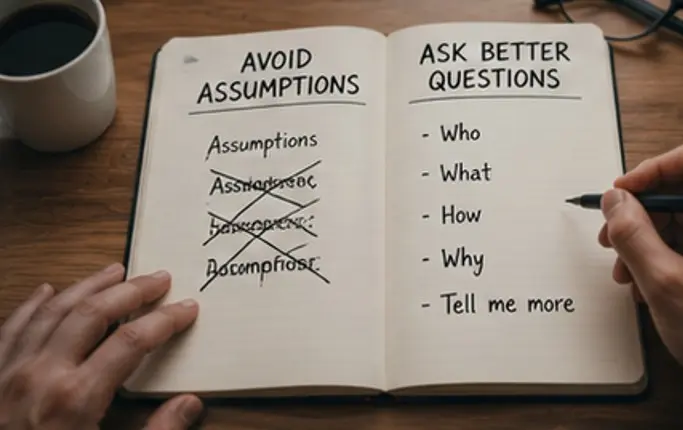
If this post describes your situation, start where the first hours decide everything: with the Accelerate Now program, which prepares you for task-force leadership, or with the individual work on your leadership under pressure in engineering leadership coaching. The mindset behind it is described in the BYG core principles, anyone who wants to develop team leads toward calm crisis leadership will find the frame in team lead mentoring, and if everything operational burns at once for you, the post on the Chief Firefighter Syndrome is worth a look.
About the author: three worlds in one crisis
You do not lead a task force from a textbook but from the experience of many real crises. Andy Balbus brings together three worlds that rarely meet in one person: 25+ years of operational automotive responsibility with 150M € revenue accountability and an R&D hub of 40+ engineers built greenfield, the methodology of an ICF PCC certified coach with more than 1,000 hours, and the intercultural perspective of four years as the accountable executive in Slovakia plus two years in Pune, with experience across DE, SK, IN, CN, MX, and UK. He has lived through the call that turns green to red, and knows which calm and which structure make the difference afterward.
Results or Excuses: The Reality Check
The next crisis does not announce itself, it simply calls. The Reality Check is a 30-minute diagnostic conversation: you bring a situation where green once turned red for you, and together we look at what your protocol for the first hours has to be, with the combined view from leadership, coaching, and culture change. No slides, no sales pitch, only your reality and a clear plan for the emergency.

Systematic Leadership does not end with a phone Call.
Follow Andy for more Perspectives and Insights.


Leave a Reply