
Summary
Burnout Prevention for Leaders: Burnout prevention is not just about self-care; it is a structural leadership issue. When you do the work of two roles, you lack the energy to notice your own exhaustion until it is too late. Unmanaged chronic stress damages your health and your team’s stability. Learn to hand over your second role cleanly, establish a trusted external sounding board, and treat recovery as a learnable skill rather than a weekend hobby.
You will not notice the signals. Not through carelessness, but because the very energy needed to read them is already spent.

Burnout prevention for leaders is usually treated as a question of self-care. That framing falls short, because the cause rarely sits in character and almost always in the system of roles, expectations and ownership somebody works inside. Anyone who wants to talk about limits therefore has to talk about leadership rather than about good intentions.
This article is written for you if you carry two roles while one was agreed. It applies equally when your week has been running at the limit for months and you treat that as a temporary phase, or when you notice something about a person on your team that you cannot quite name.
One clarification up front, because it belongs to the subject: this is about professional leadership practice and leadership development. I am not a psychologist and not a therapist, and this article replaces neither medical assessment nor treatment. Physical or mental symptoms belong in medical hands. What belongs here is the question of which working system produces those symptoms, and that question can be answered from the leadership side.
Why I Failed to Read My Own Signals
Two Roles Where Only One Was Required
Moving from test rig software developer to Coordinator Test Engineering, I kept the old role. Formally that was never the plan, in practice nobody stopped it, myself included. So I held two jobs, one assigned to me and one I kept because I did not want to let it go.
The Sentence That Extended Everything
Behind it sat a conviction I mistook for professionalism: only I can deliver this. The sentence is comfortable because it feels like accountability.
What it actually does is bind all available energy inside daily operations, precisely the energy you would need to examine your own behaviour.
Why I Did Not See the Signals
The interesting part of my story is not that I ignored warning signs. I simply did not see them. I worked longer, weekends included, and put all my strength into delivering both roles. Reading signals took time I did not have, and honestly, back then I also lacked the ability to look at my own behaviour from outside.
I Noticed Only When It Was Too Late
The turning point arrived as a condition rather than as an insight. My manager put an either-or decision in front of me, and only that choice made visible what had built up over months. Without that intervention from outside I would probably have carried on, because seen from inside everything looked like commitment.
What I Simply Did Not Have Back Then
Today I have a set of instruments available that I did not know at the time.
I know what meditation delivers, what a coaching conversation shifts, what happens when you genuinely switch off and how much a coffee drunk in peace is worth. Back then I would have filed that list under leisure activities.
These Instruments Have to Be Learned
The decisive point for you sits in that sentence: the tools do not occur to anyone on their own. They get learned, practised and then built into the week until they become routine. I have observed people who do this intuitively and who visibly withstand pressure better. Those people are the exception rather than the benchmark.

What I Take From This for Leadership
If self-observation fails exactly when it is needed, prevention cannot be a solo exercise. It needs a counterpart, fixed points in the calendar and a leader who ends the two-role problem rather than admiring it. How such a counterpart works is described in executive coaching and in the article on loneliness at the top.

No sales conversation. If I am not the right fit, you will hear that within the first five minutes.
What the Research Says
The WHO Assigns Burn-Out to the Work, Not to the Person
Since May 2019 the ICD-11 has listed burn-out as an occupational phenomenon and explicitly not as a medical condition. It describes a syndrome resulting from chronic workplace stress that has not been successfully managed, with three dimensions: exhaustion, increased mental distance or cynicism towards one’s job, and reduced professional efficacy. That classification matters for leaders, because it moves the question away from an individual’s resilience and towards the conditions under which the work happens.

Your Self-Assessment Is the Weakest Sensor in the System
Tasha Eurich found across a nearly five-year research programme that 95 percent of people consider themselves self-aware while 10 to 15 percent actually are. What makes this worse for the present subject: senior leaders do not score better, partly because honest feedback becomes harder to obtain the higher you sit. My own story is therefore not an outlier. It is the default case with numbers attached.
Recovery Is a Skill Rather Than a Character Trait
Sonnentag and Fritz described four recovery experiences that work during off-job time: psychological detachment from work, relaxation, mastery in the sense of a demanding activity outside the job, and control over one’s own free time. These four are not moods but describable states, which is exactly why they can be trained.
Two Training Sessions Produced Measurable Effects

Hahn, Binnewies, Sonnentag and Mojza tested precisely that. In their study 48 people received recovery training across two sessions one week apart, compared against 47 people in a waitlist control group. The result: recovery experiences increased one week and three weeks after the training, as did recovery-related self-efficacy and sleep quality, while perceived stress and negative affect went down. That answers the question of whether any of this is learnable.
The Honest Part of That Study
On emotional exhaustion itself the training showed no effect. That is the message of this article: recovery capability can be built in a handful of sessions, while exhaustion that has already set in does not dissolve in two. Prevention is therefore not a softer word for repair. It is a different task at a different moment.
What Sustained Load Costs Physically
According to the joint estimates by WHO and ILO, working 55 hours or more per week carries a 35 percent higher risk of stroke and a 17 percent higher risk of dying from ischemic heart disease compared with 35 to 40 hours. That figure belongs in every discussion about special assignments, as described in the article on escalation management.
Plus the Invoice the Company Pays
Attrition rates of 20 to 25 percent are normal in technical organizations, and replacing a qualified specialist costs 150 to 200 percent of an annual salary. A leader who drops out costs project time, customer confidence and the stability of an entire area on top. Anyone treating prevention as a soft topic has not yet done this calculation.
Load Check: Ten Questions for Your Working System
Deliberately no symptom questions, because symptoms belong with a doctor. The check measures five layers of your working system: role situation, recovery routines, external feedback, how the system responds when capacity runs short, and the example you set for your team. At the end you see a percentage, your profile across all five layers and the single point where your system currently fails to protect you.
Load Check
How resilient is the working system you lead inside?
Ten questions across five layers, three minutes, a measurable result with a concrete next step.
This check deliberately asks nothing about how you feel. It measures your working system: roles, recovery routines, feedback and how your organization responds when capacity runs short. Health questions belong in medical hands.
Question 1 of 10
Five Steps That Make Load Manageable
1. End the Second Role Instead of Optimizing It
While you carry two jobs, every method is cosmetic. Settle in writing which role applies and hand the other over with a date and a successor. That handover is uncomfortable and it is the only step that genuinely lowers the base load. What a robust handover looks like sits on the uncompromising delegation method page and in the article on overcoming micromanagement.
2. Install an External Sensor
Since self-assessment is demonstrably weak, you need a counterpart with an explicit mandate to be inconvenient. That can be a peer, a mentor or a coach. What matters is the mandate rather than the role, because without one nobody tells you what you would rather not hear.
3. Treat Recovery as a Skill and Practise It
Take the four recovery experiences seriously and find one concrete implementation for each: switching off, relaxation, a demanding activity outside work, and control over your own time. Begin with a single one for three weeks before adding the next. The evidence says a few sessions can be enough, and it says nothing about intentions without repetition.
4. Read Your Own Calendar as an Early Indicator

Your calendar shows load earlier than your feelings do. When the share of externally booked meetings rises, your thinking time shrinks and your free time is the first thing to go, those are measurable quantities rather than moods. The approach sits in the article no time for strategy and on the prioritization method page.
5. Apply the Same Rule to Your Team
Prevention does not stop with you. When you celebrate special assignments, your team learns that overload is the route to recognition. Watch the three dimensions from the WHO description, above all growing distance and cynicism, because both appear long before any absence. What follows is a conversation and not a diagnosis, and how that conversation runs is described in the article on open-ended questions and on the active listening method page.
You leave with a formulation, not with a proposal.
Voices From Practice
Recognizing and Holding Professional Boundaries
Marianna Kopásková was a direct report in Slovakia and is a client today. Her feedback belongs here because it describes exactly what this article is about: recognising limits in the first place and then being able to hold them.
I think you all know the saying: a good boss is equivalent to a therapist... Andy Balbus was my first manager after I finished my studies. I admired his approach in the situations when I was a challenging employee. He was able to lisen to my worries and either give me another perspective or stand up for me. Our ways split after a couple of years but the mutual friends remained. Thats how I found out that Andy moved into a coaching business. After initial alignment we started my path to improvement. Now he is the one challenging me instead. I have to think (or sometimes overthink) the way how my mind works. His guidance helped me to realize where are my boudaries. Now, I can better handle the situations, when they are crossed.
Marianna Kopásková, Application Engineer
The Founder’s Mirror for Deep Personal and Professional Alignment
Neeki Singh describes the effect of several sessions beyond the professional layer. She appears at this point because limits rarely run along professional lines only, and because her image of the mirror names the missing sensor precisely.
I recently completed four powerful sessions with Andy, and each one was a mirror that helped me pause, realign, and revisit my deeper vision, not just professionally, but personally as well. His calm, grounded energy creates a space where self-reflection feels safe, structured, and deeply meaningful. What truly impressed me was how he helped me reframe my undesirables, those areas I tend to overlook or push aside, and transform them into insights that fuel growth and alignment with my goals.
Neeki Singh, Director and Co-Founder, ANS Trust
Navigating High-Load Career Transitions with Global Insights
Gena Lentz is a coach herself and worked with me during a period of transition. Her assessment belongs here because transitions are the phases in which load typically rises unnoticed.
I had the pleasure of partnering with Andy during a transitional period in my life. It was essential for me to work with a coach who was not only well-qualified but also attuned to the nuances of growth and change. Andy brought both to our coaching engagement, combining a solid foundation of professional training with a creative and thoughtful approach. His global corporate background also enriched our work together, offering unique perspectives and multi-cultural insights.
Gena Lentz, Retired Economic Developer and Pro Bono Coach
FAQ: Frequently Asked Questions on Burnout Prevention for Leaders

Q1: Is burnout an illness?
Under the World Health Organization’s ICD-11, burn-out is an occupational phenomenon and explicitly not classified as a medical condition. That does not change the fact that symptoms belong in medical assessment. For leaders the classification means one thing above all: the starting point sits in working conditions rather than in an individual’s resilience.
Q2: Is this article psychological advice?
No. This is leadership practice and leadership development. I am not a psychologist and not a therapist, and coaching replaces neither diagnosis nor treatment. Where health symptoms are in play, the medical route comes first.
Q3: Why do I notice so little of it myself?
Because the attention required for self-observation is bound up in daily operations under sustained load. On top of that comes a general distortion: 95 percent of people consider themselves self-aware while Eurich’s research puts the real figure at 10 to 15 percent. That is exactly why prevention needs a counterpart rather than good intentions.
Q4: Which signals should I watch in myself?
Stick to observable quantities rather than feelings: the share of externally booked meetings, cancelled days off, growing distance from topics that used to matter to you, and cynicism in your own language. The last two correspond to two of the three dimensions in the WHO description.
Q5: Is a sabbatical or a long holiday enough?
As repair sometimes, as prevention rarely. Returning into the same system of roles and expectations, the old state usually re-establishes itself quickly. What works better is the combination of a changed role situation and practised recovery capability in everyday work.
Q6: Can recovery genuinely be learned?
Yes, and that is one of the most robust statements in this article. In the study by Hahn, Binnewies, Sonnentag and Mojza, recovery experiences, self-efficacy and sleep quality rose after two training sessions while stress and negative affect fell. The training had no effect on emotional exhaustion that had already set in, which is why timing decides.
Q7: What do I do if I notice something in a team member?
You hold a conversation about work rather than about health. Describe observable behaviour, ask about the workload and offer concrete relief. Assessing somebody’s health is not your place, while pointing towards occupational health services certainly is.
Q8: How does this relate to bore-out?
Both arise from a mismatch between demand and person, only in opposite directions. Under-challenge grinds people down much as overload does, and it stays invisible for longer, particularly in distributed work. The article on remote leadership covers that side in detail.
Q9: I cannot hand over my second role, there is nobody. What now?
Then succession is the actual task rather than the load question. Build the person who can take the role, with a date and interim milestones. How that works systematically is described in the article on shadow founder syndrome and in mentoring for team lead scaling.
Q10: Is resilience not simply a disposition?
Partly, though not to the extent often claimed. Some people show recovery behaviour intuitively, and they are the exception. For everybody else the subject is learnable, and that is precisely what separates resilience from a character trait.
Q11: When is coaching worth it?
Before it becomes urgent. Coaching works most strongly in the phase where room to manoeuvre still exists, and least when only regeneration helps. The formats for it are executive coaching and Accelerate Now.
About the Author
Andy Balbus spent 25 years in the automotive industry, most recently as Director Electronics in Prievidza with forty engineers and as Senior Manager in Pune, carrying a project budget of 15 million euros and revenue accountability of 150 million euros.
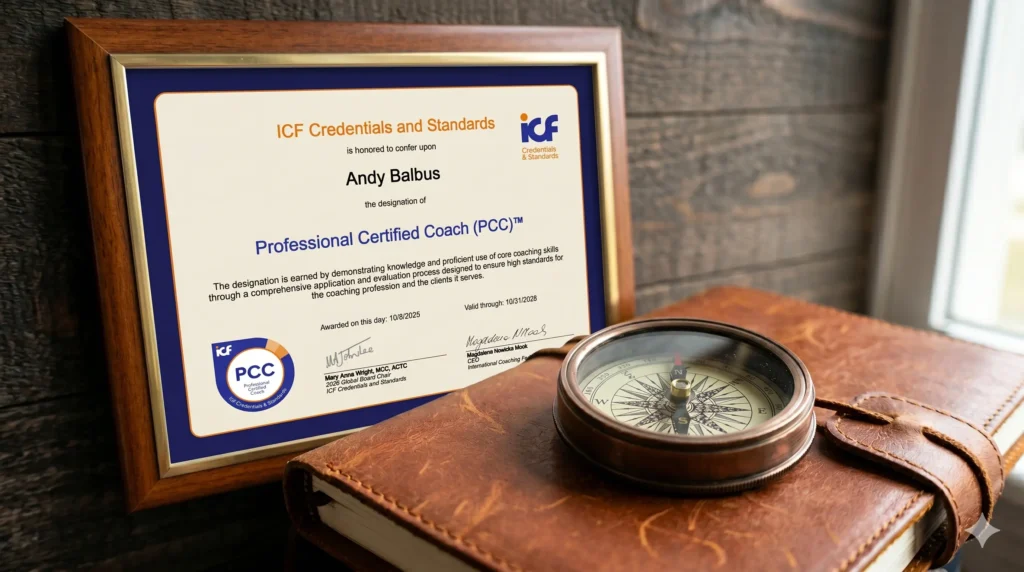
As an ICF PCC certified coach with more than 1,000 coaching hours he works with leaders across the DE-SK-IN matrix.
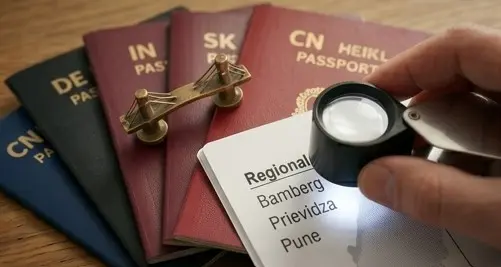
Three worlds that rarely meet in one person: operational accountability under schedule pressure, professional coaching training and four years in Slovakia plus two years in Pune as an accountable executive. The line between high commitment and overestimating yourself is not something he learned in a seminar, and that is the perspective you get in the conversation linked below.
Results or Excuses
You will not notice it in time yourself. That is not weakness, it is the state of the research. What you can decide now is whether your working system contains somebody who will tell you, and whether you hand over the second role before another person makes that decision for you. A leader dropping out costs more than the individual: it costs project time and an entire department its stability. In thirty minutes we settle which role goes, who becomes your external sensor and which single recovery building block you start with.
Make the decision before somebody else makes it for you: 30 minute Reality Check
One calendar link, no preparation required.
More on how I work sits on the page about Andy Balbus, in the leadership case studies and in the glossary. Related reading: the first leadership role, chief firefighter syndrome, setting boundaries as a leader, leading a task force and hidden factory. For leading a team under sustained load, the Team Charter Workshop, the industrial conflict architecture and the SMART method are the practical next steps. Anyone accountable for a whole business will find the right entry in executive sparring for business owners and executive coaching for CEOs.
Systematic Leadership does not end with a phone Call.
Follow Andy for more Perspectives and Insights.
Leave a Reply