
Summary
Successor Authority: Releasing authority in stages creates a shadow rather than a true successor. Full operational responsibility from day one is essential for a successor to build authority and grow into the role. The only defensible exception is a single, time-limited reservation regarding strategic realignment. Give up real decision rights to ensure your succession holds and your legacy lasts.
Release authority in stages and you get no successor. You get a shadow.
The handover event is over, the workforce applauded, a new name sits in the register. Three weeks later a customer calls because he wants to talk about price. He does not call your successor. He calls you, and you pick up.

That is the moment the handover is decided, not the day of the signature.
Everybody in the company is reading along, and they are reading correctly.
This article is for owners who hand over and stay on board for another year, and for successors who want to know what to insist on. Anyone looking for a staged plan that releases authority quarter by quarter will be disappointed. That plan is the problem.
My Preferred Successor Got Everything From Day One
First, so that nothing gets blurred here
I was not the departing owner. I remained Director of the department in Prievidza, and one of my team leads took over one of my teams. Structurally that resembles an owner who hands over and stays for a year, but it is not the same thing. What transfers is the question of decision rights, not the question of ownership.
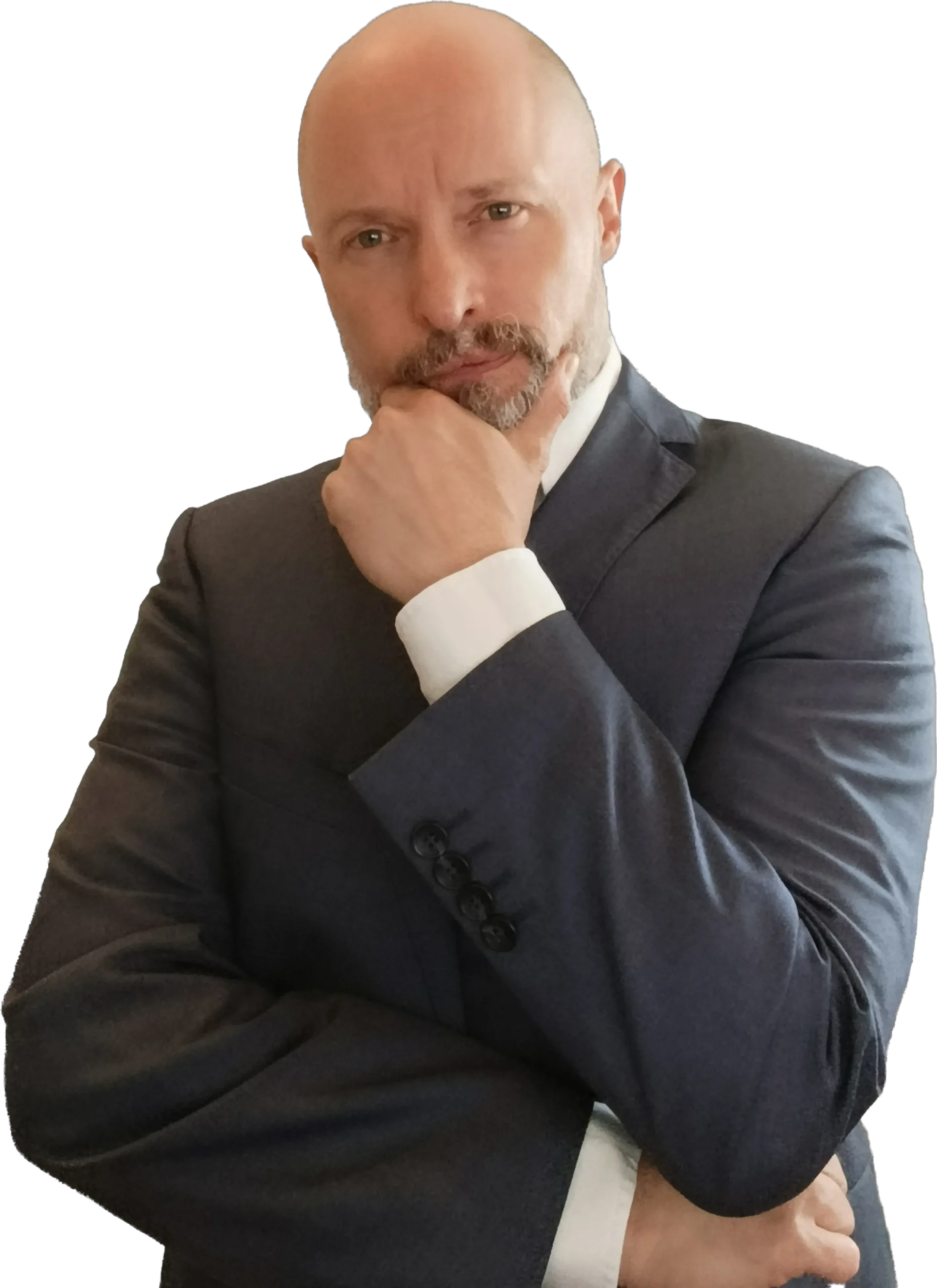
He moved from engineer to team lead, and he did so completely
When he entered that role he received full responsibility from day one. Not in stages, not subject to proving himself, not with a reservation for the first six months. He was responsible from the first day, and everybody on the team knew it.
For me that is the core of every handover
If the successor is not put in place with full responsibility from day one, he is essentially a shadow. And as a shadow, that person will not develop fully into the new role.
The question of which decisions he makes alone in year one, which he makes jointly, and when which lock is released, is in my view the wrong approach entirely.

What stayed fixed nonetheless
The strategic direction of the department. That was defined, and as long as I was Director it was pursued strictly. This is the distinction that matters: within the set direction he decided everything himself. Changing the direction itself was not his field, at least not yet.
He decided things differently from me
That happened, and it was the real test. He explained why he had decided the way he had, and once I had heard his reasoning, I backed it. Not tolerated it, backed it. In that period I never had to overrule him.
How I brought him into the strategy
Through our one-to-ones. We took the time there to talk about department goals and strategy, and I involved him in the decision process. That gave him a steadily better understanding of what the goals actually were. Not through a presentation, but by being present while they were being formed.
And then something happened that I had not expected

I would have liked to see him as my full successor, so I drew him ever further into department-level matters. In that process he recognised for himself that he did not want it at that point in time. He told me so, and I understood his reasons.
That is precisely the argument for day one
A shadow would never have noticed, and I would never have found out.
Somebody who makes no real decisions cannot discover whether they want the role at all, because agreeing costs nothing as long as nothing is genuinely at stake. Full responsibility does not only develop the successor. It is the only way to learn whether they want the role.
How it ended

Department leadership later went to a different person, because headquarters decided to strengthen the synergy between motor and electronics. That had nothing to do with him. What remains is the insight: the most honest information about a successor does not come from an assessment. It comes from actually letting them decide.

No sales conversation. If I am not the right person for you, you will hear that in the first five minutes.
What the Research Shows About Predecessors Who Stay
The predecessor stays and the change does not come
Timothy Quigley and Donald Hambrick analysed 181 successions in high-technology firms in the Strategic Management Journal in 2012, with extensive controls for the circumstances of succession, the firm’s need and capacity for change, and for endogeneity. Their finding: predecessor retention restricts the successor’s discretion and dampens their ability to make strategic changes or to deliver performance that deviates from pre-succession levels.

Quigley describes the effect plainly. When the predecessor stays on, little in the firm changes. Strategies remain in place, there are fewer acquisitions and divestitures, the new chief executive is restrained from reshaping the top team, and performance continues largely in line with what existed at succession. He calls it a partial succession.

The most revealing part sits in the supplementary analyses. Retention has a more pronounced effect in preventing big performance gains than in preventing big drops. Translated into your situation: your staying acts as insurance against a collapse and simultaneously as a cap on the upswing. The two belong together, and you cannot have one without the other.
(Source: Quigley, T. J. & Hambrick, D. C. (2012), When the former CEO stays on as board chair, Strategic Management Journal, 33(7), 834-859.)
In family firms the picture reverses, and there is a reason
Zybura and colleagues analysed 455 successions in German family firms. Their result turns the direction around: a family CEO successor, higher successor CEO-related human capital and prolonged predecessor influence each raise the likelihood that innovation output materialises after the handover.
The decisive part is the qualifier the authors attach. Predecessor influence is moderated by the successor’s own capability. The predecessor who stays is therefore neither inherently harmful nor inherently useful. He is useful when the successor genuinely carries the role technically and as a leader, and harmful when they do not. And that capability only forms when somebody makes real decisions. A shadow builds no human capital.
(Source: Zybura, J., Zybura, N., Ahrens, J.-P. & Woywode, M., Innovation in the post-succession phase of family firms, Journal of Family Business Strategy.)
And what the successor finds on day one decides the rest
Waldkirch, Belschner and Kammerlander analysed 74 interviews from 43 intra-family successions in German family firms in Entrepreneurship Theory and Practice in 2025. They identify three configurations that enable change: authority, empowerment and alignment.
Their central point matches my experience. How much change occurs after a handover depends not only on the successor as a person but on the structure they find: how much power they hold, how close they are to the predecessor, and how urgently the business needs change. It depends explicitly on the conditions of day one. Just as explicitly, the authors stress that there is no one best way. My arrangement is therefore one viable configuration, not the only one.
(Source: Waldkirch, M., Belschner, R. & Kammerlander, N. (2025), Taking Charge: A Configurational Perspective on Post-Succession Change in Family Firms, Entrepreneurship Theory and Practice.)
Voices From Practice
Gena Lentz is a retired economic developer who works as a coach herself. Her feedback sits here because she describes a transition, and transitions are what this article is actually about: not the day of the signature, but the time that follows.
Which of Your Reservations Are Justified?
Reservations are not the problem. Unspoken reservations are, and operational reservations are. Assign six decision areas, each to the successor alone, to both of you jointly, or to yourself as final decider. There are no points and no grade, only the feedback on which of your reservations can be defended and which turn your successor into a shadow.
Assign six decision areas.
The One Reservation and How to Phrase It
If you stay on board for a year after the handover, you need a clear line between what the successor owns alone and what you reserve. That line does not follow the size of a decision. It follows whether the decision changes the direction of the company.
Operational means complete, immediate and visible
Personnel decisions in the layer below the successor, investments up to the normal approval threshold, terms with existing customers, the shape of the units. All of it belongs to the successor from day one, without asking and without countersignature. Keep a reservation here and you make it visible daily, and your people read from it who is really leading.
Strategic means time-limited, written and known in advance
Entering a new market, exiting an existing one, a fundamental change to the product portfolio. A reservation held by the outgoing owner is defensible here, because this is where a life's work and usually private wealth sit. It is defensible only under three conditions though: it is written down, the successor knows about it before their first decision, and it carries a date on which it ends.
Why the expiry date is not negotiable
A reservation without an end date is not a reservation, it is a permanent arrangement. And a permanent arrangement produces exactly what Quigley and Hambrick measured across 181 cases: little change and a capped upside. Put the date in the handover agreement rather than in a conversation, because conversations expire.
The test for whether you have built a shadow
It takes two minutes and it stings. Bring to mind the last five decisions your successor made.
For how many of them did you know beforehand how they would turn out? If the answer is five, they are not deciding, they are executing. And then you will also never learn whether they want the role.
And the uncomfortable question for you

Can you sit with it when your successor decides something differently from you and the reasoning is sound but not yours? For me that was exactly the moment where it showed whether the handover was real. I backed the decision once I had heard the reasoning. Anyone who hesitates here should take the reservation back now and name it openly, rather than exercising it quietly for the next eighteen months.
You leave with a phrasing you can use, not with a proposal.
Where Settling Decision Rights Is Not Enough
Decision rights are one half of a handover. The other half is values and culture, and I wrote a separate article on transferring company values in succession, which also carries the case of an owner who wore out several managing directors because he never let them decide. If your successor does not contradict you, what is missing is not a rule but psychological safety. And if they are only fighting fires after six months, you are working on the chief firefighter syndrome rather than on the handover.
Manuel Prando has worked with me for many years. His feedback sits here because it describes the double movement a handover demands: attending to what matters today while keeping the future in view.
How a handover can be accompanied sits in the legacy programme and in coaching for CEOs and senior leaders. Terms from this article are defined in the leadership glossary, and the full toolkit sits in the methods overview.
FAQ: Frequently Asked Questions About Successor Authority
Q1: How much decision power does a successor need in year one?
Operationally, all of it, from day one. A staged plan that releases authority quarter by quarter produces a shadow, and a shadow does not grow into the role. One reservation is defensible, namely on strategic realignment, and even that only with a time limit.
Q2: What counts as operational and what as strategic?
Operational is everything that happens within the existing direction: people, investments within the normal frame, terms, structure. Strategic is what changes the direction itself: new markets, exits, a fundamental reshaping of the portfolio. The line follows direction, not amount.
Q3: Is it harmful if I stay on for another year as the former owner?
It depends, and the research is not one-sided. Quigley and Hambrick found less strategic change across 181 listed-company successions. Zybura and colleagues found across 455 German family firms that prolonged predecessor influence raises innovation output, moderated however by the successor's own capability. Your staying is therefore only as good as the independence you permit.
Q4: How do I recognise that my successor is only a shadow?
From three signals. Your people still ask you although the successor is accountable. You know in advance how their decisions will turn out. And they have never contradicted you since the handover. The third signal is the clearest.
Q5: What do I do when they decide something I consider wrong?
You ask for the reasoning before you react. In my case that is exactly where it showed that the decision was different but well founded, and I backed it. If you remain convinced afterwards that it does damage, that is a strategic question and belongs in the agreed reservation, not in a spontaneous veto.
Q6: How long should the strategic reservation last?
As short as possible and with a fixed date. Twelve to eighteen months is a common order of magnitude. What matters more than the length is that the date is written down and not silently extended. Without a date you create the permanent arrangement whose cost Quigley and Hambrick measured.
Q7: Should customers know who decides now?
Yes, and you should tell them personally. As long as your most important customers suspect they get a better price from you, they will call you. After that your successor negotiates against you rather than for the company, and you notice it first in the margin.
Q8: What if my successor turns out not to want the role?
You listen and take the reasons seriously. That is exactly what happened to me when I drew my preferred successor further into department matters: he recognised for himself that he did not want it at that point. That information is valuable, and you only get it if they carried real responsibility beforehand.
Q9: Do we need a written handover agreement, or is a conversation enough?
Written, for one simple reason: conversations expire, and after a year both sides remember them differently. The paper should carry the operational mandate, the single reservation, its expiry date, and who tells which customers what.
Q10: How do I prepare a successor for strategic decisions?
By having them present while decisions form, not while they are presented. In my case that ran through the one-to-ones, where we took time for department goals and strategy and I involved him in the decision process. Understanding of goals forms in the process, not in the summary.
Q11: What if the successor comes from outside?
The same applies, only the time pressure is higher because they lack the network. Give them the operational mandate immediately anyway and invest your time in contacts and context instead, meaning why certain decisions were made the way they were years ago.
Q12: We are a family. Does that change anything?
Not the substance, a great deal about the difficulty. Family firm research suggests prolonged predecessor influence can even be useful there. The precondition stays the same: the successor has to decide independently, otherwise the capability on which the effect depends never forms.

About the Author: The Intersection of Three Worlds
Most providers are either a coach or a consultant. They know handovers from facilitating them, not from the position of the person who has to let go. I have worked in all three worlds.
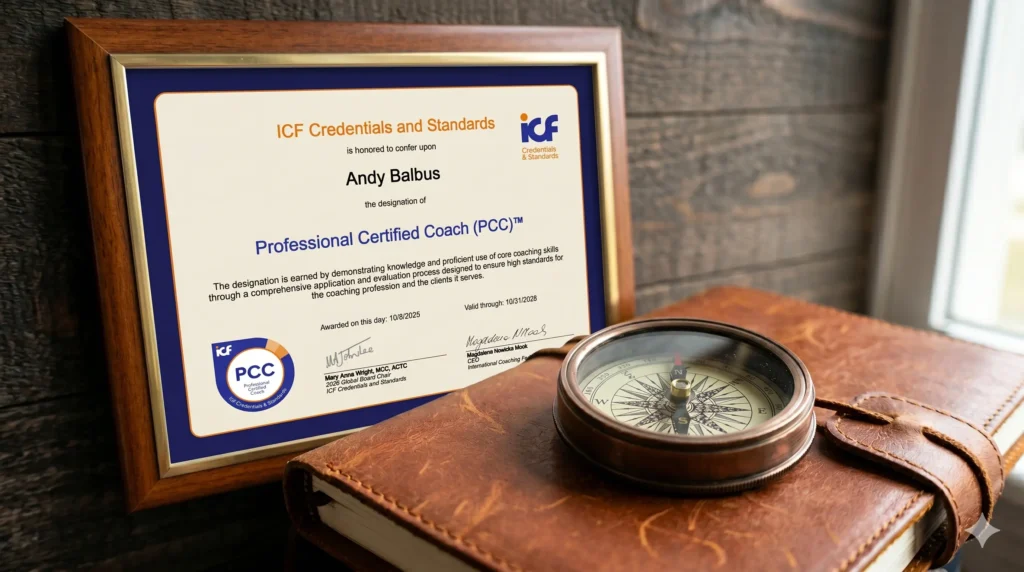
Executive leadership: 25 years of operational automotive DNA, 150 million euro of revenue accountability, an engineering site with 40 engineers built from a greenfield. Executive coaching: ICF PCC certified, more than 1,000 coaching hours.

Intercultural transformation: four years as the accountable leader in Slovakia, two years in Pune, alongside experience in Germany, China, Mexico and the United Kingdom.
I have handed responsibility over and experienced somebody deciding differently from me. I backed it anyway, and that is what this article is about. More about the path is on the page about Andy Balbus and in the case studies.
Results or Excuses?
The customer call you take costs you nothing. It costs your successor their authority, permanently, because your people read from it who really decides. Eighteen months on you have no successor but a well-paid deputy, and the question of whether they ever wanted the role remains unanswered.
In 30 minutes we sort your decision areas, name the one reservation that may stay, and you leave with a sentence you can say to your successor and to your most important customers. I bring the view from leadership, coaching and cultural change at the same time.
One calendar link, no preparation required.

You can also reach me through the contact page. How the formats connect is visible in Accelerate Now, in executive coaching, in coaching for automotive leaders, in female executive coaching and in Your Power Within. For the role change there is mentoring from expert to leader, for growing spans mentoring for team leads, for leadership without formal authority mentoring without authority and for strategic influence mentoring at director level.
To work structurally, use the team charter workshop, the mentoring method, intercultural mentoring, the SMART method, prioritisation, uncompromising delegation, active listening, the conflict architecture, the Gemba Walk and remote leadership. To dig into root causes, start with micromanagement, the first leadership role, goal setting, breaking down silos and no time for strategy. For the site questions there are Germany and India.
Systematic Leadership does not end with a phone Call.
Follow Andy for more Perspectives and Insights.


Leave a Reply