
Your Team Already Knows When You Are Under Pressure. The Question Is: Do You?
You are the strongest engineer in the room. That is exactly why your team has quietly stopped bringing you the truth.
You are technically strong. You know the system better than almost anyone around you, and you have delivered, consistently, for years. And yet something is not working the way it should, and you have probably not said it out loud to anyone.
Your people no longer bring you the real problems. They bring you the cleaned-up version, the one already filtered through a single quiet question: how will he react to this. So you solve issues that should have stayed a level below you, and every time you step in, the team learns a little more that they do not have to. The thirty-minute alignment call turns into a two-hour renegotiation of things everyone already agreed to. And the energy that belongs in strategy keeps draining into firefighting.
None of this is a technical problem. It is the gap between knowing how to do the work and knowing how to lead the people who do it. That gap has a name, and it is not a soft one: emotional intelligence. Across the automotive matrix, in Germany, Slovakia, and India, it is the hardest currency you hold.

Emotional Intelligence for Leaders: Is This You?
Accelerate Now was built for one specific moment in a leadership career, the moment technical mastery stops being enough.
- You are the R&D director whose best people have gone quiet, and the real status is never quite the one in the report.
- Promoted for being the best engineer, you now watch your day disappear into problems the team should own.
- You hold a cross-cultural matrix together, where a yes in one country quietly means something else in another.
- As the high-potential being groomed for the next level, you want the leadership skill before the title, not after.
- You can feel the sixty-hour weeks are not sustainable, and you know the answer is not working harder.
If you recognized yourself in more than one of those, the next six sessions were designed for you.

The Real Cost of Low Emotional Intelligence Is Not in the Budget. It Is in Your Calendar.
Look at where your week actually goes. The hours that should fund strategy are spent re-deciding what was already decided, absorbing other people’s anxiety, and rescuing problems that never should have reached you. None of it appears as a line item, which is precisely why it never gets fixed.
When a senior engineer finally leaves, the replacement is widely estimated to cost around 150 percent of annual salary once you count the gap, the search, and the ramp-up. The more expensive number stays quiet: the decisions delayed and the trust eroded while the seat sits empty. Across 25+ years in this industry, almost every costly leadership failure I have watched shared one root, a leader who could not regulate under pressure, who avoided the crucial conversation for months, or who missed the signal that the yes was never a yes.
The same gap shows up as two quiet taxes on every project. There is a Translation Tax, paid when a clear instruction from headquarters lands in the hub as something subtly different, and an Alignment Tax, paid when the same decision has to be re-made three times because nobody surfaced the real disagreement the first time around. Both look operational. Both are emotional intelligence wearing an operational disguise.
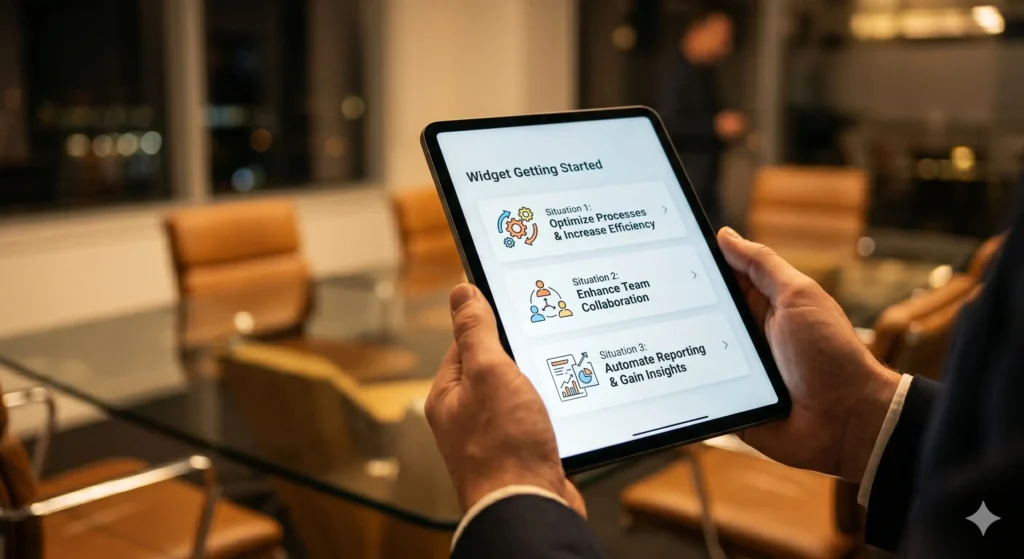
From the Field: What the Expert Paradox Actually Cost Me
When I built the electronics R&D department at Brose Prievidza from nothing, I carried one instinct into leadership that I was proud of: solve it yourself, it is faster. It was the single most destructive habit I had as a leader.
The change did not come from a decision. It came from discipline. Asking the question instead of handing over the answer. Holding the silence afterwards, even when it was uncomfortable, long enough for the engineer to find their own way through. Four years later, when I left for India, my team lead Michal said something I still carry: ‘How dare you, you are leaving a family we built.’ That sentence is not from a leadership book. It is the sound of 40+ engineers who were given real ownership and the room to use it.
You can have either excuses or results, not both.
Accelerate Now is how you build the conditions where your team chooses results, on their own.
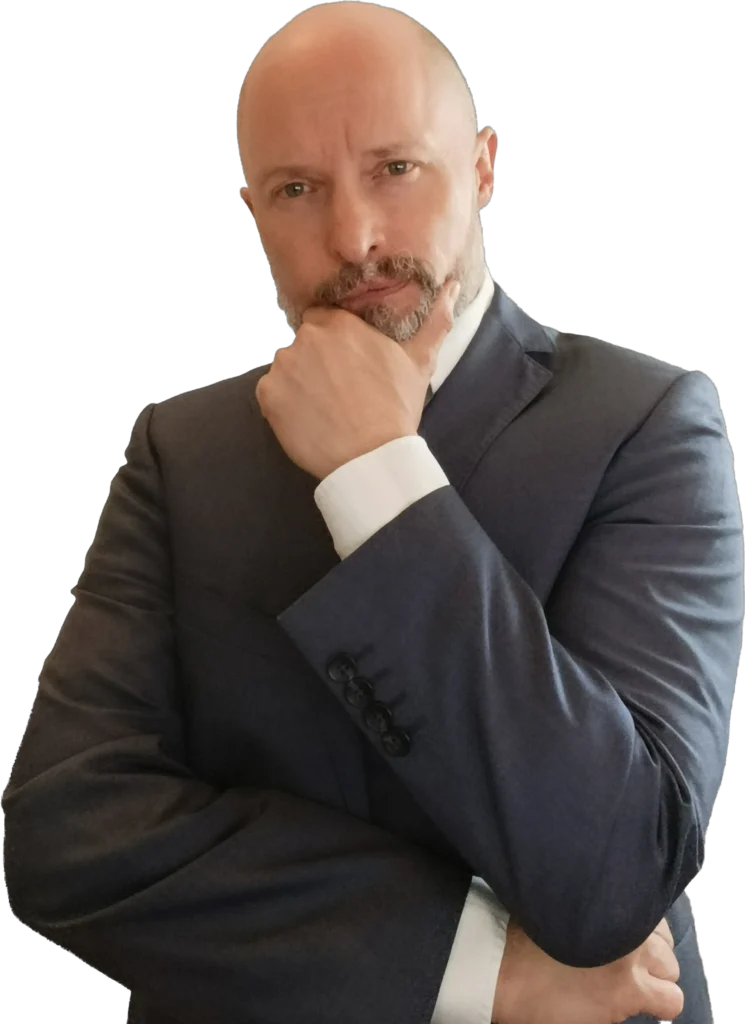
Regularly on-site, among others in Bamberg, Nuremberg, Zapfendorf, Bratislava, Prievidza, Barcelona, Pune, Mumbai, Bangalore, Shanghai, Querétaro, and Pittsburgh.
EQ Leadership in Practice: Three Things Change. Measurably. Permanently.
These are not learning objectives for a course. They are the three shifts every participant names when asked, months later, what was different.

How deeply are you stuck in expert mode?
Four questions, ninety seconds, an honest look at how much your team still waits for you instead of owning the work.
1 of 4: A tricky technical problem lands on your team. Your honest first instinct?
2 of 4: An engineer interrupts you mid-task with a problem. What usually happens?
3 of 4: When you delegate, what are you really handing over?
4 of 4: It is late, and a deliverable is at risk. Your move?
Six Sessions. Three Parts. One Complete Shift.
The sequence is deliberate. Self-awareness before self-regulation, self-regulation before empathy, empathy before the hard conversations. Each session stands on the one before it, because the neuroscience does not allow shortcuts.

An EQ Group Programme, Not 1:1 Coaching. Three Deliberate Differences.
BYG Executive Coaching follows your live problem, open-ended and responsive, built for leaders already under real operational pressure. Accelerate Now is a different instrument, and the differences are the point.

Three Ways to Run the Programme
ONLINE INDIVIDUAL, WORLDWIDE
You and up to 7 peers in a live online cohort, in English and German, scheduled across the headquarters, Prievidza, and Pune time zones at once. It is the fastest format to start.
ONLINE CORPORATE COHORT, YOUR TEAM
A dedicated cohort of 3 to 8 leaders from your own organization, for department-head circles, high-potential groups, and cross-functional teams who need one shared leadership language. Your people practise the new behaviour on each other in the same sessions where they learn it.
ON-SITE, ONE WEEK, IN YOUR COUNTRY
The full six-session curriculum in person at your location in Germany, Slovakia, India, or any target country. On-site adds live observation of team dynamics and a depth of trust that physical presence creates. Every on-site engagement is arranged individually, since travel, visa, and logistics vary.

Bangalore On-Site: Two Coaches, Two Perspectives, One Room
The Bangalore on-site programme is co-facilitated by Andy Balbus (ICF PCC) and Ruchikka Kar (ICF ACC). This is the only format where two coaches, one carrying the German headquarters context and one carrying the Indian corporate leadership context, work in the same room at the same time.
Andy Balbus brings 25+ years in automotive, two years on the ground in Pune at Brose India, and twelve executives coached inside the Indian hub, the headquarters view from someone who has sat in the Indian alignment calls.
Ruchikka Kar brings local cultural intelligence and insider credibility in the Indian corporate context, and co-facilitates exclusively for the Bangalore delivery.
Most international programmes deliver Western content and call it cross-cultural. This co-facilitation closes the gap between what the facilitator intends and what the Indian participant actually hears.

Q1: What is the difference between Accelerate Now and Executive Coaching?
Executive Coaching follows your live problem, one to one, open-ended, and responsive. Accelerate Now is a structured six-session EI curriculum in a group. Different instruments for different jobs, and many leaders use both, the programme to build the foundation and coaching to apply it to a specific live situation.
Q2: Why six sessions, and not more or fewer?
The sequence mirrors how the brain actually builds the skill: self-awareness, then regulation, then empathy, then the hard conversations. Six is enough to move through all four with real practice between each, and short enough to hold inside a demanding workload.
Q3: Why does the group need a minimum of three participants?
The method depends on seeing your own patterns reflected in other people and practising new behaviour on real humans. Below three, that mirror disappears and the group dynamic that does half the work is gone.
Q4: What happens between the sessions?
Each participant leaves with one concrete practice commitment and applies it in the real working week. The next session opens with what actually happened, which is where most of the lasting change is made.
Q5: What makes the Bangalore delivery with Ruchikka Kar different?
Two coaches in one room, the headquarters context and the Indian context at the same time. Nothing gets lost in the gap between what a Western facilitator intends and what an Indian participant receives, because both are present and named.
Q6: Can the programme run in German?
Yes, fully in German or in English, and bilingual cohorts work well across the DE-SK-IN matrix. The language follows the group, not the other way around.
Q7: What if our team has fewer than three people?
You join an open online cohort with peers from other organizations, or we combine smaller teams into one group. Bring me the situation in your Reality Check and we find the right fit.
Q8: Is this soft-skills training?
No. Emotional intelligence is the hardest currency in the matrix, and every tool here is concrete, practised live, and tied to a specific Monday-morning behaviour. Nobody leaves with a feeling, they leave with a protocol.
Q9: Does online really work for this kind of content?
Yes. The roleplays, the listening drills, and the non-verbal work are built for live online and on-site alike. On-site adds physical presence and real-time observation of team dynamics, not a different curriculum.
Q10: What does the programme cost?
The investment depends on the format and the group, so we discuss it directly in your Reality Check, with no obligation. You will know exactly what you are deciding on before anything is agreed.
Q11: Who is this programme not for?
Anyone looking for a motivational seminar or a certificate for the wall. This is for leaders willing to be seen, to practise in front of peers, and to change a behaviour they have held for years.
Q12: Which KPIs actually improve when EQ improves?
The ones downstream of trust: earlier escalation of real problems, fewer repeated alignment loops, faster and more honest feedback, lower regretted attrition, and decisions that stop bottlenecking on you.
Q13: How soon will my team notice a difference?
Usually within the first two weeks. The self-regulation tools change how you show up under pressure almost at once, and your team reads that shift long before you announce anything. The deeper changes in trust and honest escalation build across the full six sessions and the ninety days that follow.

You Can Have Either Excuses or Results
Your technical authority got you here. It will not get your team to bring you the truth, regulate the room under pressure, or have the conversation that actually changes the culture. Emotional intelligence will, and it is trainable, in six sessions, with people facing exactly what you are facing.
Or reach out directly: founder_andybalbus@boost-your-growth.com | WhatsApp: +49 151 4495 7099
Go deeper: Active Listening, Uncompromising Delegation, Conflict Architecture, Intercultural Mentoring, Case studies
Where This Programme Runs
I built this work along the Germany, Slovakia, and India axis, in Prievidza and Bratislava, in Pune and Mumbai, and across the German industrial belt around Bamberg, Nuremberg, and Zapfendorf, where I made this shift myself. From there the reach extends on purpose: across Europe into Austria, Spain with Barcelona, the Czech Republic, and Poland, and beyond the continent into China with Shanghai, Mexico with Querétaro, and the USA with Pittsburgh. Because the programme runs live online and worldwide, the cohort holds wherever your matrix sits, and for on-site delivery I come to you, including the Bangalore on-site with Ruchikka Kar.
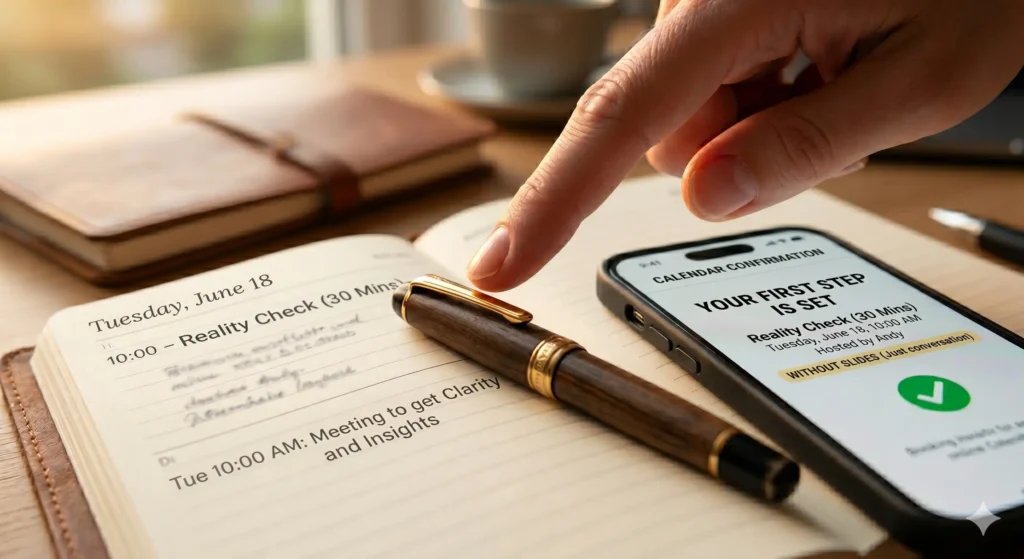
Systemic leadership does not end after one call.
Follow for unfiltered insights and straight-talk strategies:


