
Your team says yes. Your instinct says something is wrong.
This method is part of the BYG Leadership Toolkit: 28 validated instruments for automotive executives navigating the DE-SK-IN matrix.
This page is for leaders who carry responsibility across site boundaries. Perhaps you steer an R&D team split between the German headquarters, Prievidza, and Pune. Perhaps you run a plant and rely on status reports that flow back to you from three time zones and three communication cultures. Some readers lead as expats between two cultures, others run global programmes from the DACH region. What connects you is the same question: how do I know whether the green status light reflects operational reality, or whether it is simply the answer my team believes I want to hear.
You have sat in the alignment call. The status report is green and the timeline is confirmed. Everyone in the room, Bratislava on the screen, Pune dialling in, is nodding. And you leave that call with a quiet, unnameable unease. Not a fact you can point to, also not a number that is wrong. Just a feeling, somewhere between your gut and your experience, that the green you are seeing is not the green that is actually there.
That feeling has a name:
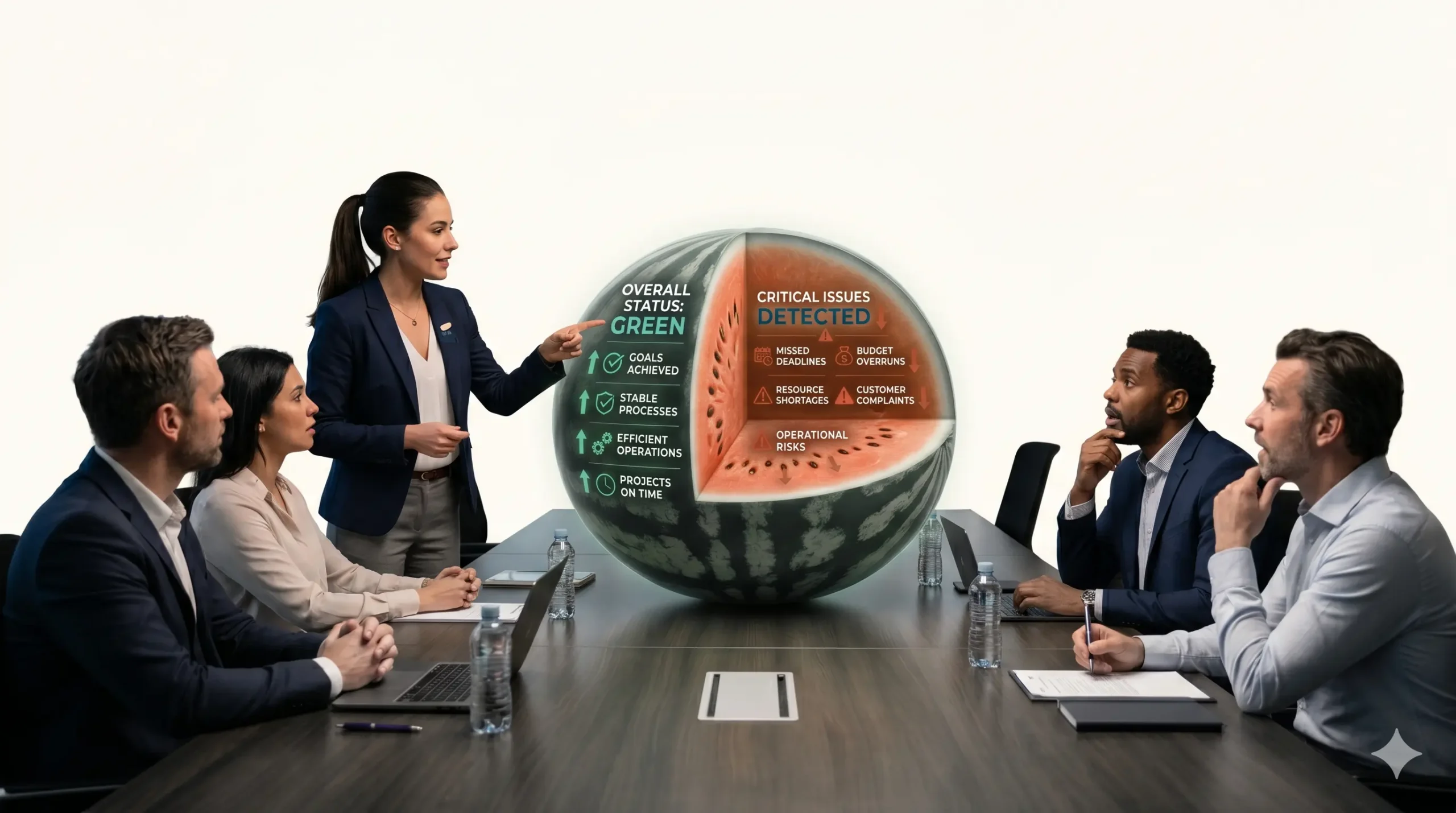
It is the Green-Melon Effect. Green on the outside, deep red on the inside. It is not a communication problem and not a cultural misunderstanding. It is a structural failure in the way you are listening.
Your engineers in India are not withholding information because they are dishonest. Your team in Slovakia is not hiding problems because they do not care. Both are responding, entirely rationally, to a leadership environment that has never made it structurally safe to say what is actually true.

I know this silence. I sat in it.
My name is Andy Balbus. Diplom-Wirtschaftsingenieur, ICF PCC certified coach, and 25+ years in automotive leadership: Germany, Slovakia, India, China, Mexico, UK. I managed 150M € in annual revenue, built a complete R&D department from zero in Prievidza, and led 40+ engineers through greenfield scale-ups under real OEM timelines. However, the moment I remember most clearly was not a milestone. It was a Tuesday afternoon in Pune.
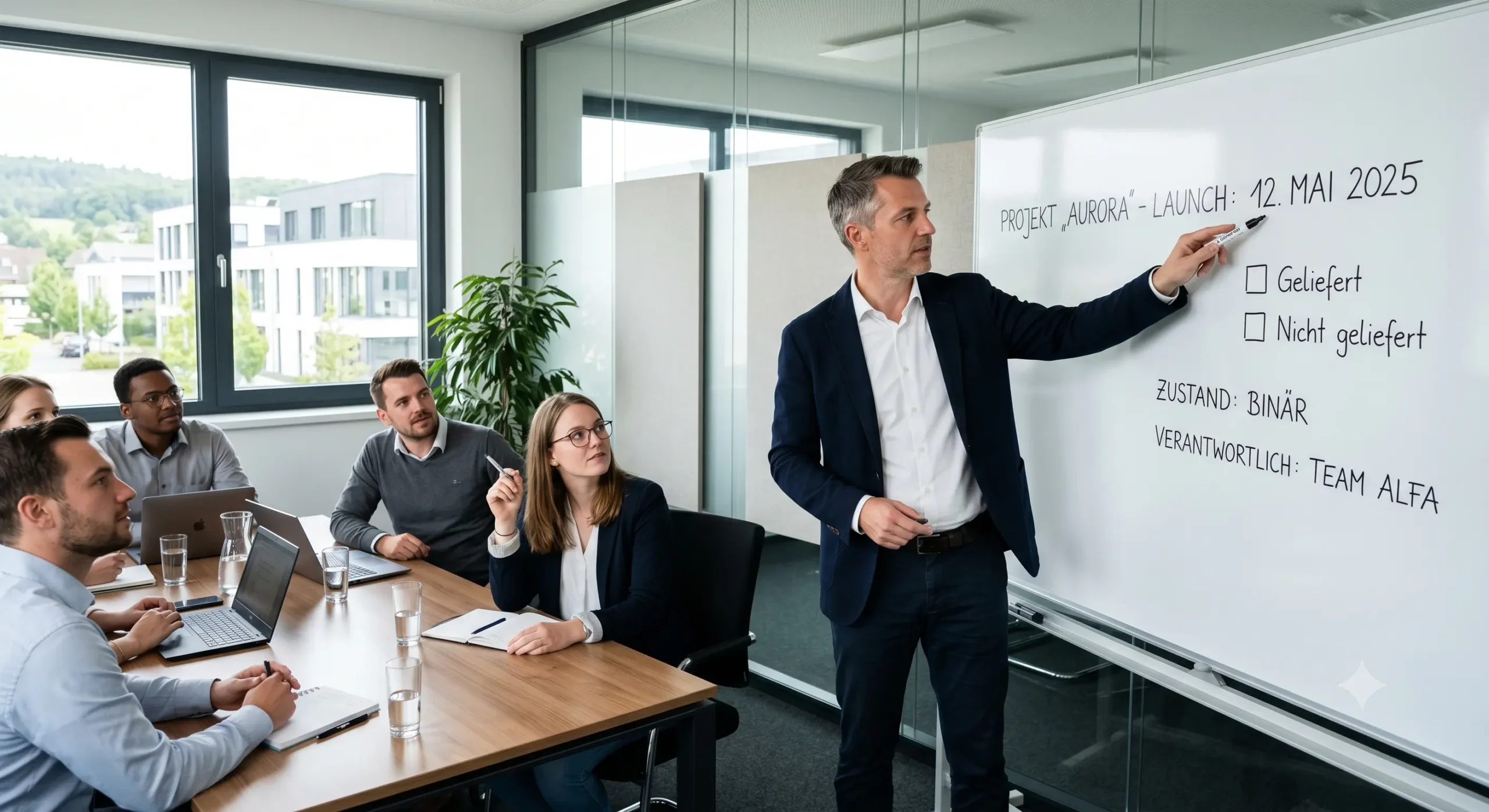
I was in a technical review with three of my Indian engineers. We were twenty-two days from an SOP. Project status: green. I asked the lead engineer directly whether we were on track and everything was under control. He looked at me, smiled, and said: „Yes, sir. Everything is fine.“
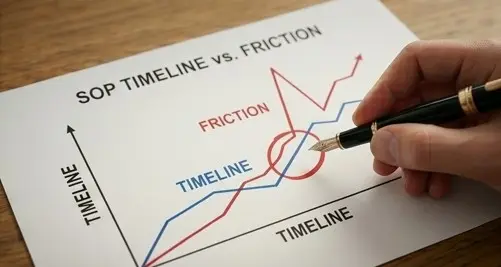
Eleven days later, I discovered that the team had been managing a critical electrical deviation for three weeks. Not out of incompetence. Not out of distrust. But because, in that room on that Tuesday, I was not actually listening. I was only hearing. There is a difference, and in the DE-SK-IN matrix that difference is measured in OEM penalties and missed deadlines.
This is exactly where the textbook version of active listening failed me. The classic techniques, paraphrasing, open questions, eye contact, assume that the other person wants to tell the truth and only needs the right invitation. In a matrix with pronounced hierarchy asymmetry, that assumption does not hold. So I rebuilt the method: away from conversation technique, toward an operational early-warning system, calibrated for the suppression mechanisms that differ between Slovak and Indian teams.
I built the BYG Active Listening method because I lived the cost of its absence. Not as a case study. As an operational failure with my name on the outcome.

Why Standard Listening Fails in the Matrix: The Documented Costs
The patterns that active listening prevents have a measurable financial signature. These are not motivational statistics; they are the numbers that appear in your P&L when the information gap goes undetected.
Every one of these patterns has a communication root. Specifically, it begins at the moment a leader stops at Level 2 and never reaches Level 3, where the actual operational truth lives.
The Neurological Reason: Your Phone Costs You the Signal
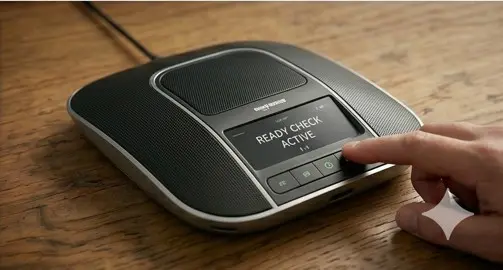
Ward et al. (2017) ran controlled studies showing that the mere presence of a switched-off smartphone on a desk measurably reduces cognitive capacity. The brain spends resources suppressing the impulse to check it. That suppression costs exactly the mental capacity you need to detect the hesitation in a voice, the pause before a confirmation, the shift in tone that signals a problem is being managed rather than surfaced. Removing the device is not a courtesy. It is a structural upgrade to the quality of your information.
The BYG 3-Level Method: From Hearing to Operational Radar
Most leaders listen at Level 2. They focus on the data: numbers, timelines, technical detail. That is necessary, yet not sufficient. In the DE-SK-IN matrix, the information that prevents a SOP failure is almost never in the data. It sits in the atmosphere around the data. The method rests on three validated scientific foundations and is calibrated to the communication architecture of globally distributed automotive teams.
The Three Scientific Foundations

The Three Levels of Contextual Presence

Before the Method: A Quick Self-Diagnosis.
At which radar level are you leading right now?
Six situations from the DE-SK-IN matrix. Choose your instinctive reaction rather than the one you think you should give.
What Level-3 Listening Changes in Practice
The eleven days in Pune were expensive, but they were instructive. Once I began to remove the device consistently and to hold a structured silence after the first question, my team did not change. What changed was what my team showed me. The same engineers who had quietly managed a deviation for three weeks now brought risks to the table weeks earlier, because for the first time the space for it existed. The Green-Melon Effect does not survive a leader who operates reliably at Level 3.
Active Listening in Transition: Why Level-3 Presence Matters More in 2026, Not Less
Automated status reporting and AI-assisted reporting tools are changing how information reaches leadership. They deliver precise Level-2 data: numbers, status lights, timelines. What they cannot structurally deliver is the atmosphere around that data, the hesitation in a voice, the shift in tone, the silence after a confirmation. This is precisely why the value of Level-3 listening grows as reporting becomes automated. The cleaner the status report looks, the greater the risk that the Green-Melon Effect stays undetected beneath the surface.
Psychological Safety Automotive Teams: The Structural Precondition
Level-3 listening only produces reliable signals when teams are willing to send them in the first place. Psychological safety in automotive teams across the DE-SK-IN matrix is not a soft add-on competency; it is the structural precondition for honest escalation happening before the crisis rather than after. Where psychological safety is missing, even the most attentive leader stays trapped at Level 2: the data is there, the unspoken risk stays unspoken.
FAQ: Frequently Asked Questions regarding Active Listening.
Q1: Is Active Listening relevant for technically focused German leaders, or only for cross-cultural contexts?
Specifically for technically focused German leaders. Most have spent years developing Level-2 listening, precise, analytical, data-focused. That is an enormous strength. The gap is Level 3: detecting whether the team behind the data actually stands behind it, or is quietly managing a risk that has not been escalated. Ward et al. (2017) show that even in co-located German teams, the passive presence of a smartphone measurably reduces the cognitive capacity to detect contextual signals. The DE-SK-IN matrix amplifies a problem that already exists in monocultural environments, it does not create it.
Q2: Why should I physically remove my phone from the meeting space? Is that really necessary?
Yes, and the science is unambiguous. Ward et al. (2017) showed that the mere presence of a switched-off smartphone reduces fluid intelligence and working memory by a measurable margin. The brain allocates resources to suppress the impulse to check it. That suppression costs the mental capacity you need to detect the hesitation in a voice, the pause before a confirmation, the shift in tone. Removing the device is a structural upgrade to the quality of your information.
Q3: What is the difference between hearing and listening, and why does it matter operationally?
Hearing is passive reception of sound. Listening is active processing of meaning, including the meaning not carried by words. Operationally: a leader who hears gets the formal answer. A leader who listens at Level 3 gets the answer behind the answer, the real risk assessment, the actual confidence level, the unstated qualifier that changes everything. The Indian Yes is invisible to a mere hearer. At Level 3 it is clearly detectable, because tone, timing, and atmosphere of the confirmation carry signals that the words themselves do not.
Q4: How does Active Listening connect to the Green-Melon Effect and the Indian Yes?
They are structurally linked. The Green-Melon Effect is produced when a leader operates at Level 1 or 2: the formal report reaches them, the contextual signal does not. The Indian Yes, a confirmation that signals respect and receipt rather than commitment, is indistinguishable from genuine agreement at Level 2. Level-3 listening detects the atmosphere around the confirmation: the slight hesitation, the qualified tone, the cultural context that makes „yes“ mean „I have heard you“ rather than „I will deliver by Friday.“
Q5: Can Active Listening be developed, or is it a natural talent?
It is a structured operational skill, not a personality trait. The BYG method operationalises it through three behavioural protocols. First: device removal, the Ward evidence is explicit. Second: structured silence after a question, the pause creates space for the real answer rather than the automatic one. Third: the atmosphere question, a second question that bypasses the formal status report and invites the operational truth. In DE-SK-IN contexts these protocols are calibrated for the suppression mechanisms that differ between Slovak and Indian teams.
Q6: How quickly can I expect results, and what does „results“ mean here?
The most immediate result is available within 48 hours: remove devices, introduce structured silence after the first question, observe. Most leaders report that the quality of information in their next three meetings is noticeably different, not because the team changed, but because it had always been willing to say more, and the conditions for it had not existed before. The longer-term result, eliminating the Green-Melon Effect as a systemic pattern, takes consistent application over 4 to 6 weeks before it becomes automatic.
Q7: Does this apply to conversations outside of work, with family or peers?
Completely. The neuroscience does not distinguish between a Monday morning stand-up and a Sunday evening dinner table. Ward et al. found the same impairment from device presence in social as in professional contexts. The Indian Yes equivalent exists in any relationship where one party has learned that certain answers are safer than the truth. Level-3 listening is the same skill in every context. The professional framing here is because that is where the financial cost is measurable.
Q8: I have already done communication or intercultural training. What makes the BYG method different?
Standard training teaches conversation technique and assumes the other person wants to tell the truth and only needs the right question. In the automotive matrix with pronounced hierarchy asymmetry, that assumption does not hold. The BYG method is not a communication training; it is an operational early-warning system, developed from 25+ years of lived DE-SK-IN leadership and calibrated for the specific suppression mechanisms of Indian and Slovak teams. It does not supply better questions, it supplies the perception that decides when a question is even needed.
Q9: How does Level-3 listening differ from simply asking more probing or coaching questions?
Level-3 listening is not a questioning technique, it is a perception skill. Probing and coaching questions activate after something has registered as worth asking about. Level-3 listening is the upstream capability of registering that signal in the first place: the tone shift, the hesitation, the pause. Without that perception, a leader does not know when a coaching question is even warranted. The method supplies the radar; GROW and similar models supply the conversation that follows.
Q10: How does Active Listening connect to psychological safety in automotive teams?
They depend on each other. Psychological safety in automotive teams determines whether an engineer lets a risk show up in tone or hesitation at all, rather than suppressing it. Level-3 listening determines whether a leader detects that signal once it is there. Without psychological safety, there is no signal to hear. Without Level-3 listening, an existing signal goes to waste. Amy Edmondson’s research and the BYG 3-Level Method address two sides of the same structural problem.
Q11: Does Level-3 listening work in written communication, such as email, chat, or status reports?
Only to a limited extent, and that is precisely the point. Tone, hesitation, and the silence after a confirmation are acoustic and visual signals that are largely lost in text. A written status report can read green without a single Level-3 signal ever forming, which is exactly what makes it fertile ground for the Green-Melon Effect. The BYG method therefore recommends clarifying critical status points in a live format, on video or in person, rather than relying exclusively on written reporting.
Q12: What is the Reality Check, and how is it different from a discovery call?
A Reality Check is a 30-minute direct diagnostic conversation. No slides, no programme overview, no sales agenda. Andy applies the method, including Level-3 listening, to your specific situation and tells you honestly whether a BYG engagement addresses your highest-cost problem. Both parties leave with a clear assessment. Not a follow-up proposal unless the fit is genuine. It is not a Discovery Call and not a Chemistry Call, it is a structured diagnosis with a direct outcome.

Stop Managing Filtered Data. Start Hearing the Operational Truth.
The method is fully documented, the deep-dive one click away. Andy takes a limited number of new engagements each quarter. The Reality Check is the direct entry point: 30 minutes, no slides, no pitch.
Results or excuses. If you want to know which unspoken risk your matrix is carrying right now, we resolve it in a conversation rather than a proposal.
Or directly: founder_andybalbus@boost-your-growth.com | WhatsApp: +49 151 4495 7099
The Next Stage: Mentoring Matched to Your Leadership Reality
Level-3 Active Listening is the starting point. Which mentoring stage fits next depends on your current leadership reality.
Expert to Leader, Team Lead Scaling: from single point of failure to strategic redundancy, Director, Strategic Influence, Lead Without Authority (LWA)
Do Not Trust the Theory, Trust the Field Record
Active Listening in the BYG Toolkit
This method addresses the communication root of the Green-Melon Effect and the Indian Yes. It works in compound with other methods:
The BYG Programmes That Deploy This Method
Coaching follows the ICF standards exclusively.
Explore all 28 methods in the BYG Leadership Toolkit ›
Intercultural Mentoring (Service): the structured programme for expats and leaders crossing DE-SK-IN boundaries, Team Charter Workshop, Accelerate Now, Executive Sparring for acute SOP crises, Legacy Programme, Succession Architecture, Your Power Within (YPW)
Systemic leadership does not end after one call.
Follow Andy on LinkedIn for weekly method publications:


