
Summary
Chief Firefighter Syndrome: As a leader, jumping in to solve every crisis makes you a hero but leaves your organization fragile. The Chief Firefighter Syndrome rewards late rescues while ignoring quiet prevention. To break the cycle of constant escalations, shift your role from solving to deciding. Make fire prevention visible, demand solutions instead of just problems, and build an architecture that learns to function without you.
You put out every fire fast and reliably. That is exactly why the fires keep coming.

This article is written for leaders who are needed and suffer from it. For the engineering director whose phone never stops on vacation because nothing gets decided without him. For the plant manager who gets applause for every rescue and none for a crisis that never happened. And for everyone who suspects that being indispensable is not a compliment but a diagnosis.
The Hero the Organization Needs, and the Bottleneck It Builds
Another escalation, another call to you, solved again. In the round the next day you hear the sentence: good thing we have you. It feels like recognition, and it is a warning. Because while you were putting out that fire, nobody learned how to prevent it, and your team took away a lesson you never intended to teach: waiting pays off, the boss will come anyway.
Pune: How I Stopped Being the Fire Brigade
The Empty Room I Furnished Myself
My name is Andy Balbus. In Pune I was, for a while, exactly the chief firefighter I recognize in organizations today. The training academy was a bleak, empty room, and I transformed it: air conditioning, essential in India so that people can learn at all and have air to breathe. A carpet, proper wall art, a projector, whiteboards. The infrastructure stood, and it stood because I had put it there myself.

Too Many Roles for One Person
In parallel my assignment in India was multi-layered: bridgehead and connector between the German headquarters and the local hub, support for the local R&D head, collaboration with the local president. Whoever steers this interface role from headquarters finds the matching support in Executive Sparring Germany HQ. I had taken on a large number of tasks, and I could never have managed all of it alone. That is the core of the syndrome: the bottleneck is not created by laziness but by competence plus a sense of responsibility. You put out fires because you can.
The Hire That Changed Everything
So the opportunity to hire Priti Shahane came at exactly the right moment.
I ran her hiring interview and advocated for her appointment, because I saw something in her that cannot be trained: the enthusiasm for teaching people. She comes from the university world and spent many years teaching as a former assistant professor. Over two years I happened to meet two of her former students, and both spoke with genuine enthusiasm about their time with Priti as a teacher.
Letting Go Was the Strategy, Not the Outcome
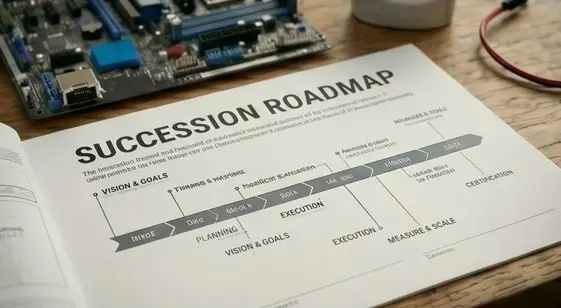
When she started, letting go was the strategy. At first I onboarded her through numerous one-on-one meetings, and her desk stood right next to mine so we could clarify topics on the spot. Very quickly, though, I handed her real duties, because doing is how people learn fastest. This is where delegation separates from dumping: the desk next door was support, and the ownership was real.
And Then Nothing Happened
There were teething problems, and they were instructive. The electronics managers had known me for years, the relationship was solid, the respect was there: when I asked for something, I got an answer or a result quickly. When Priti asked the same managers, nothing happened. I could have stepped in, it would have been fast, and it would have been a relapse into firefighting. Instead I coached her, helped her develop her own ways to be heard there, in her way and not mine, and I backed her up. Had I taken everything back onto my desk as before, she would never have become the real head of the academy.
I could have put that fire out in five minutes. That is exactly why I did not. Whoever puts out every fire himself prevents the organization from ever learning fire prevention.
Andy Balbus, 25+ years automotive, DE-SK-IN
You are the bottleneck of your own organization? Then let us look at your dependency structure together. The Reality Check is a 30-minute diagnostic conversation, no slides, no sales pitch.
Book your Reality Check: 30 minutes, only your situation
Why the Firefighting Mentality Creates the Next Crisis

The scale of the problem comes from a ten-year observational study by Heike Bruch and Sumantra Ghoshal, published in Harvard Business Review in 2002 and conducted across around a dozen large companies, among them Sony, LG Electronics, and Lufthansa. Their finding: 90 percent of managers squander their time on ineffective activities, and only 10 percent work in a focused, purposeful, reflective manner. What they describe is exactly our pattern: rushing from meeting to meeting, extinguishing fire after fire, with almost no time for reflection. The calendar is full, and leadership is not happening.
The cause comes from the work of Nelson Repenning and John Sterman at MIT Sloan, with a title that says it all: Nobody Ever Gets Credit for Fixing Problems That Never Happened (California Management Review, 2001). That sentence came verbatim from an engineer at an automotive company, and it describes the trap: organizations reward and promote those who rescue troubled projects through heroic effort or keep the line running. Late problem solving gets rewarded; early improvement gets overlooked. The authors call it the capability trap: the work-harder loop pays off immediately and makes the system more fragile over time, because no capacity is left for the work-smarter loop. The more you firefight, the more flammable your organization becomes. That is precisely what the glossary term Chief Firefighter Syndrome captures: fast, reliable, effective, and entirely unsustainable.
Three Honest Questions Before You Read On
What comes to a standstill when you are unreachable for two weeks?
How many of the escalations of the past four weeks could someone else have solved, if they had been allowed to?
And when was the last time somebody in your organization was praised because a problem never occurred?
If you hesitate on any of these, the next section is for you.
Ending the Chief Firefighter Syndrome the BYG Way: Three Steps
1. The Dependency Diagnosis: The Two-Week Test
Run the test in your head, honestly and without cosmetics: you are unreachable for two weeks. Which decisions stall, which escalations wait for you, which customer gets no answer? In parallel, count the escalations of the past four weeks and mark every one that somebody else could have solved, had the mandate and the information been there. That number is your dependency index. It does not measure the competence of your team; it measures the architecture you built.
2. Give the Fire Back: Decide Instead of Solve
Introduce one simple rule: whoever brings a problem brings two solution options and a recommendation. Your role shifts from extinguishing to deciding, and your team practices exactly what has been taken away from it so far. Hold the rule even when doing it yourself would be faster, and especially when somebody stumbles at the beginning, as in my experience with Priti. The craft of a clean handover, from choosing the task to transferring real ownership, sits in full on the Uncompromising Delegation method page; why control is the wrong reflex here is covered in the article on micromanagement.
3. Make Fire Prevention Visible: Flip the Incentive System

As long as only rescues are visible, your organization will keep producing rescuers. So make prevention countable: name the prevented fires explicitly in your rounds, meaning the escalation that never happened because somebody asked early, or the defect caught in a review instead of at the customer. Put those cases into your reporting and praise them at least as loudly as a rescue. What gets measured and celebrated gets done, and how a team makes such rules binding is shown by the Team Charter Workshop. How this plays out in real situations is documented in the BYG Case Studies with 13 starting positions from the DE-SK-IN matrix.
You want to turn the fire brigade into an organization that works without you, without risking delivery?
Explore Uncompromising Delegation
Or go straight to the Reality Check: 30 minutes, only your situation
Voices from the Field
Why these two voices? Priti Shahane is the living counter-proof to the firefighting reflex: she is the successor I turned into the real head of the academy in Pune not by stepping in, but by letting go. Her feedback shows what emerges when you deliberately do not put out the fire yourself:
I’m grateful for the certificate and the exceptional sessions you both led!! Your thoughtful curation and delivery made each session truly impactful. I appreciated the valuable insights and takeaways that empowered me through introspection.
Priti M. Shahane (Ph.D), Manager Training Academy, Brose Pune
Dutonde Amol stood exactly where a chief firefighter usually pulls everything back onto their own desk: at the development of his own leadership capability. His words show that developing beats taking over.
Andy is an outstanding mentor who has a deep understanding of individual needs. His mentorship has been invaluable in helping me develop my managerial skills.
Dutonde Amol, Deputy Manager Finance, LinkedIn recommendation
FAQ: Straight Answers to Skeptical Questions

Q1: What exactly is the chief firefighter syndrome?
It describes the leader who personally solves every problem: fast, reliable, effective, and entirely unsustainable. The team stops developing ownership because the fire brigade always arrives. The organization functions while the leader is present and slows down the moment they are gone. In the end the leader burns out; the term itself sits with its neighbors in the BYG Glossary.
Q2: Is fast intervention in a crisis not exactly my job?
In a real crisis yes, as a permanent state no. The difference lies in frequency: once intervention becomes the rule, it is no longer crisis management but architecture. Use the number from step one to check how many of last month’s interventions truly needed your experience, and build the safety for others to decide, as described in the article on psychological safety. Everything beyond that was work somebody else could have learned.
Q3: If I stop stepping in, delivery will suffer. How do I solve that?
Through the size of the risk, not the amount of control. Start with fires whose failure would be correctable, and hand over critical topics only once the first handovers have held. Which task deserves priority at all is clarified by the Prioritization method page. The ramp-up loss is real and one-time; the dependency is real and permanent.
Q4: My team constantly asks me instead of deciding. Why?
Because it has learned that asking is faster and safer than deciding. You taught that lesson without meaning to, every time you solved something quickly yourself. The rule with two solution options reverses it, and the craft of playing questions back with open-ended questions instead of dictating moves the thinking to where the knowledge sits. Expect resistance in the first weeks; that is not a setback but the beginning of learning.
Q5: Why does prevention get no recognition in our organization?
Because it is invisible. Repenning and Sterman studied exactly this and made an automotive engineer’s sentence their title: nobody ever gets credit for fixing problems that never happened. Organizations therefore reward the spectacular rescue and overlook the quiet prevention, and consequently they promote rescuers. Whoever wants to change that has to make prevented fires visible and name them, otherwise the fire brigade always wins.
Q6: Is this not the same as micromanagement?
Related, but not identical. Micromanagement means not trusting the other person’s path and therefore controlling every step. The chief firefighter syndrome means pulling the problem itself onto your desk, because you can solve it faster. The micromanager interferes with work that is running; the firefighter takes over work that is burning. In both cases the effect is similar: the team stops thinking for itself.
Q7: How do I explain to my boss that I will solve less myself from now on?
With the dependency number, not with a principle. Show how many decisions hang on you and what would stall if you were unavailable, because that is a risk for the company, not only for you. Where you also need clear boundaries upward, the baseline technique helps. Retreat then turns into a build-up program, and your boss gets stability instead of a hero with single-point risk.
Q8: What do I do when my successor cannot get through at first?
You help them find their own ways instead of lending them your authority. That was exactly my experience with Priti: my requests got answered immediately, hers got nothing at first. The structured development toward that is delivered by Mentoring from Expert to Leader. That the initial friction is normal is shown in the article on the storming phase. Whoever steps in confirms to everyone that the route still runs through the old channel; whoever coaches and backs them up builds real authority, and that holds afterwards, even without you.
Q9: How long does the rebuild from firefighter to architect take?
Expect a quarter for the first stable patterns and a year for cultural anchoring. The diagnosis takes a week, the two-options rule from the delegation method starts working within weeks, and flipping the incentive system takes longest because it changes habits. For distributed teams, the Remote Leadership method page adds the needed clarity. In my experience the first relief arrives after about two months: your calendar develops gaps where escalations used to sit.
Q10: How does BYG help out of permanent crisis mode?
For the acute situation there is Accelerate Now: focused executive sparring that makes the dependency structure visible and secures the first handovers without risking delivery. For the systematic build-up of successors and local leadership there is Intercultural Mentoring. And how a team finds the courage to decide without the fire brigade in the first place is covered in the article on psychological safety. The personal work on your own pattern is accompanied by executive coaching.
The Next Step Out of the Fire Brigade
If this article describes your daily business, there are two fitting paths: the Uncompromising Delegation method page for the craft of the handover, or Accelerate Now for structured relief in the critical phase.

For the director level, Mentoring for Directors deepens the build-up of real deputies, and structured development conversations come from the GROW method page. How this plays out in real starting positions is documented in the Case Studies; the stance behind it is described in the core principles, and the terms in the Glossary.
About the Author: The Intersection of Three Worlds
Most providers in this market are either a coach or a consultant, and they know the matrix from the consulting desk. Andy Balbus works at a rare intersection of three worlds. Executive Leadership: 25+ years of operational automotive DNA, €150M revenue accountability, an R&D hub with 40+ engineers built greenfield. Executive Coaching: ICF PCC certified, 1,000+ coaching hours, developing people systematically instead of by gut feeling. Intercultural Transformation: lived and led as the accountable executive for 4 years in Slovakia and 2 years in Pune, with experience across DE, SK, IN, CN, MX, UK. Every method on these pages is tested in the engine room of exactly these three worlds, not in theory.
Results or Excuses: The Reality Check
As long as every fire runs across your desk, your calendar stays full and your organization stays dependent. The first step out is a 30-minute diagnostic conversation: you bring the last five escalations that landed on you, and together we separate the fires that truly needed your experience from the ones your team could have put out long ago, seen through leadership, coaching, and culture change at once. No slides, no sales pitch, only your reality.

Book your Reality Check: 30 minutes, only your situation
Systematic Leadership does not end with a phone Call.
Follow Andy for more Perspectives and Insights.
Leave a Reply