
Summary
Senior Manager Transition: Moving into a senior manager role rarely fails due to a lack of technical skills. Many experts wrongly believe they must learn new technologies to step up. True leadership requires a fundamental shift in perspective: letting go of technical detail control and focusing on enabling your team. Discover how to take full ownership of your career path, leverage your core strengths, and transition from a technical specialist to a leader who guides from the front.
Ashish P. was looking for his next technical skill. What he needed was a different question.
Ashish P. is preparing for the step into a senior role. He came into the conversation with a clear expectation: tell me which technology I need to learn next so I can hold my own as a leader. The realisation he left with was different. His team, not him, needs to know more technology, and his real job is to develop that team to the point where it delivers.

You may know that quiet question. You are strong on the technical side and you are standing in front of the next step. In the background runs the worry whether your expertise still holds. This is exactly where your transition is decided, and not by the next certificate.
You just thought of your own next step, or of a person on your team who is facing it. In 30 minutes, get clear on the one question that actually carries that step:
No sales pitch. If I am not the right fit, I will tell you so in the first five minutes.
The Starting Point: A Strong Expert at a Fork in the Road
The wrong question came first
Ashish P. was preparing for a selection interview for a senior manager role. His first assumption was the assumption of a good engineer: moving up means going even deeper on the technical side. That is how he entered the conversation, looking for support with his interview.
The decision was his, not the coach’s
The first moment that surprised him was not advice. It was the return of responsibility. The choice between a technical path and a leadership role was his, and no one was going to take it off his hands.
The sentence that turned the direction
Then came the actual turning point. Ashish P. asked whether he had to learn a new skill. The answer flipped his entire starting question.

From here it was no longer about his technology. It was about his clarity on his own strengths and about how he builds a team that delivers the technical result itself.
What BYG Does Here: Change the Question, Not the Person
The core of this conversation is not advice, it is a change of context. Ashish P. arrived with “which skill do I learn” and left with “how do I enable my team”. That shift is reproducible, and it follows three movements.

Return responsibility instead of handing over a solution
The first movement is the refusal to give the quick answer. Take the decision away from an aspiring leader and you keep them small. Hand it back and you make them capable. This is what we mean by Coaching at the Expert Paradox: stop pouring more expertise into the system and expose the leadership decision instead.
Make the real question visible
The second movement replaces the skill question with the leadership question. Not “what else do I need to know”, but “what are my strengths, and how do I build a team that carries the load”. That is the heart of the transition from expert to leader. For the senior step it adds the ability to secure resources and influence.
Ashish described exactly this shift for himself.

Lead from the front
The third movement is letting go of technical detail control. Leading from the front means letting the team work out the technical solution and setting the frame in which that succeeds. How much a resilient team lifts performance is the subject of our piece on building real redundancy in the team.
Bring your own fork in the road, technical depth or leadership. In the Reality Check we phrase the one question that carries your decision together, and you walk out with a sentence, not with an offer.
You leave with a phrasing, no preparation needed.
Why This Realisation Is Not a One-Off
The role change is a change of profession, not a promotion
Ashish’s surprise is the norm, not the exception. Our piece First Leadership Role shows why most new leaders enter the change without any structured guidance, and where it then breaks down. Treat the change as a mere promotion and you underestimate that a new profession begins here.
Leadership means letting go, not tightening control
The second half of Ashish’s realisation, not wanting to stay the best technician, is the core move away from the urge to control. Why that control slows teams and drives talent out is laid out in our piece Overcome Micromanagement, from controller to architect of your own leadership time.

FAQ: Frequently Asked Questions
Q1: What is a Practice Insight?
A short, real experience report from practice. Not a marketing text, but a genuine moment from the work, prepared so that you can recognise the mechanism behind it and transfer it to your own situation.
Q2: Is this experience report real and released?
Yes. Ashish P. described his experience himself and expressly agreed to be named as “Ashish P.”. His statements appear in his original wording.
Q3: As an aspiring leader, do you really not need to learn new technology?
The statement is deliberately sharp, but the core holds. The bottleneck in the role change rarely sits in technical knowledge. It sits in the ability to enable a team and to hand over responsibility.
Q4: Who is this senior manager transition report for?
For technical experts before the jump into leadership, for fresh leaders in their first months, and for the managers or HR partners who want to guide a promotion.
Q5: What is the difference between coaching and mentoring in this case?
Coaching uses questions to expose your own decision. Mentoring adds concrete experience from the industry. We run both paths separately, coaching here and mentoring here.
Q6: I am already a leader, is this still worth it?
Yes. The relapse into technical detail control also happens to experienced leaders under pressure. The report shows how to spot the relapse early.
Q7: How does the Reality Check work?
A confidential conversation of 30 minutes. You describe your concrete situation. We work out the real question and you receive a clear assessment.
Q8: What do I take away from the 30 minutes?
A phrasing, not a mood. You leave with the one question or the one decision your next step depends on.
Q9: Is the conversation confidential?
The conversation is confidential. What you share stays between you and me.
Q10: How is BYG different from a textbook coach?
The background. 25 years of operational responsibility in the automotive industry stand behind every question, not a model from a seminar.
Q11: How do I prepare my team for this?
In our Automotive Leadership Case Studies. This collection of Practice Insights grows step by step, whenever a client wants to share their real experience publicly. There is deliberately no fixed cadence, and that is exactly what makes each report a moment that genuinely happened. If you do not want to miss the next one, check back here.

About the Author: The Intersection of Three Worlds
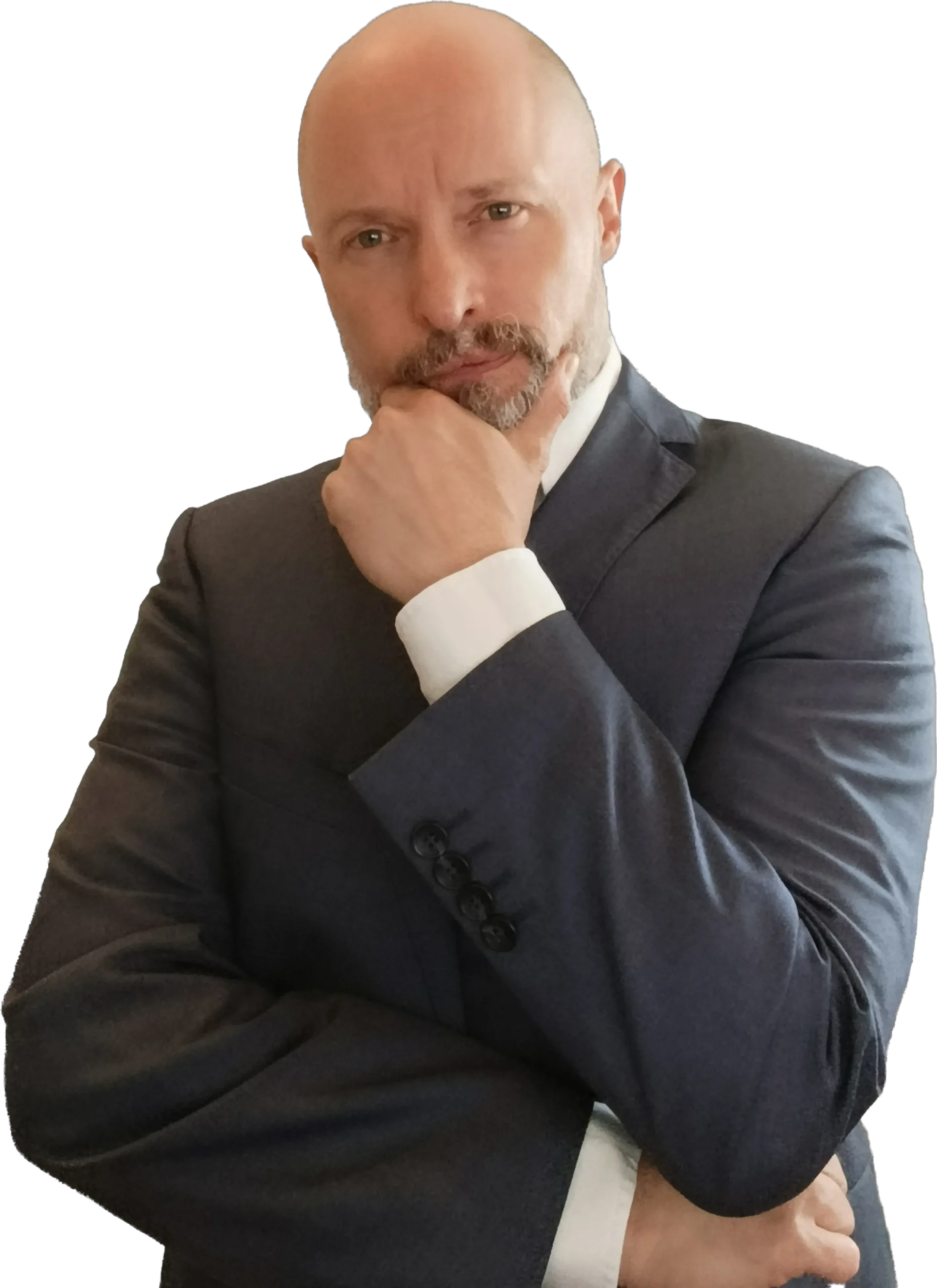
Most providers are either coach or consultant and know the matrix from the desk. Andy Balbus sits at a rarer intersection. First, executive leadership: 25+ years of operational automotive DNA, 150 million euros of revenue accountability, an electronics hub with 40+ engineers built greenfield.
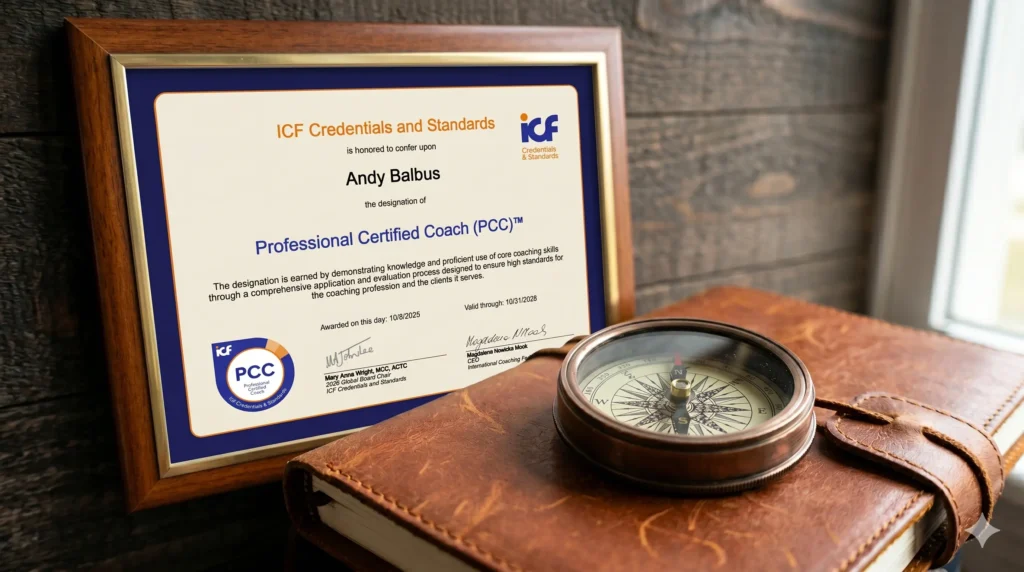
Second, executive coaching: ICF PCC certified, 1,000+ coaching hours. Third, intercultural transformation: four years lived and led as an accountable executive in Slovakia and two years in Pune, with experience across DE, SK, IN, CN, MX and UK. The turn Ashish P. went through is tested in the engine room of these three worlds, not in theory. More on Andy Balbus.
Every month in the old pattern is a month in which your best team waits for instructions instead of carrying the load. Do not push this clarity to the next promotion round. Take the 30-minute Reality Check now, with the view from leadership, coaching and cultural change at once.
A calendar link, no preparation needed.
Systematic Leadership does not end with a phone Call.
Follow Andy for more Perspectives and Insights.


Leave a Reply