
Summary
SOP Delay: Green dashboards will not protect your production launch. Watch for the three true early warnings: commitments without questions, silent interfaces, and reporting gaps. Ask actively instead of assuming to prevent expensive late-stage damage control.
Is the shipment on its way? The answer to that question showed me twice what a green dashboard is really worth.
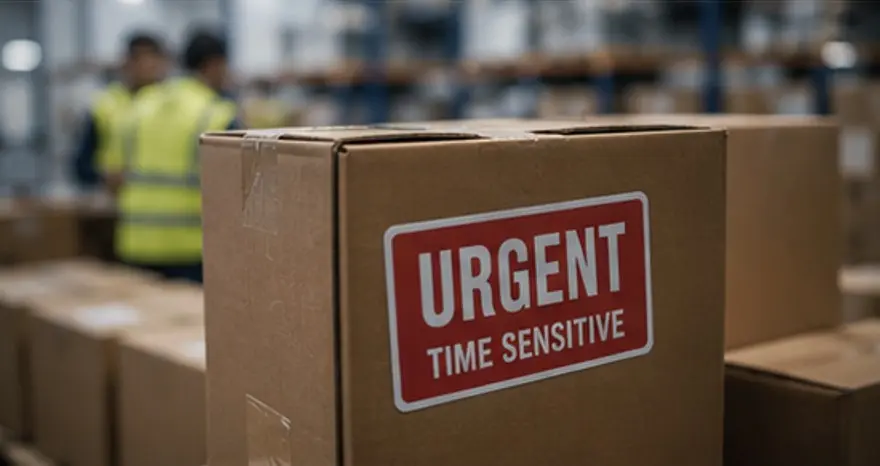
This article is written for leaders who own a production launch and have stopped fully trusting their status reports. For the project lead in the product development process whose milestones are formally green while his gut says amber. For the plant manager who knows that an SOP delay is not born on delivery day but weeks earlier. And for everyone in launch management who would rather check an uncomfortable signal early than correct a comfortable number late.
The Launch Is Green, Until Suddenly It Is Not
Four weeks before the milestone, your dashboard shows no need for action. The supplier confirmations are in, the traffic lights are green, the status rounds take twenty minutes. Then comes the day when one single question flips the picture, and a project on track turns into a rescue operation. Not because the facts changed on that day. Because on that day, someone asked for them for the first time.
Twice in My Career: The Supplier Who Simply Said Nothing
The Question That Uncovered Everything
My name is Andy Balbus. Twice in my projects I lived through a situation I wish on no responsible manager: a supplier gave no information at all. No warning, no delay notice, no call. Only my question whether the ordered goods were on their way to shipment brought out the truth: they were not finished. Not delayed in transit, not partially done, simply not finished.

The Moment Leadership Ends and Damage Limitation Begins
That is the worst possible position a responsible manager can be in. You can no longer act as a leader; you can only attempt damage limitation, and even that no longer succeeds to the customer’s satisfaction. Every option that makes up leadership, meaning replanning, reprioritizing, shifting capacity, escalating, needs lead time. On delivery day, the lead time is zero.
The Signals Were There Before
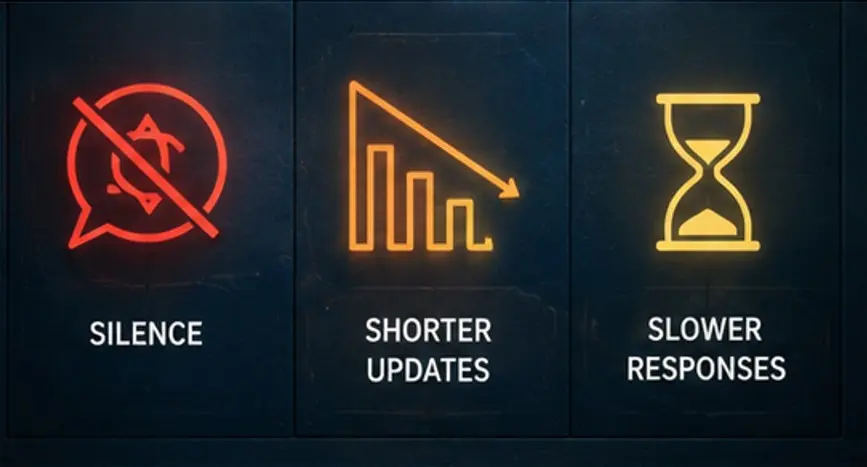
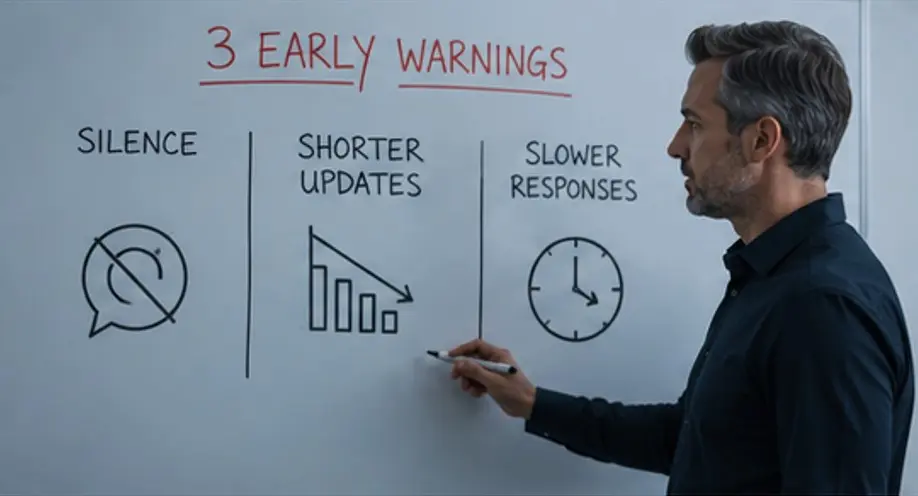
Looking back, the silence did not appear out of nowhere. There were commitments without a single question in return. There were status updates that grew shorter while the deadline grew closer. And there was an interface that responded more and more slowly to coordination requests. Every one of those signals was visible, yet none of them appeared in the dashboard, because dashboards show what gets reported, and the reporting was exactly what had stopped.
Ask Instead of Assume: The Lesson
My consequence from those two experiences shapes every launch I support today: at the discovery of even one of these signals, active communication is the right move, held in the spirit of nonviolent communication. Make no assumptions, raise no accusations; ask, listen actively, and capture the situation as completely as possible. Not on delivery day, but in the moment the signal appears. Whoever asks early can still lead. Whoever asks late can only clean up.
Your launch shows one of these signals? Then let us check it together before your customer does. The Reality Check is a 30-minute diagnostic conversation, no slides, no sales pitch.
What Is at Stake: The Numbers Behind Launch Risk

Why invest in an early-warning system next to the dashboard? Because the impacts in this industry are anything but small. The Siemens study True Cost of Downtime 2024 puts one hour of unplanned downtime in automotive manufacturing at around 2.3 million US dollars, a rise of 113 percent since 2019. An SOP delay that touches your customer’s lines plays in a league where weeks of hesitation cost millions.
The second number shows what happens when quality slips under schedule pressure: according to the Allianz AGCS analysis, the average loss of a product recall stands at 12.4 million euros, and the automotive industry accounts for more than 70 percent of major losses. That is why early detection is not busywork for quiet days. It is the cheapest insurance a launch owner can buy.

The Three Early Warnings Before Every SOP Delay
Three Honest Questions Before You Read On
If a name comes to mind immediately, the next section is for you.
Preventing the SOP Delay the BYG Way: Three Steps
Letting go is a craft and one of the 28 methods in the BYG leadership toolkit; here is the short version for daily business.
1. The Early-Warning Radar Next to the Dashboard
Turn the three signals into a weekly checking routine, next to the dashboard, not instead of it. Ten minutes per week, three questions per critical partner or work package: did questions come back with the commitment? How has the communication density changed? How fast does the interface respond? The result is a second traffic light that measures behavior instead of reports, and behavior tips weeks before the report does.
2. The Reality Alignment: Ask Instead of Assume
When the radar fires, what follows is not another reporting loop but a direct conversation, held by the principles of nonviolent communication: observation instead of judgment, no assumptions, no accusations. Open questions bring reality onto the table: where does the package really stand, what is missing until the date, what is still needed for that? Then comes active listening: receive the answer completely, including the undertones. Whoever creates safety instead of pressure in that conversation gets the truth earlier, and that is the whole point.
3. The Stabilization: Structured Intervention Instead of Frantic Action

When the risk is confirmed, the quality of the intervention decides the launch: reorder priorities, clarify ownership and decision paths, and stabilize the communication between the parties before operational frenzy takes over. This exact situation is what Accelerate Now is built for: a focused executive sparring that moves from signal to resilient countermeasure in a few sessions, with the outside view that is naturally missing inside your own project.
Your radar has fired and you want to structure the intervention before your customer asks the question?
Explore Accelerate Now: executive sparring for critical project phases
Voices from the Field
Manuel Prando has worked with me for many years; his review in the German original says that I concentrate on what matters now while keeping the future in view, and that my experience means I have most likely mastered similar challenges before:
FAQ: Straight Answers to Skeptical Questions
Q1: We run a professional launch management with maturity reviews. Is that not enough?
Maturity reviews check reports and documents; the radar checks behavior. The two systems see different things: a review detects missing evidence, but it does not detect a smooth yes without questions or an interface that goes quiet. The ten minutes per week do not replace your launch management; they close its blind spot.
Q2: Are the three signals not just gut-feeling psychology?
Every signal is observable and countable: the number of questions attached to a commitment, the change in communication density over the weeks, the response time of an interface. You measure behavior, not mood. The difference to gut feeling lies in the routine: whoever checks the same three questions weekly recognizes trends instead of impressions.
Q3: What if I am wrong in the reality alignment and the partner feels controlled?
That is why the stance decides. A conversation held by the principles of nonviolent communication starts with an observation instead of a judgment: I noticed we have heard less from each other for two weeks, where does the package stand from your side? Whoever asks like that is not controlling; he is interested. If the radar was wrong, the conversation costs twenty minutes. If it was right, it saves the milestone.
Q4: Why would a supplier not report something like this on his own?
For the same reasons bad news travels late inside your own organization: hope of catching up, fear of the reaction, worry about the business relationship. Whoever reports the delay makes it official. That is exactly why waiting for the report fails as a strategy, and exactly why the active, judgment-free question is your job and not his duty, however unfair that feels.
Q5: Does this apply only to suppliers or to internal interfaces as well?
To both, and internally it often hits harder, because formal orders and contractual penalties are missing there. An internal development team that goes quiet, a neighboring department that commits without questions: same signals, same reality alignment. In the matrix between headquarters and sites, cultural amplifiers join in, making a yes even smoother and the silence even longer.
Q6: How do I tell normal project calm from dangerous silence?
By the reference point of the deadline. Calm while the milestone is far away is normal; silence while the distance shrinks is a signal. Healthy projects get louder as the date approaches: more alignments, more detail questions, more friction. If it gets quieter instead while the countdown runs, check.
Q7: How much time does such an early-warning system cost?
Around ten minutes per week and critical partner, because only three questions get checked. Set against the stakes, the ratio is absurd in your favor: the Siemens figure of around 2.3 million US dollars per hour of downtime turns every radar minute into the best return in your project budget.
Q8: My team reports everything to me. Do I still need the radar?
Test that assumption with one question: when did someone last bring you bad news proactively, before you asked for it? If a current example comes to mind, you own a rare culture; protect it. If not, your information flow works like in most organizations, and the radar is your insurance against the filters in between.
Q9: We are four weeks before SOP and one signal has just been confirmed. Is it too late?
No, but the sequence decides. First the complete reality alignment, so you know the true delta instead of the reported version. Then the stabilization with clear priorities and decision paths instead of frantic action. Four weeks with clarity are worth more than eight weeks with green reports. The earlier the structured intervention starts, the more options remain.
Q10: What does working with BYG look like in this situation?
The entry point is always the Reality Check: 30 minutes, your situation, no slides. If the need for action is confirmed, Accelerate Now follows as a focused sparring across a few sessions: evaluate the signals, prepare the reality alignment, structure the intervention, and stabilize the communication between the parties. For leaders in headquarters who steer sites or suppliers, Executive Sparring Germany HQ carries exactly this interface focus.

The Next Step for Your Launch

If this article describes your project, there are two fitting paths: Accelerate Now for the structured intervention in the critical phase, or Executive Sparring Germany HQ for the ongoing steering of your site and supplier interfaces.

The patterns behind the three signals run deeper in the articles on the Indian Yes, the Green Melon Effect, and ignored emails; the key terms sit in the BYG Glossary.
About the Author: The Intersection of Three Worlds
Most providers in this market are either a coach or a consultant, and they know the matrix from the consulting desk. Andy Balbus works at a rare intersection of three worlds. Executive Leadership: 25+ years of operational automotive DNA, €150M revenue accountability, an R&D hub with 40+ engineers built greenfield. Executive Coaching: ICF PCC certified, 1,000+ coaching hours, developing people systematically instead of by gut feeling. Intercultural Transformation: lived and led as the accountable executive for 4 years in Slovakia and 2 years in Pune, with experience across DE, SK, IN, CN, MX, UK. Every method on these pages is tested in the engine room of exactly these three worlds, not in theory.
Results or Excuses: The Reality Check
The first step is a 30-minute diagnostic conversation: you bring your most critical milestone, and together we test it against the three early warnings, seen through leadership, coaching, and culture change at once. No slides, no sales pitch, only your reality.

Systematic Leadership does not end with a phone Call.
Follow Andy for more Perspectives and Insights.


Leave a Reply