
Summary
Transferring Company Values: A successful succession is a question of letting go, not of legal contracts. 70 percent of handovers fail, usually because of missing trust and unprepared successors. Learn how to explicitly name your company values and truly transfer decision space. A successor who is micromanaged will never establish himself. Ensure your life’s work survives by transitioning from a controlling boss to a guiding mentor.
Most handovers do not fail on the contract. They fail on the part that cannot be signed.

This piece is written for owners who want to pass on their life’s work without losing the culture that built it.
It is for the next generation that will lead differently and still needs to carry what came before. And it is for anyone who senses that transferring company values in succession is not a question of the org chart, but of letting go.
What a Handover I Watched Up Close Taught Me About Succession
A handover that looked perfect on paper
I once watched a company succession from close range. A family business, an owner who wanted to step back, and an external managing director who was meant to take the lead. On paper everything was settled: title, responsibility, signing authority. The handover looked complete.

Why the owner never truly let go
What happened next, I have since recognised in many conversations. The owner handed over leadership but let the new managing director make no real decisions of his own. He stepped into everything, corrected, overruled. The successor stood at the top, yet without the room to actually lead.
One worn-out leader after another
The pattern repeated. One managing director left, another arrived, and that one hit the same invisible wall. Over the years the company wore out several leaders. Each one started with ambition, each one was stopped at the very same point.
Someone else was always to blame
To the outside, the story read differently. In the owner’s telling, other people were always the reason for the company’s troubles, the market, the managers, the circumstances, never the owner himself. That habit of blaming outward belonged to the same pattern that blocked the handover from within.
What this observation did to my view of succession
This observation shaped my view of succession for good, and it still carries my Legacy Program today. A company head has to accept one thing first: a managing director, a successor, the next generation, they will decide differently and act differently. That is exactly what they must be allowed to do, fully, and of course own the outcome. A successor who exists only on paper, and is never truly allowed to work independently, will never establish himself.
You cannot transfer values by contract
Transferring company values in succession is not a legal act. It is a question of trust and of letting go, much as my leadership principles for owners describe. An owner can transfer shares, titles and processes. Whether the culture survives comes down to one thing: whether the successor is truly allowed to act.
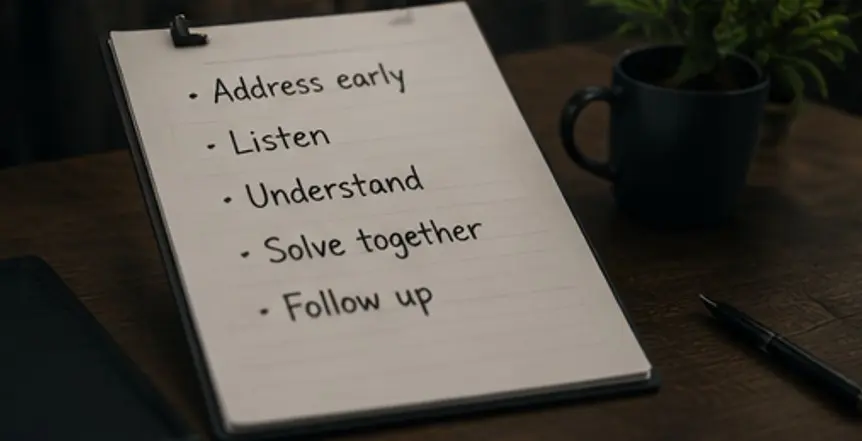
No sales pitch. I will tell you plainly whether your handover holds or exists only on paper.
What the Numbers Say About Transferring Company Values
70 percent of handovers fail, but not over money
The most extensive study on this comes from the advisory firm The Williams Group. Roy Williams and Vic Preisser tracked 3,250 families through real handovers across twenty years and recorded the result in their book Preparing Heirs. About 70 percent of these intergenerational wealth and business transfers failed. Not over the contract, not over tax, but over something no notary secures, a truth also visible in our documented case studies.

Why trust is the real currency
The breakdown of causes is clear. Sixty percent of the failures came from a collapse of trust and communication within the family, and 25 percent from inadequately prepared successors.
All technical reasons combined, tax, law and financial planning, accounted for only about 15 percent. That is exactly what I saw in that handover. The legal part was flawless, the human part was not, and that gap is where sound conflict work begins.
How rarely a handover truly holds
The second figure makes the scale tangible. By a widely replicated estimate, worldwide only about 30 percent of family businesses reach the second generation, roughly 10 percent the third, fewer than 5 percent beyond that. Treat a succession as a mere legal act, and you are very likely to land in the 70 percent that do not make it. An early strategy sparring shifts that probability the other way.
Three honest questions before you read on
If you hesitate on any of these, the next section is for you.
Transferring Values That Survive the Ownership Change: The BYG Path in Three Steps
The three steps below interlock and draw on tools from the BYG method toolkit. Together they turn a good intention into a handover that holds.
1. Make values visible before you hand over
Values are not a poster on the wall, they are observable behaviour. Before you hand over, make explicit what has only been lived so far: how decisions are made under you, where the line runs between diligence and hesitation, what a handshake really means with you. A Team Charter Workshop turns quiet assumptions into a shared language, and the BYG leadership principles give that language a firm frame. What a successor cannot name, he cannot carry forward.
2. Actually hand over the decision space
The second step is the hardest, because it demands letting go. A successor establishes himself only when he is allowed to decide, including differently from you. That means not only naming responsibility but handing it over for real, the way our piece on uncompromising delegation describes it. Pull every decision back to yourself, and you turn the successor into an administrator and yourself into the actual bottleneck. Develop the successor on purpose instead, with the GROW method and clear goals set the SMART way, and you build real capability rather than dependence. A structured sparring for business owners helps you draw that line on purpose.
3. Accompany the handover, do not control it

Letting go does not mean disappearing. The outgoing owner stays available as a sounding board, not as a correction desk. Regular conversations as equals, where the successor reflects rather than reports, carry the culture forward without suffocating autonomy. A coaching for owners and managing directors gives both sides a protected space for this, and the active listening method keeps accompaniment from turning into quiet remote control. The outgoing owner stays a mentor rather than becoming a shadow boss.
You leave with one concrete decision, not with a concept.
Voices From Practice
Value transfer does not show up in the handover contract, it shows up in a relationship that holds over years. Gauri Gole has worked with me across several years and multiple initiatives, and she names exactly the strategic clarity and trust that a succession needs in order to hold:
FAQ: Frequently Asked Questions About Transferring Company Values
Q1: What does transferring company values in succession actually mean?
It means passing on what a company is at its core: how decisions are made, how people treat one another, what the firm stands for. Shares and titles transfer by contract. The culture survives only if the successor understands it, shares it, and is allowed to carry it forward independently. Key terms are explained in the BYG glossary.
Q2: Why do so many handovers fail despite solid contracts?
Because the contract secures the wrong part. The Williams and Preisser study shows that about 70 percent of transfers fail, and 85 percent of those failures trace back to missing trust, poor communication and unprepared successors. Only about 15 percent fail over technical matters such as tax or law.
Q3: What is the most common mistake the person handing over makes?
Not truly letting go. Many hand over the title but keep the decisions. The successor then stands at the top without being allowed to lead. This pattern wears out capable leaders and blocks the next generation from establishing itself. A parallel executive coaching helps you catch your own control reflex in time.
Q4: Does a successor have to make the same decisions I would?
No, and that is the heart of it. A successor will decide differently and act differently. That is exactly what he must be allowed to do. Different is not wrong. Values stay stable, the paths toward them are allowed to change.
Q5: How do I hand over responsibility without losing control of the culture?
By making the values explicit before you hand over the decision space. When it is clear what the company stands for, you do not need control over every single decision. The frame holds, even when the paths are new.
Q6: What if my successor makes a mistake?
Mistakes are part of taking on responsibility. A successor who is never allowed to decide independently, and to fail while doing so, never learns to truly carry the company. Your role is to stay available as a sounding board, not to correct every decision. This is the stance the BYG mentoring method describes.
Q7: Does this only apply to family businesses?
No. Whether the succession runs inside the family, goes to an external managing director, or passes to the next leadership tier, the pattern is the same. Everywhere, the decision space you hand over decides whether the transfer holds. When the move comes from within the ranks, the path from expert to leader helps.
Q8: How do I recognise that a handover happened only on paper?
By two signs. First: the successor still comes to you for sign-off on decisions that are rightfully his. Second: in external communication, problems are always someone else’s fault, never the owner’s own role in the handover.
Q9: How long should the accompaniment after the handover last?
There is no fixed term, but a clear principle: the accompaniment shifts from leading to resonance. As long as the outgoing owner still makes decisions, the handover is not complete. Once he only reflects and the successor decides, it holds.
Q10: Do company values matter across cultures too?
Very much so. Where a succession crosses site or country borders, different ideas of authority and decision-making meet. Values then have to be not only passed on but translated, so they can be lived in the new context. How fast misunderstandings arise is shown by the Green Melon Effect and the Indian Yes; structured support comes from intercultural mentoring.
Q11: What is the first step if I want to take my succession seriously?
Make visible what your company stands for before you talk about people. Once the values are named, it becomes clear what a successor can take on and what only you embody. A first honest look at that fits into a 30-minute conversation. An overview of the fitting formats is on the services page.

About the Author: The Intersection of Three Worlds
Most providers are either a coach or a consultant. They know the matrix from the advisory desk, not from accountability. With Andy Balbus, three worlds meet. First, executive leadership: 25+ years of operational automotive DNA, 150 million euros of revenue accountability, an R&D hub of 40+ engineers built greenfield and later handed over.

Second, executive coaching: ICF PCC certified, over 1,000 coaching hours.
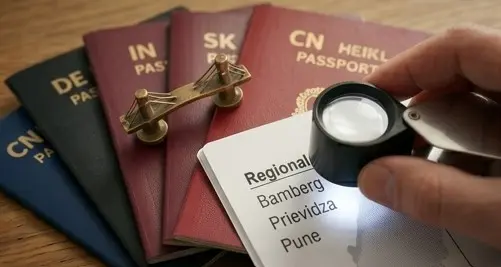
Third, intercultural transformation: four years in Slovakia and two in Pune as the accountable leader, with experience across DE, SK, IN, CN, MX and UK. Someone who has built a department and then deliberately handed it over speaks about succession not from theory, but from the engine room of all three worlds.
Results or Excuses
The succession you keep postponing does not get easier while you wait. It gets more expensive, because every decision you refuse to hand over quietly erodes the trust your successor depends on. In a 30-minute Reality Check we look together at where your handover hangs on the contract or on trust, with the view from leadership, coaching and cultural change at once. No slides, no sales pitch, only your reality and the honest question of whether you are handing over a rulebook or a life’s work.

One calendar link is all it takes. The only thing to bring is candour.
Systematic Leadership does not end with a phone Call.
Follow Andy for more Perspectives and Insights.


Leave a Reply