
The 4 Pillars of Leadership at a Distance: Tested in a Pandemic, Proven Across DE-SK-IN
This method is part of the BYG Leadership Toolkit: 28 validated instruments for automotive executives navigating the DE-SK-IN matrix.
This page is for everyone leading teams without daily physical proximity. What you share is the core executive question: How do I sustain trust, performance, and retention when physical presence is missing?
- Multi-Site R&D Networks: Steering engineering groups across Germany, Slovakia, and India without co-location.
- Hybrid Operations: Coordinating plant shifts and technical units across regional production hubs.
- Cross-Cultural Expats: Managing international teams while bridging cultural and operational gaps.
- Home Office Governance: Maintaining delivery standards and accountability without resorting to micromanagement.

March 2020. Prievidza, Slovakia. A Monday That Changed Everything.
Remote leadership in the automotive industry stopped being a method question that day and became a survival question. Anyone holding a leadership role back then remembers that exact moment, because it permanently changed how we lead.
Today, with 25+ years of automotive leadership experience, I look back on that period with one clear recognition: I still had a great deal to learn.
In early 2020, I was head of the electronics department at Brose in Slovakia, managing 40 engineers with critical ongoing SOP processes. When initial rumours surfaced, I acted with foresight: together with our IT department, I organised laptops for the team. No panic, just a clear-headed calculation to remain flexible.
Then came the lockdown. Fast, unexpected, without exception. Within 48 hours the office was empty. What I had not factored in: a laptop alone does not make a functioning remote team.
Why Technical Infrastructure Is Not Automotive Remote Leadership
Laptops and VPNs provide connectivity, not governance. When physical proximity disappears, traditional management habits collapse. You can no longer gauge team alignment by walking the shop floor, nor catch emerging technical blockers at the coffee machine.
In a Tier-1 environment with tight OEM gate reviews, losing this informal visibility creates immediate SOP delivery risk. It requires a deliberate operational architecture to replace what physical presence used to solve naturally.
From Physical Presence to Structural Matrix Governance
Leading at a distance forces a fundamental shift: from monitoring presence to evaluating delivered results. Engineering teams across Germany, Slovakia, and India need absolute clarity on decisions they can make locally versus risks that require immediate escalation.
This crisis in Prievidza became the empirical proving ground for uncompromising remote governance. It demonstrated that high-performing matrix hubs do not rely on a director sitting in the same building. Instead, they rely on robust, self-steering systems.
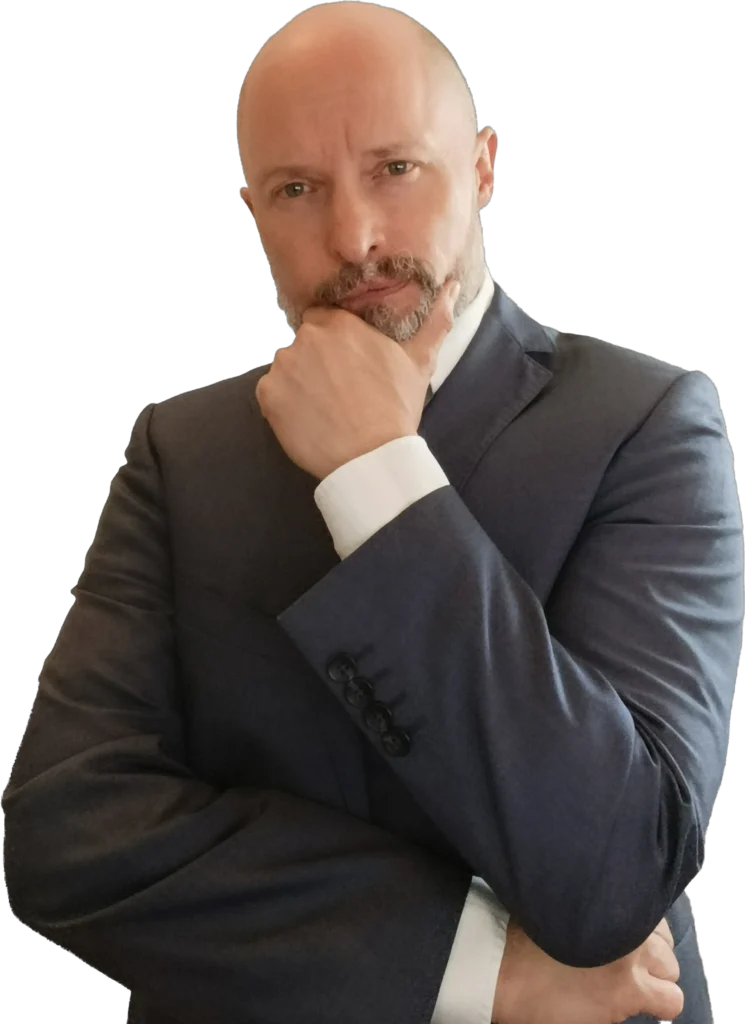
How do I lead people I cannot see?
My first instinct was the same as most leaders: structure. Daily reports. Standup calls. Progress updates. I wanted control because I felt I was losing it. And I was fundamentally wrong.
After two weeks, project progress was not the core issue. I was simply no longer truly reaching my people. Scheduled calls happened and status reports came in, but something was missing. Without physical proximity, I could not see who was struggling. Critical signals that told me who needed help had disappeared. Years of physical presence taken for granted had been my most invisible leadership tool.
The Realisation That Changed Everything
Somewhere in the third week of lockdown, my phone rang. One of my best engineers. No meeting, no reporting window. Just: Andy, I cannot handle this. At home with three kids, a dog and a flat with no study.
In that moment every checklist disappeared from my mind. Instead of asking about project status, I asked: How are you really doing? That was the turning point. Remote leadership does not start with the milestone. It starts with the person.
At the same time something became visible that I had not seen coming: part of my team simply could not be fully productive remotely. Not for lack of motivation, but because of the nature of their work. Our hardware developers and lab engineers need physical equipment, measurement tools, real components. No laptop replaces an electronics lab. Together with my development manager I fought to get these people access to the lab under strict protocols: masks, gloves, distancing, separate zones.
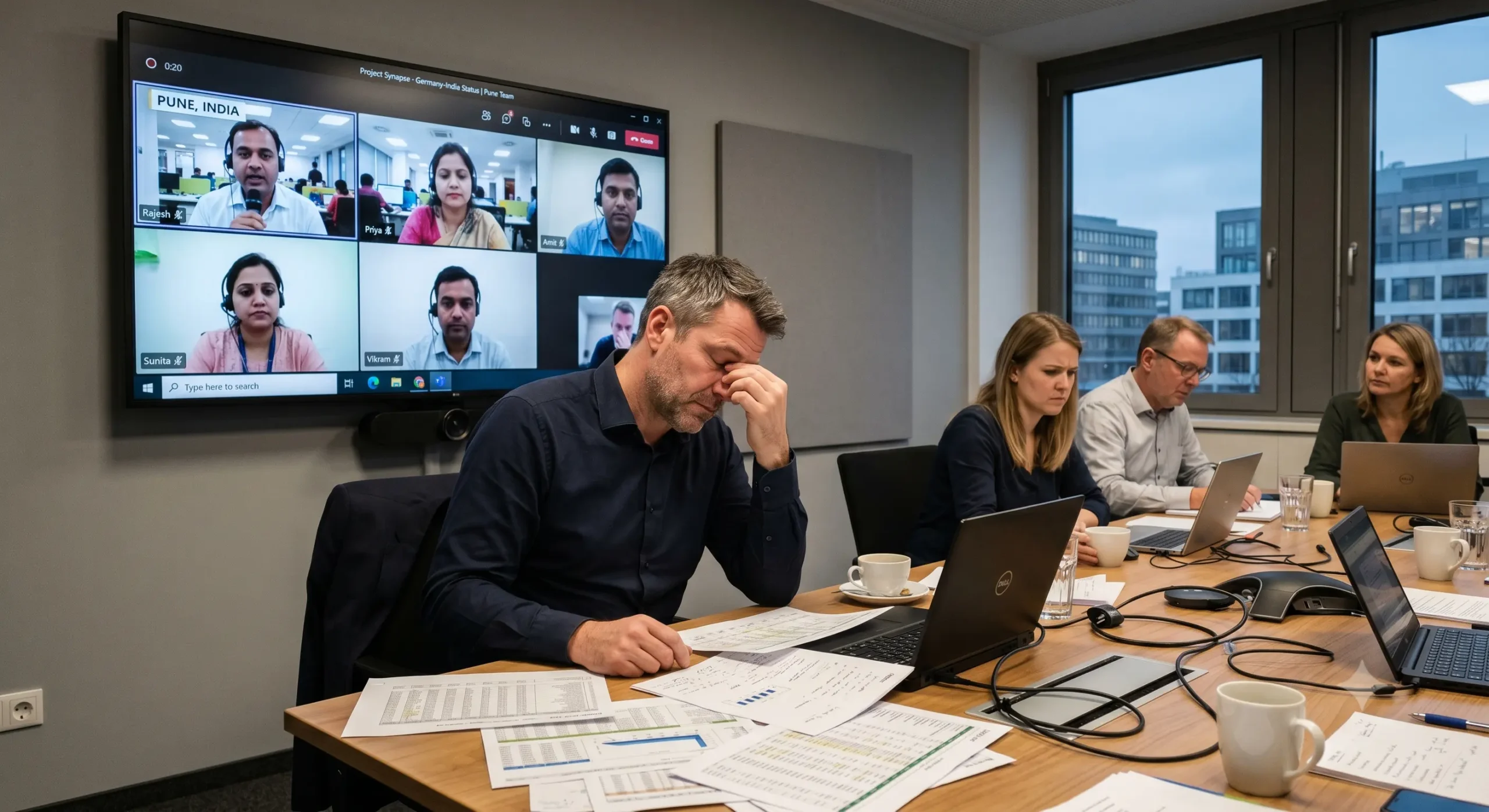
Office Presence When Remote Was Not an Option
And then I made a decision that still matters to me today: I went into the office myself. Under the same conditions. With the risk in mind that nobody could truly assess at the time. Not because I had to, but because I did not want my team to feel abandoned in that situation.
What I learned in those weeks is perhaps the most important leadership lesson of my career: remote leadership must never be understood as a choice between home office and office presence. It is not about a rigid model. It is about each individual person, their technical deliverables, their real-life situation, and their specific operational environment. A dogmatic answer always loses someone. An individual answer builds trust.
Cross-Continental Execution for International Decision-Makers: Translating strategic methodology into real-world impact requires a flexible framework built for global complexity. We support executive leaders across Spain, Europe, the USA, and Mexico, applying our methods both virtually and on site. From dynamic hubs like Barcelona to key industrial centers in Querétaro and Pittsburgh, these tools empower leaders to maintain strategic alignment across borders.
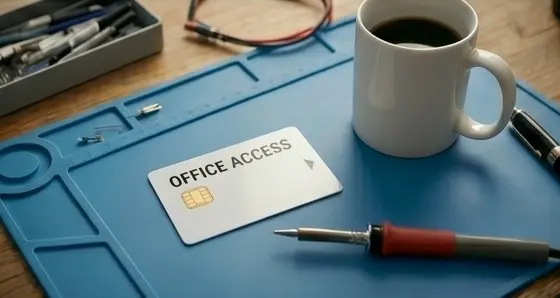
International Track Record & Presence Governance
- 25+ Years Experience:
Proven Tier-1 automotive leadership across multi-site engineering operations. - 40+ R&D Engineers:
Balanced management across remote setups and physical laboratory presence in Slovakia. - 4 Years Prievidza (SK):
Onsite leadership and local engineering team development. - 2 Years Pune (IN):
Cross-border matrix steering, intercultural alignment, and global delivery optimization. - Pragmatic Presence:
Setting physical presence protocols based on operational role requirements rather than corporate dogmatism. - Cross-Continental Fit:
Supporting executive clients across Germany, Spain, CEE, North America, and India.
The BYG Remote Leadership Method: The 4 Pillars
What I learned during the pandemic was not theory. It was a series of operational stress tests that produced a practical remote framework. Tested and proven across Tier-1 matrix setups in Bamberg, Prievidza, and Pune, this methodology ensures delivery, trust, and retention in multi-site operations.
Pillar 1: Trust Is the Foundation, Not the Reward
The biggest misconception in remote leadership is assuming trust must be earned before it is given. Physical leadership often substitutes trust with permanent visibility. Remote removes that substitute entirely.
- Control Trap: Tracking screen time, login hours, and document progress produces compliance, not productivity. Employees learn to look controlled rather than work effectively.
- Invisible Loss: The greatest damage in remote teams is not the employee who burns out visibly. It is the skilled engineer who quietly stops caring under micromanagement.
- HBR Research Anchor: High-trust organizations achieve 74% less stress, 50% higher productivity, and 76% stronger retention (Paul J. Zak, Harvard Business Review).
74% Less Stress | 50% Higher Productivity
Employees in high-trust organisations report 74% less stress and 50% higher productivity (Paul J. Zak, HBR).

Pillar 2: The Person Before the Milestone
In remote setups, body language and informal hallway cues disappear completely. One-to-ones that only tick off project milestones miss critical leadership signals and obscure personal blockers.
- The 10-Minute Rule: Begin every remote 1:1 with three genuine questions about the person before touching the project. This shift costs 10 minutes and resolves blockers faster than any status dashboard.
10 Minutes Investment | 23% Bore-Out Risk
Three personal questions before any project question: the lowest-cost trust lever in remote leadership.
Bore-Out: The Invisible Brain Drain Risk in Remote Work
Burnout from overload is visible and widely discussed. Bore-out from chronic underchallenge stays invisible. That is precisely what makes it so dangerous in remote environments.
In an office, a leader notices when someone stops growing and enthusiasm disappears. Remote removes all of those informal signals. An engineer can stagnate for months, deliver consistent green reports, and quietly stop caring without any dashboard flagging the risk.
- Pronova BKK Benchmark: 23% of German employees experienced bore-out or observed it in colleagues within a 12-month period. Bore-out is nearly two-thirds as common as burnout, but receives a fraction of public attention.
- Gallup Productivity Loss: Globally disengaged employees cost organisations $8.1 trillion annually in lost productivity.
- Brain Drain & Replacement Costs: An underchallenged employee stops developing and loses confidence. That loss leads directly to quiet quitting or physical resignation, with replacement costs reaching 150% to 200% of an annual salary.
23% Bore-Out Rate | 150-200% Replacement Cost
Nearly two thirds as frequent as burnout, but a fraction of public attention (Pronova BKK, Arbeiten 2023 Study).

Pillar 3: Structure Availability, Do Not Maximise It
Remote leadership tempts leaders into two extreme mistakes: forcing permanent availability, which leads to burnout, or allowing asynchronous isolation, which creates dependence on endless email chains.
- The Availability Extremes: Forcing 24/7 responsiveness causes fatigue, while unstructured flexibility leads to communication chaos.
- Availability Architecture: Physical presence solved alignment organically. Remote setups require explicit communication rules to maintain decision speed without sacrificing deep focus.
- Deep-Work Protection: High-complexity Tier-1 engineering requires uninterrupted focus time. Without explicit windows, constant pings fragment executive and technical bandwidth.
3 Communication Levels | Zero Communication Noise
Synchronous (live windows), asynchronous (channel rules), and escalation (emergency protocols). These three levels replace what physical presence solved organically.

Pillar 4: Individual Solutions, Not a Uniform Rule
Framing home office versus office presence as a matter of rigid principle is a fundamental mistake. Remote work is not for everyone, and a blanket office mandate is no better. Tailored individual solutions demand more leadership effort than a uniform rule, but they deliver unmatched ownership. Two engineers from my team in Prievidza proved this on completely different paths.
Eric: Home Office as a Condition, Not a Compromise
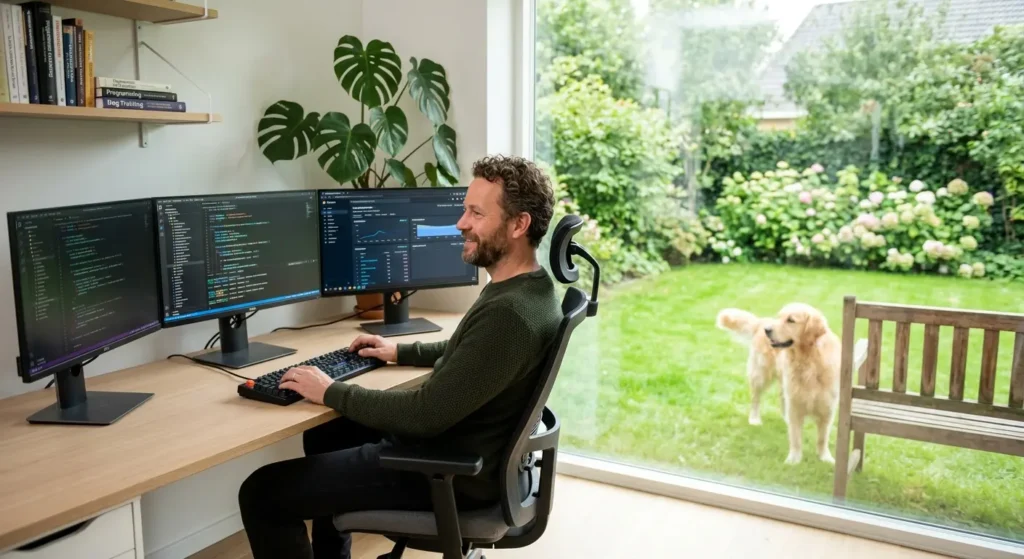
Eric was direct from his very first interview: if he joined us, it would be exclusively from home. His reason was genuine passion: Eric breeds dogs for competitions, a rhythm that standard 9-to-5 schedules simply cannot accommodate.
Instead of insisting on standard corporate models, we agreed on a schedule enabling both dog care and reliable output. Eric worked as a bridge between Prievidza and our Bamberg team, delivering performance that generated unsolicited praise across sites. He had no fixed 9-to-5. He had total ownership.
Tomas: When Office and Home Office Flex Together
Tomas was the opposite. For him, remote work was seasonal. When his family needed him, when children were ill, or when nursery drop-offs fell in the middle of the day, he worked from home.
He was not sitting at his desk 9-to-5 on those days, but he regularly logged on in the late evenings to move projects forward and catch up on deliverables. Not because I asked, but because he wanted to.
Treat your people like adults and you receive adult responsibility in return. Know their life circumstances and respect them to secure loyalty that no control system can force.
Trust Creates Loyalty | Zero Dogmatism
Eric delivered outstanding results without fixed hours. Tomas worked in the evenings without anyone asking. Both stayed loyal over years through trust rather than control.
The Hard ROI of a Remote Leadership Culture
Remote leadership competence is not a wellness initiative. It is a direct investment in the stability of your supply chain, the retention of your key talent, and the protection of your EBIT.
R&D Leader / Plant Manager: SOP Protection and Delivery Stability
Psychological safety in remote R&D determines escalation speed. When teams hesitate to surface blockers early, minor technical issues compound into major SOP crashes.
- Early Risk Escalation: High-trust environments encourage engineers to escalate technical blockers weeks before gate reviews fail.
- Downtime Avoidance: Preventing communication breakdowns protects critical line ramps, assembly targets, and OEM delivery schedules.
$2.3M / Hour Downtime Cost | Zero Line Stoppage
Average cost of an unplanned assembly line stoppage in automotive manufacturing (Siemens True Cost of Downtime).

HR Director: Talent Retention and Bore-Out Prevention
Key engineers do not leave companies; they leave managers who lack remote visibility. While burnout causes visible absence, bore-out causes quiet resignation and sudden talent drain.
- Silent Disengagement: Unchallenged engineers deliver green status reports while quietly looking for external offers.
- Replacement Pressure: Losing senior automotive R&D talent creates severe knowledge drain and costly recruiting cycles.
150-200% Replacement Cost | $8.1 Trillion Global Loss
Average replacement cost for senior technical key talent, backed by Gallup and SHRM global benchmarks.

The Leader (You): Strategic Freedom Instead of Bottleneck
Leaders who fail to establish structural remote governance end up working for their team instead of leading it. Every micro-escalation upward drains executive capacity.
- Micro-Escalation Trap: Without clear local authority boundaries, directors become constant operational bottlenecks.
- Capacity Recovery: Structured remote governance restores dedicated bandwidth for long-term strategic growth.
+10 Hours Strategic Time / Week | Zero Bottleneck
Average cost of an unplanned assembly line stoppage in automotive manufacturing (Siemens True Cost of Downtime).

Business Owner & Board: Site Stability and Greenfield Security
Whether expanding in Prievidza, Pune, or a new international hub: remote leadership competence determines whether offshore engineering sites deliver value or drain capital.
- Multi-Site Alignment: Ensuring new and existing international engineering hubs achieve identical delivery standards.
- Investment Security: Building resilient cross-border matrix operations that protect long-term plant value.
74% Less Turnover | Multi-Site Stability
Reduction in employee turnover in high-trust remote organisations (Paul J. Zak, Harvard Business Review).

BYG Self-Evaluation
How strong is your remote leadership really?
Five targeted questions provide a clear diagnosis of your digital management skills within two minutes.
What People Say Who Have Worked with Andy
1,000+ Coaching Hours | 25+ Years Operations
Evaluated leadership impact across automotive engineering hubs in Germany, Slovakia, and India.
BYG Team Diagnostics · Widget B
Burnout or bore-out in your remote team?
5 observations. 2 minutes. A clear signal.
Remote Leadership FAQ & Executive Qualification
Q1: Is remote leadership not just normal leadership, only on video?
No, and this misconception is one of the most expensive in remote leadership. In-person leadership lives on informal signals: the hallway conversation, the body language that shows someone is overwhelmed, the shared lunch that builds trust. All of that disappears remotely. Remote leadership requires a deliberate architecture for everything that emerges organically in physical presence.
Q2: My company uses tracking software for home office. What is wrong with that?
Tracking software does not solve the problem it claims to solve. Employees learn to look controlled rather than work effectively. Research shows: high-trust teams deliver 50% more productivity than controlled teams. Leaders who track instead of trust pay an invisible price in motivation, loyalty and ultimately performance.
Q3: How do I recognise whether employees in the home office are overloaded?
You cannot read it from reporting data. You can only find it through real conversation. Begin every 1:1 with three questions about the person before any project question: what is weighing on you right now? what is slowing you down? what is demanding more of you than work right now? These questions generate the signals that physical presence used to deliver automatically.
Q4: What is bore-out in remote work and why is it as dangerous as burnout?
Bore-out from chronic underchallenge is as dangerous as burnout from overload, and in remote settings significantly harder to detect. A 2023 study by Pronova BKK found that 23% of German employees experienced bore-out themselves or observed it in colleagues within a twelve-month period, compared to 34% for burnout. Nearly two thirds as frequent, but a fraction of the public attention.
In an office a leader notices when someone has stopped growing: the energy is gone, the enthusiasm has dried up. Remote removes these signals entirely. Someone can stagnate for months delivering green reports while quietly disengaging. Gallup estimates that globally disengaged employees cost organisations 8.1 trillion dollars annually in lost productivity. Bore-out is a key driver because it is the silent path to quiet quitting and eventual resignation. The only instrument that surfaces it before it becomes irreversible is the honest 1:1 that asks about the person, not just the project.
Q5: What do I do when a remote employee underperforms but always claims everything is fine?
That is the Green Melon Effect: green on the outside, red on the inside. It emerges when psychological safety is missing. When your team member does not share honest signals, they have learned that honesty has consequences. The solution does not begin with confrontational criticism but with deliberately building a safe conversation where openness carries no punishment.
More on the Green-Melon-Effect here. ›
Q6: Not every member of my team wants to work from home. Is that a problem?
No. It is a valuable insight. Remote work is not for everyone, and the leader who accepts that and develops individual solutions retains more talent than the one who enforces uniformity. In my pandemic experience in Prievidza, developing individual solutions was more effort, but the gain in loyalty and performance was immediately measurable.
Q7: How do I build psychological safety in a remote team?
Through three consistent leadership behaviours: address mistakes openly without assigning blame, ask questions that demonstrate you are listening, and take problems seriously before they escalate. Psychological safety is not the output of a workshop. It is the cumulative result of a hundred small decisions by the leader.
Q8: We have teams in DE, SK and IN working hybrid. How do I coordinate that?
The DE-SK-IN matrix has its own remote dynamics. German HQ managers find letting go harder because control culture runs deep. Slovak teams need clear autonomy signals to step out of execution mode. Indian teams often communicate even more cautiously remotely than in person because hierarchy respect is amplified digitally. This intercultural remote dynamic is my core domain.
Q9: Why do remote teams in the automotive sector miss deadlines so often?
In most cases it is not missing processes or poor tools. It is missing psychological safety. Remote teams that do not escalate problems early do so not out of laziness but because they have learned that honest signals carry negative consequences. The Green Melon Effect: green on the outside, red on the inside. In the automotive supply chain, where SOP delays create direct line stoppage risk, this is not a soft skill problem. It is an operational risk. The solution starts not with more reporting tools but with building the trust that makes honest escalation possible.
Q10: What happens when a remote team member silently checks out?
That is the bore-out path. It does not happen overnight. It builds slowly over months of under-challenge and under-connection. The warning signs: decreasing initiative, responses that become shorter and less engaged, no more unsolicited ideas. In an office these signals are visible. Remote hides them until stagnation has become the default. Leaders who invest ten minutes per 1:1 in genuine personal questions catch this pattern long before it becomes permanent.
Q11: From when should I seek professional support?
When your remote team consistently reports green but results are red, the system has a structural gap. When your best people leave and cite remote as the reason, that is a leadership signal, not an HR signal. Finally, when you notice you are spending more time on reporting and control than on real conversations, now is the right moment.
Q12: How do I build loyalty and talent retention in a distributed R&D team?
Loyalty in remote teams does not come from benefits or flexible hours alone. It comes when team members feel their leader knows them as people, not just as resources in a project plan. Two of my people in Prievidza, Eric and Tomas, are the clearest example: one bred dogs for competitions and needed no 9-to-5, the other was a father of young children who needed seasonal flexibility. Both delivered above-average results because I knew and respected their real lives.
Q13: Home office vs office: which is actually more productive?
The question of home office vs office is the wrong one. Productivity does not come from the location but from the fit between person, task and life situation. A hardware engineer is more productive in the lab, a focused architect often at home. High-trust teams show 50 % higher productivity than controlled teams, regardless of where the work happens. Trust beats attendance.
Q14: Should I issue a return to office mandate for my team?
A blanket return to office mandate, often framed as forcing employees back to office, rarely solves the actual problem. Anyone who mandates attendance confuses visibility with performance. Hybrid work leadership that follows task and person beats a uniform rule. My experience across the DE-SK-IN matrix is clear: teams led individually rather than dogmatically deliver more reliably and stay longer. A presence requirement makes sense when the work demands it, not because control feels better.

Stop Managing. Start Trusting.
When your remote team consistently reports green status while actual results lag, you face a trust deficit rather than a reporting gap. No software, dashboard, or automated check-in tool resolves missing psychological safety. Over 25 years of operational leadership experience prove that silent non-escalation remains the highest hidden cost in multi-site management. Address root causes directly before SOP milestones fail.
30 Minutes | 100% Confidential | Direct C-Level Sparring
Direct Contact: founder_andybalbus@boost-your-growth.com | WhatsApp: +49 151 4495 7099
The Next Step: Mentoring Matched to Your Leadership Reality
The remote method provides verified tools. Selecting the right guidance depends on your current operational context and span of control. Four distinct tiers, one unified principle.

- Active Listening: Uncovering hidden alignment barriers and making cross-cultural agreement visible in distributed teams.
- SMART Execution: Turning vague strategic directions into binding operational commitments across matrix sites.
- Delegation Framework: Breaking the chief-firefighter loop to restore dedicated executive capacity.
- Team Charter Workshop: Building a unified working foundation for distributed engineering units.
Explore all 28 methods in the BYG Leadership Toolkit ›
Systemic Leadership Does Not End After One Call
Follow for unfiltered operational insights, empirical matrix strategies, and direct executive sparring:


