
Summary
Customer Retention: Key customers are loyal to your people, not just your company. An unmanaged ownership handover can cost up to 17 percent of annual sales per key account. Secure your life work by planning an overlapping transition phase, capturing unspoken requirements in writing, and giving your customers a say in their new contact person.
Your customer does not stay because of your relationship. He stays because a way of working functions that nobody ever wrote down.
Losing customers during an ownership handover is the worry that keeps many owners awake, and it rarely gets said out loud. The thought behind it runs: my key accounts work with me, not with my company. That worry is justified, though for a different reason than most people assume.

This article is written for you if you run a company you intend to hand over within the next few years and a substantial share of your revenue sits with a handful of customers.
It applies equally if you have already named a successor and remain unsure when and how to introduce him to your accounts.
My view of this comes from the other side of the table. I commissioned and assessed suppliers for years, and I experienced what a change of contact person triggered on our side as the customer. What follows from that for an orderly handover sits at the centre of the Legacy Program.
What I Learned About Contact People as a Customer
I Sat on the Buying Side
As coordinator for test engineering I was responsible for procuring test systems, and later I worked with many suppliers and customers across various roles. So when I write about customer retention, I am not speculating about what your customers might be thinking. I was one of them.

What a Long-Standing Contact Person Actually Delivers
The longer you work with one fixed person, the more unspoken requirements get met. The supplier knows the customer and knows from experience what matters, even where nothing is written down. A deep cooperation grows out of that and makes a great deal easier, which is exactly why every buyer values those relationships.
And What Grows Alongside It
The other side of that coin is uncomfortable: the deeper the cooperation runs and the fewer requirements are fixed in writing, outlined and communicated, the higher the dependency becomes.
That holds for both parties. To you as the supplier it feels like loyalty, to your customer’s procurement department it feels like exposure.
Which Is Why We Always Asked at Least Three Suppliers
In industry I experienced it as a necessity to force independence again and again, in order to obtain pricing worth acting on. In our case it was policy to request at least three suppliers for every procurement. If your key account works similarly, its procurement department is already working today on reducing its dependency on you, entirely without any grievance against you.
What Happened When the Contact Person Changed
My experience was unambiguous: it meant relearning every time, and inside projects that was occasionally painful. Things that had run as a matter of course suddenly had to be explained, justified and secured. How quickly that hits a deadline is described in the article on SOP delays.
The Side Effect No Supplier Wants
Those changes helped us formulate our requirements better and detail our specifications. And the better our specifications became, the more comparable the offers became.

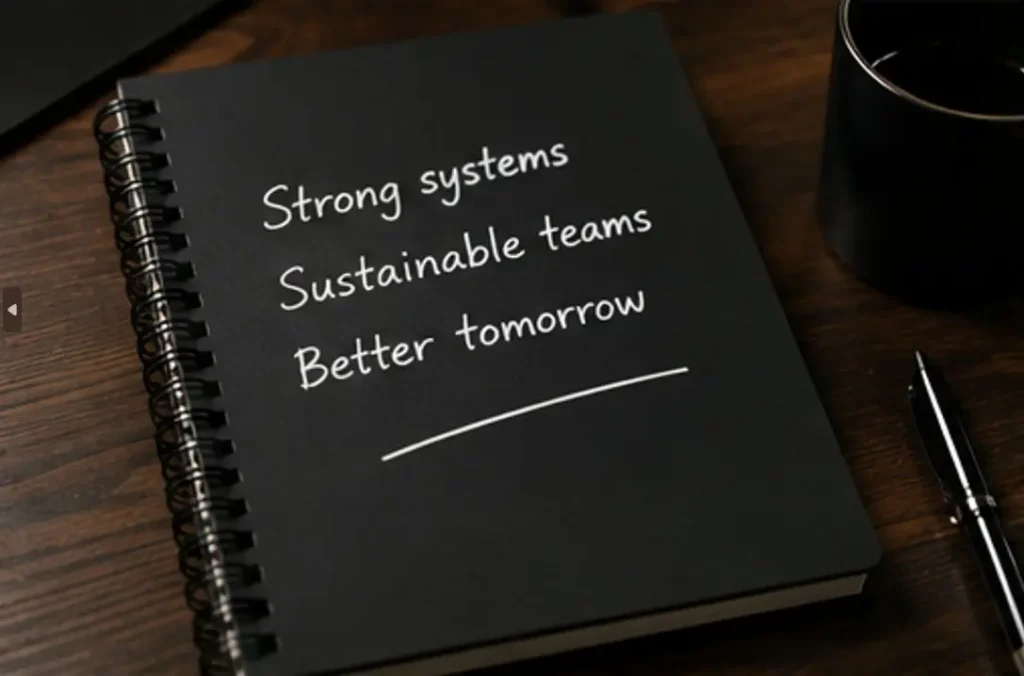
This is the point I would write into every owner’s notebook: a large part of your advantage consists of nobody else being able to quote cleanly against you. The moment the requirements are written down, that advantage is gone.
Something Was Lost Every Time on the Human Side
Beyond everything formal, each change carried a loss you cannot write into a specification. Trust, pace, the willingness to pick up the phone rather than escalate, which is where the translation tax starts to bite. That comes back, though it takes time, and during that time the relationship is exposed.
What Worked Instead
It always went well when the outgoing contact introduced his new colleague personally and we had a genuine transition phase.

Not a farewell meeting, but a period in which both were present. Afterwards the new person knew not only the contracts but the reasons behind our requirements, the same principle as in stabilizing a team after restructuring.
What I Draw From That for Any Succession
Anyone entering succession planning should plan overlapping time as a matter of course and give customers, suppliers and business partners the chance to get used to the new contact. A managing director who wants his company to succeed after his departure has to invest the time to establish his successor across a longer phase. Anyone who skips that cannot expect customers to build trust in somebody they first meet on handover day.

No sales conversation. If I am not the right fit, you will hear that within the first five minutes.
What the Research Says About Changing the Point of Contact
The Price of a Transition Has Been Quantified
Shi, Sridhar, Grewal and Lilien analysed data from a Fortune 500 firm in the Journal of Marketing, using a difference-in-differences design with correction for selection bias. When the person handling an account changes, annual sales with the affected customer fall by 13.2 to 17.6 percent. That is not a mood reading from a survey but a causal estimate on real revenue data.

A Successor From Outside Is the More Expensive Option
The same study shows that newly hired people cushion the losses less effectively than people already inside the firm. On top of that, the closer the successor sits to the predecessor in prior industry experience, the smaller the loss. Building your successor in house and keeping him technically close to you therefore buys in measurably cheaper.
The Transition Itself Is Not the Problem
Bendapudi and Leone examined in the Journal of Marketing how business customers react to losing their key contact. Their finding is the genuinely good news here: customers react far less negatively when the transition is properly managed. Churn arises not from the change itself but from the way it gets handled.
And One Detail Almost Nobody Implements
The same work shows customers stay calmer still when they have a say in the replacement. Recommended measures also include announcing the successor early and giving the customer multiple contact points into the company.

Your handover is therefore not an announcement date but an alignment process.
The Trade-Off I Will Not Smooth Over
The research explicitly recommends limiting personal attachment to a single individual, through several contacts and rotation. That lowers the risk while costing part of the tacit familiarity your customers value in you. Nobody can take that judgement off your hands, though it should be made deliberately rather than by habit.
What This Means for Your Numbers

Add up the revenue of your three largest customers and take fifteen percent of it. That is the order of magnitude at stake in an unmanaged handover, per customer rather than once overall. Seen against that, an overlapping phase of twelve months is not generosity, it is the cheaper option.
Inventory of Silent Deliverables
Before thinking about steps, you need a stocktake. Imagine your most important customer’s procurement team writes a complete tender document tomorrow. Ten items, and for each of them the question of where it stands today. The result is not an assessment of your work but a list of what does not travel on its own during a handover.
Inventory of Silent Deliverables
What does your customer expect without ever having ordered it?
Ten items, three minutes, an inventory rather than an assessment.
Think of your most important customer and imagine their procurement team writes a complete tender document tomorrow. For each item, answer where it stands today. This is a stocktake rather than a test.
Item 1 of 10
Five Steps to a Planned Relationship Handover
1. Write Down the Unspoken Requirements Before Somebody Else Does
Go through your most important customers and note what you deliver that nobody ever ordered. That list is uncomfortable and it is your actual operating capital. If you do not write it, your customer’s procurement department writes it later, and then as tender documentation.
2. Develop the Successor Inside Your Own House
Since successors from outside demonstrably cushion losses less well, succession starts years before the handover with people development. Anyone looking for a frame will find it in mentoring from expert to leader and in mentoring for team lead scaling.
3. Plan the Overlap and Announce It Early
Introduce the successor while you are still accountable, and let him work visibly in meetings rather than listen. Twelve months is a realistic frame for key accounts. What matters is that the customer sees the new person make a decision, not merely shake hands, an application of functional and disciplinary leadership.
4. Let the Customer Have a Say
Ask your most important customers what they expect from the future collaboration and who from your organization would fit.
That costs you an hour per account and takes the surprise out of the handover. How to run those conversations without smuggling in the answer sits on the active listening method page and in the article on open-ended questions.

5. Build Multiple Contact Points
Make sure your customer knows more than you, meaning engineering, project management and quality inside your company as well. That spreads the risk across several shoulders, in the same way that virtual team ground rules spread responsibility across a distributed team. Many owners experience this step as a loss of control, and that is precisely the pattern described in shadow founder syndrome and in transferring company values.
You leave with a formulation, not with a proposal.
Voices From Practice
Cross-Site Handover & Succession in Global Leadership
Vasanth Suratkal Kamath was President of Brose India and assesses the handover of responsibility across sites. His feedback belongs here because a succession is the same task on a smaller scale.
Complex Industrial Project Execution Across Sectors
Valentine Nelaev delivers large projects in plant engineering and knows the execution and procurement side outside the automotive industry. He appears here because the mechanics of a supplier relationship run the same way across sectors.
Navigating Handover Complexity Under Time Pressure
Dutonde Amol worked in the same company and describes the two abilities a handover actually needs: making complexity accessible and planning under time pressure.
FAQ: Frequently Asked Questions on Customer Retention During Succession
Q1: Are my customers really loyal to me rather than to my company?
Partly, and usually for a more sober reason than it feels. Your customer stays because a way of working functions that nobody wrote down and that you can execute. At a handover he loses no friend, he loses a running system, and that system can be transferred.
Q2: How much revenue is actually at stake in a handover?
In the study by Shi and colleagues, annual sales with the affected customer fall by 13.2 to 17.6 percent when the person handling the account changes. Apply that share to your three largest customers and you have the order of magnitude at stake.
Q3: How long should the transition phase last?
For key accounts, twelve months with both sides present is a realistic frame. More important than the duration is the substance: the customer has to see your successor make a decision, not merely learn that he exists.
Q4: Successor from outside or from inside?
The evidence is clear here: people from inside the firm cushion losses better than new hires, and technical closeness to the predecessor reduces the loss further. An external successor is possible, though it costs more time and more revenue.
Q5: Should I involve my customers beforehand?
Yes, and that is the least implemented piece of advice in the research. Bendapudi and Leone show customers react considerably more calmly when they have a say in the replacement. One conversation per key account is enough to turn an announcement into an alignment.
Q6: Do I not lose my advantage by documenting everything?
You lose that advantage either way, the only question is when and to whose benefit. If your successor does not know the requirements, your customer’s procurement department writes them down afresh, and that document is ready for tender. In our case policy required at least three suppliers per procurement, and the better the specification, the more comparable the offers.
Q7: What about framework agreements, do they not protect me?
They secure volume for the term rather than the relationship beyond it. What decides is who sits at the table for the next award round and whether that person knows the reasons behind the requirements. A contract bridges time, it does not replace a handover.
Q8: Should I announce the change openly or keep it quiet?
Openly and early. Advance notification is among the explicitly recommended measures, and a customer who hears about it later through back channels draws his own conclusions. Silence rarely reads as consideration inside a procurement department.
Q9: What do I do when a customer insists on working only with me?
You take it seriously and change nothing about your plan. Build additional contact points, in engineering and project management for instance, so the relationship does not hang on one person. That approach is explicitly recommended by the research and it reduces exactly the risk keeping you awake.
Q10: How do I recognise that a customer is already working on alternatives?
Through three signals: enquiries suddenly get worded very precisely, line-item breakdowns get requested, and meetings happen more often with procurement than with engineering. That is not a breach of trust, it is ordinary purchasing work.
Q11: When is outside support worth it?
When you are simultaneously the owner, the account manager and the person handing over, while deciding about your own replacement. A neutral counterpart separates worry from risk more cleanly in that position. The frame for it is the Legacy Program, with executive coaching for CEOs alongside.

About the Author
Andy Balbus spent 25 years in the automotive industry, most recently as Director Electronics in Prievidza with forty engineers and as Senior Manager in Pune, carrying a project budget of 15 million euros and revenue accountability of 150 million euros.

As an ICF PCC certified coach with more than 1,000 coaching hours he works with leaders across the DE-SK-IN matrix.
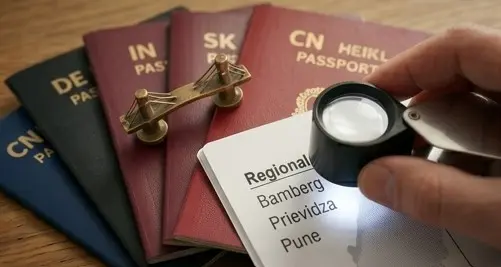
Three worlds that rarely meet in one person: years of accountability on the buying and customer side of industrial relationships, professional coaching training and four years in Slovakia plus two years in Pune as an accountable executive. How a customer thinks about losing his contact person is something he knows because he was that customer, and that is the perspective you get in the conversation linked below.
Results or Excuses
On the evidence, a handover without a run-up costs you around fifteen percent of annual revenue per key account, and that loss lands precisely when the price of your company is being negotiated. Postponing the relationship handover by another year means negotiating it later under time pressure, with a successor your customers have never seen make a decision. In thirty minutes we name your three most exposed customer relationships, settle which unspoken services sit behind them and fix the one step you start with this quarter.

One calendar link, no preparation required.
More on how I work sits on the page about Andy Balbus, in the leadership case studies and in the glossary. Related reading: transferring company values, shadow founder syndrome, leading a task force, goal setting for engineering teams and greenfield scaling in Slovakia. To secure the collaboration itself, the industrial conflict architecture, uncompromising delegation, the core principles and the Team Charter Workshop are the practical next steps.
Systematic Leadership does not end with a phone Call.
Follow Andy for more Perspectives and Insights.


Leave a Reply