
Summary
Stabilizing a Team After Restructuring: A new org chart does not mean a team works. Friction and turnover are expensive and occur because rules are not clarified after the rebuild. Leaders must actively guide the reset. Establish new rules in a Team Charter Workshop, hold onboarding conversations with everyone, and correct deviations immediately to successfully lead the team into working order.
The new org chart went out on Friday. On Monday a team that never existed before starts working together, under rules nobody remembers.

Stabilizing a team after restructuring is one of the most underestimated leadership tasks in the automotive industry. The organization treats the new org chart as the deliverable. For the people underneath it, that chart is the starting line: new neighbours, new responsibilities, new escalation paths and not one settled question about how the work actually gets done from Monday onwards.
This piece is written for you if you have just taken over a department assembled from two previously separate units. It applies equally if your site was consolidated, if a reporting line moved to another country overnight, or if only half the colleagues around you are the ones you had six months ago. What you will not find here is a change communication plan for the workforce, because your organization almost certainly has one already.
The weeks right after the reorganization decide your delivery dates, your quality and who stays. That is exactly where the Team Charter Workshop begins its work, and it is also where the real work described in this article starts, because a workshop is an opening move and not a result.
The Step After the Workshop That Almost Every Leader Skips
Rules on a Wall Are Not Yet Rules in a Team
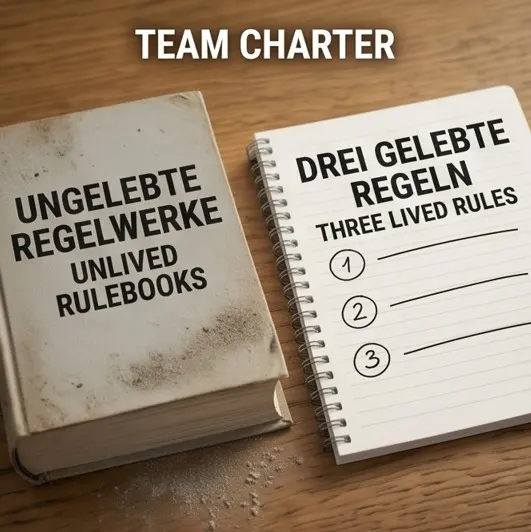
A team can spend an excellent day together and walk out with a handful of team charter rules everyone genuinely supports. The day feels good. Two weeks later half the room recalls three out of five rules and nobody asks about the rest. A rule that is never demanded in daily work is a poster.
Why I Ran Every Onboarding Conversation Myself
As Director Electronics in Prievidza I personally ran the onboarding conversation with every new employee. Not HR, not the respective team lead, but me. I walked through our team rules one by one, with the reasoning behind each and with the everyday situation where that rule becomes visible. It cost me a solid hour per person, which in a department of forty engineers was a deliberate investment.
The One Question That Turns Information Into Commitment
At the end of the conversation I asked one question, and I asked it seriously: do you agree to every one of these rules? The answer had to be spoken out loud. A nod was not enough and silence certainly was not. Anyone who agrees cannot later claim they did not know, and anyone with an objection raises it while it can still change something.
Two Deviations, Two Conversations, No Delay
Across the whole period there were exactly two cases where someone stepped outside the agreed rules. Both times I went into the conversation myself, without routing it down through the next leadership layer and without the quiet hope that the situation would resolve on its own. That hope never pays off. It only extends the period in which the team watches and draws its own conclusions.

The First Case Ended in a Departure
The first time, I held the conversation together with HR and made it unmistakably clear that this behaviour was not tolerated with us. A few days later the colleague left the company. Not a pleasant outcome, but a clean one, and the team understood that our rules were not decoration.
The Second Case Ended in Full Integration
The second time, that single conversation was enough. My colleague was fully part of the team afterwards, with everything that entails, and she stayed that way. Same instrument, same clarity, two entirely different outcomes. A leader who only applies clarity when the outcome is already known is not applying clarity at all.
What This Has to Do With Your Restructuring
After a reorganization everyone in the room is a new employee, including the colleague who has occupied the same desk for twelve years. Her neighbours are new, her reporting line is new, and the unwritten rules of her former unit no longer apply in the new setup. That is why the onboarding conversation stops being a routine for newcomers after a reorg and becomes a format for the entire team.

You just thought of one specific person. No sales conversation: if I am not the right fit, you will hear that within the first five minutes.
What the Numbers Say About Teams After the Rebuild
Change Rarely Fails on the Idea
McKinsey puts the share of change efforts that fail during execution at 65 percent. The strategy is almost never the weak point. The failure sits in the weeks afterwards, when nobody owns the question of whether the new structure has produced new collaboration.

The Calculation That Never Appears on a Reorg Slide
Attrition rates of 20 to 25 percent are unremarkable in technical organizations, and replacing one qualified engineer costs 150 to 200 percent of an annual salary. Run that for three developers who leave quietly after the rebuild and you have paid for a full stabilization program several times over. The difference is that these costs never show up in the reorg business case. They show up twelve months later in the personnel budget.

Conflict Costs Working Hours, Not Atmosphere
The CPP Global Human Capital Report records 2.8 hours per employee per week flowing into conflict, with a total damage of 359 billion US dollars, and 70 percent of surveyed leaders rate conflict competence as business critical. After a reorganization that figure rises, because responsibilities are unclear and every ambiguity gets settled between two people who never had to align before. Turning that friction into structure is the subject of the industrial conflict architecture method page.
What Nobody Reports Upwards After the Rebuild
Sidney Yoshida’s Iceberg of Ignorance describes how top management is aware of roughly 4 percent of frontline problems. During the phase after a restructuring that gap becomes dangerous, because nobody escalates the message that collaboration is grinding. What gets reported is that the structure is in place. The rest disappears into what our glossary calls the Hidden Factory.
Safety Inside the Team Is the Measurable Difference
Google identified psychological safety in Project Aristotle as the single strongest driver of team performance, and Gallup reports up to 59 percent lower turnover for highly engaged teams. Neither of those comes out of an org chart. Both come out of one question: in this new setup, is anyone allowed to say that something is not working? Why trust is an investment made before the performance arrives is something I have written about at length.
Stability Check: Twelve Questions, Six Layers, One Measurable Value
The check measures across six layers: rule clarity, decision rights, safety in the team, conflict capability, visibility and your own leadership mode. At the end you see your stability value as a percentage, your profile across all six layers and the single point where your team currently loses the most.
Stability Check After the Rebuild
How stable is your team eight weeks after the restructuring?
Twelve questions across six layers, from the rules to your own leadership mode. Three minutes, a measurable stability value and the one spot that currently hurts.
Answer for the team as it is composed today. Not for the unit you led before, and not for the state you would like to see.
Question 1 of 12
The BYG Approach: Five Steps From Org Chart to Working Team
1. Name the Rebuild as a Reset, Out Loud
Tell your team in a dedicated session that this is a new team. Not an extended version of the old one. John Kotter describes change as a sequence of phases that cannot be skipped, and the first of those phases is the shared recognition that something is different. Without that sentence, half your people keep working to the rules of their previous unit and consider it loyalty.
2. Renegotiate the Rules Instead of Importing Them
The temptation to carry over the proven charter of the larger unit is strong. Doing so declares the smaller half of your team permanent guests in their own house. Rebuild the rules with everyone in the room and cap them at a number people can actually remember. How team commitment emerges is a question of process, not of wording.
3. Repeat the Onboarding Conversation for Everyone
This is the step from my story and the most expensive one in your calendar.
One conversation per person, the new rules explained, the agreement spoken. With thirty people that is two working weeks spread across two months, and those two weeks are the cheapest insurance against a year of friction. Open-ended questions are the decisive tool here, because closed questions tend to produce nothing but a yes.

4. Address the First Deviation Within 48 Hours
The first deviation after a rebuild is the real test and your team watches it closely. React quickly, factually and one to one. Wait two weeks and you have introduced a new rule, namely that rules are negotiable. Hesitation at this point leads straight to malicious obedience, a team that does exactly what was asked and not one step more.
5. Recalibrate After Six Weeks
Book a session six weeks after the start and walk through the rules again. Which one is lived, which one is detached from reality, which one is missing? A team allowed to correct its own rules will defend them afterwards. A team allowed only to comply waits for the next restructuring.
You leave with a formulation, not with a proposal.
Voices From Practice
Cross-Border Leadership & Intercultural Mentoring
Vasanth Suratkal Kamath led a growing organisation as President of Brose India Automotive Systems, an environment where scopes and responsibilities kept shifting. His assessment speaks to the exact situation discussed here: leadership across sites and across structural boundaries.
Scaling Organizational Restructuring Through Culturally Sensitive Coaching
Tanaya Deole judges the work from the organisational perspective, which is the level where restructuring decisions are made in the first place. Her feedback shows that individual and organisational effects belong together.
Refining Leadership Behavior for Stronger Team Outcomes
Priyanka Maturi took part in several programs and described what changed in her own leadership behaviour. She appears here because her feedback lands on the core of this article: clarity about your own line produces better outcomes in the team.
FAQ: Frequently Asked Questions on Stabilizing a Team After Restructuring
Q1: How long does it take before a team is fully productive again after a restructuring?
That depends less on size than on whether someone actively leads the reset. Without a led reset the friction stretches over months. With a structured approach of renegotiated rules, individual conversations and a recalibration after six weeks, most teams return to their previous performance level within two to three months.
Q2: Do I really need to rebuild the team rules if two thirds of the team stays the same?
Yes. As soon as the composition changes, the unwritten rules change with it. Carrying over the old charter turns the remaining third into permanent newcomers. The Team Charter Workshop is built precisely for this situation.
Q3: What do I do if my own manager declares the rebuild complete?
For the organization it is complete the moment the structure is signed off. Your task begins afterwards and it needs calendar time rather than approval. How to defend that time against demands from above is covered in the article on setting boundaries as a leader.
Q4: How many rules make sense?
Few enough that anyone can list them without thinking. Three lived rules outperform twenty documented ones, and the full reasoning sits in the article on team charter rules.
Q5: What about an employee who openly rejects the new rules?
You hold the conversation immediately, factually and one to one, and you establish whether this is a substantive objection or a matter of principle. A substantive objection improves the rule. A matter of principle requires a decision, with HR involved if needed.
Q6: Does this work with a team distributed across several sites?
Yes, with two adjustments. The individual conversations happen by video and take longer, because the informal layer is missing. You also need explicit agreements on availability and response times, a point I go into in the article on remote leadership.
Q7: How do I tell a normal storming phase from a real problem?
A storming phase is loud and productive: people argue and then decide. A real problem is quiet. Nobody contradicts anymore, information flows only on request, and conflicts get discussed outside the team. The article on the team storming phase goes deeper.
Q8: What if the restructuring brings two cultures together, for example Germany and India?
Then the effort for step 3 doubles, because agreement means different things in different contexts. A yes can signal understanding rather than commitment. The mechanics are described in the articles on the Indian yes and the translation tax.
Q9: My team is smaller after the rebuild, the workload is not. Where do I start?
With prioritization rather than with rules, because an overloaded team cannot learn new collaboration. Cut tasks visibly before you demand behaviour. Eisenhower prioritization and uncompromising delegation are the two nearest tools.
Q10: How do I stop my best people from leaving during the restructuring?
Through clarity and through speed. Uncertainty about one’s own role is the most common trigger for exit thinking, and the longer it lasts the more likely the resignation becomes. Talk to your key people in the first week, not in the first quarter.
Q11: When is external support worth it?
Whenever you are a party to the situation yourself. If you led one of the two merged units before, none of your wording can read as neutral. In that constellation external facilitation stabilizes faster, and both Accelerate Now and executive coaching are built for exactly this moment.

About the Author: The Intersection of Three Worlds
Andy Balbus spent 25 years in the automotive industry, most recently as Director Electronics in Prievidza with a department of forty engineers and as Senior Manager in Pune. He carried a project budget of 15 million euros and revenue accountability of 150 million euros.
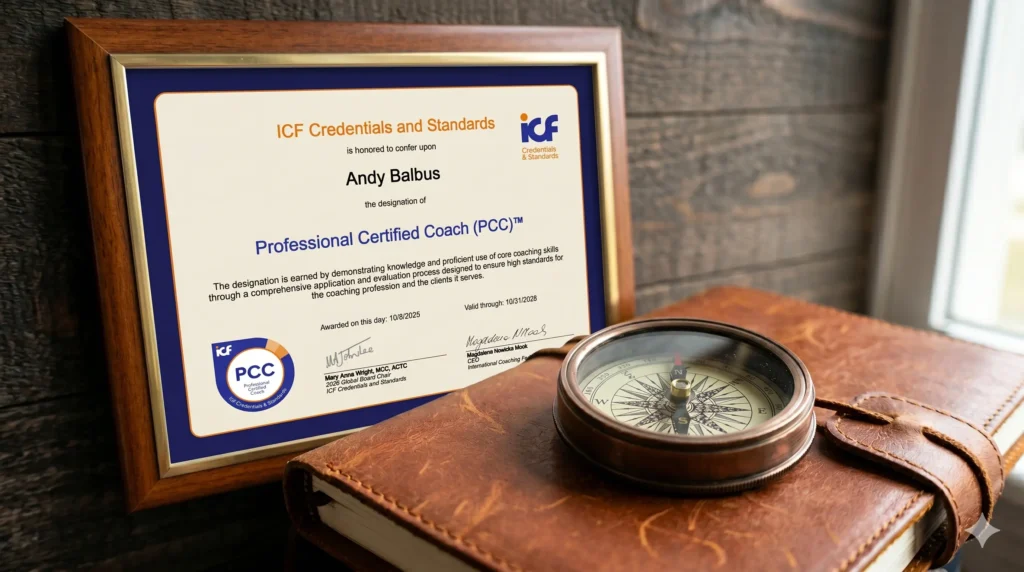
As an ICF PCC certified coach with more than 1,000 coaching hours he now works with leaders across the DE-SK-IN matrix.
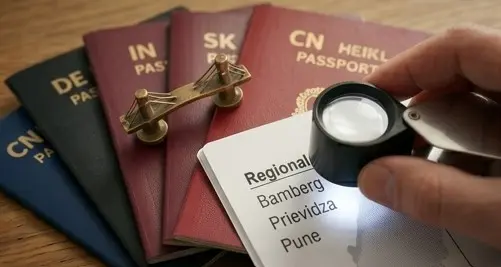
Three worlds that rarely meet in one person: operational accountability on the plant floor, professional coaching training and the lived experience of building a team in a foreign country. That combination is what you get in the conversation linked below.
Results or Excuses
Your restructuring is decided and no longer up for debate. The only open question is whether your team delivers in eight weeks or in eight months. Two resignations from now this conversation gets considerably more expensive, because at that point we are no longer discussing rules but replacement hiring at 150 to 200 percent of an annual salary. In thirty minutes you get that calculation for your specific case and the decision on whether you lead the reset yourself or bring support in.

One calendar link, no preparation required.
More on how I work can be found on the page about Andy Balbus, in the leadership case studies and in the glossary. If your restructuring touches a site in Slovakia, the page on executive sparring Slovakia is the next step.
Related reading: breaking down silos, overcome micromanagement, SOP delay in automotive, leading a task force, loneliness at the top, the first leadership role and chief firefighter syndrome. Team leads inside a rebuild will also find value in mentoring for team lead scaling, active listening and the green melon effect.
Systematic Leadership does not end with a phone Call.
Follow Andy for more Perspectives and Insights.


Leave a Reply