
Summary
Giving Constructive Feedback: Feedback that only surfaces during the annual review has failed its purpose. Surprising your team in an appraisal is a leadership failure. Genuine, constructive feedback must be timely, specific, and focused on the situation rather than the character. Learn how to address criticism effectively, use public praise wisely, and why agreeing on a follow up action is the difference between an opinion and true professional development.
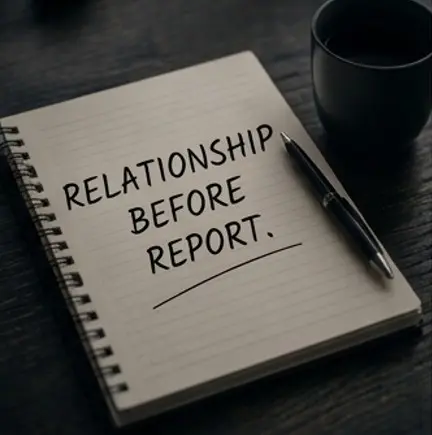
If somebody is surprised in the annual review, you missed something twelve months ago.
You are in the annual review and you say a sentence you prepared beforehand. The face across the table changes. Not angry, more disbelieving. This person is hearing for the first time what has been noticeable since spring, and they can no longer do anything about it, because spring is over.

The mistake here is not the wording. The mistake sits eight months in the past.
This article is for engineering and manufacturing leaders who want to be straight with their teams and still notice themselves hesitating. Anyone who believes feedback is a matter of character, that you either have the knack or you do not, will find this article disagrees. It is a craft, and it can be learned.
What My Team in Slovakia Said About My Feedback Practice
The sentence that told me it was working
In the long mid-year and annual conversations in Prievidza, several engineers told me the same thing. Nothing we discussed came as a surprise to them. They gave the reason in the same breath: they had relied on the fact that I do not wait six or twelve months.

Which is why it is the first thing I pass on in mentoring
Feedback helps most when you receive it in the moment the situation exists. Not months later. I put that sentence at the start of every mentoring engagement, because everything else depends on it. The finest wording achieves nothing once the occasion is out of reach.
I gave both early, the positive and the uncomfortable
Always tied to a concrete observation, never to a general impression. That is not a matter of style. A general impression cannot be checked and cannot be refuted, which is exactly why it lands on the person instead of on the task.
And when a weekend fell in between, I used it
Above all for uncomfortable feedback. I took preparation time to phrase it so that it addressed the project situation rather than attacking the person. Timely therefore does not mean unfiltered. It only means that no quarter sits between the occasion and the conversation.
The ratio most people get wrong
In four years as a director I had to give feedback on a person’s behaviour exactly twice. Twice. Nearly every other conversation was about technical matters, project situations, working together on something specific. Anyone who associates feedback mainly with awkward conversations about character is carrying a distorted picture, and that is why they keep postponing it.
Why any of this matters

Somebody who receives no feedback cannot change anything about their work. That sounds obvious and gets ignored daily. People develop faster when they learn early what works and what does not. Feedback is the fuel for change, and without fuel even a good team stands still.
When negative feedback accumulated, my question changed
If I saw that feedback to one person kept coming out negative, I worked out with them what specifically had to change. Sometimes it was a training course. Sometimes what was missing was knowledge transfer from headquarters.
And sometimes closer exchange with a local colleague who could already do it was enough. Whatever we agreed got written down. Feedback does not end with the message, it ends with an opportunity you have built together.

The observation I had not expected
With praise, some leaders lean towards effusive speeches in the team meeting. I asked my engineers in advance whether they were comfortable with me naming it in the large group. Close to 60 percent of my team did not want that.
The reason lay in the make-up of these professions
In the work we were doing, an introverted disposition was strongly represented. What was intended as an honour would have been pure stress for these people. I had already said the positive thing in person, and for many that was exactly enough. Where the matter mattered to everyone, I anonymised it: I named in the team meeting what a customer had fed back to us, without naming the person who achieved it.

No sales conversation. If I am not the right person for you, you will hear that in the first five minutes.
What the Research Shows About Feedback and Its Effects
One third of all feedback interventions reduced performance
Kluger and DeNisi published a meta-analysis in Psychological Bulletin in 1996 covering 607 effect sizes and 23,663 observations. On average, feedback improved performance, with an effect size of d equals .41. Over one third of the interventions studied reduced it, and that finding could be explained neither by sampling error nor by whether the feedback was positive or negative.
The explanation the authors found is the decisive part. Effectiveness falls as attention moves away from the task and towards the self. That is precisely what my weekend preparation was about. Not politeness, but the question of where the conversation lands. Describe the project situation and you work on the level that functions. Describe the person and you work on the level where one case in three backfires.

(Source: Kluger, A. N. & DeNisi, A. (1996), The effects of feedback interventions on performance, Psychological Bulletin, 119(2), 254-284.)
Volume decides nothing, whether it lands as valuable decides everything
Gallup and Workhuman found that only about one in four employees strongly agree they receive valuable feedback from the people around them. Those who do are five times as likely to be engaged, 57 percent less likely to be burned out and 48 percent less likely to be watching for another job.
Alongside that sits a result which surprises many leaders. Only 27 percent want feedback at least weekly. People are not asking for more feedback, they are asking for better feedback. A second finding explains what better means. Employees who receive recognition from their manager at least weekly are 2.9 times as likely to agree that they get valuable feedback. Recognition is not the garnish on feedback, it is the part that makes the rest credible.
(Source: Gallup and Workhuman, Organizations Can Redefine Feedback by Including Recognition.)
And public praise is not a safe bet
Deloitte surveyed more than 16,000 professionals across more than 4,000 organisations in 101 countries for its Business Chemistry study. One central finding: most people prefer recognition that is shared with a few people or delivered privately, rather than broadcast widely.

The classic rule says praise in public, criticise in private. Its second half holds. The first is an assumption. My 60 percent in Prievidza were not an exception, they were the rule. Asking costs you one sentence. Not asking costs your recognition its effect.
(Source: Deloitte, It’s Time to Rethink Your Employee Recognition Strategy, Business Chemistry study.)
Voices From Practice
Smriti Kiran Singh-Sawant works as a functional safety specialist in the Brose Group and was coached by me. Her feedback sits here because she names honest feedback explicitly, and in exactly the combination this article turns on: listening, being straight, and still moving the person forward.
Which Feedback Pattern Are You Running?
From what I have observed there are three routes, all well intentioned, none of which help anyone. Some leaders only raise what went wrong. Some only raise what went well. And some save everything for the annual review. Think of one specific person on your team and answer six questions. There are no points and no grade, only your pattern and one action for next week.
Five Rules for Feedback That Lands
These five rules are what survived four years in Slovakia and two in Pune. You need no formula for them. If you want one, German-speaking practice uses the WWW model of perception, effect and request, and it works as scaffolding at the start. I work without it, because the sequence follows on its own once the first rule is in place.
Rule one: now, not eventually
The distance between the occasion and the conversation decides more than any wording. A few days are fine, a weekend for preparation likewise. Past a few weeks an observation turns into an assertion, because the other person can no longer reconstruct the situation. Collect it up and you convert help into a verdict.
Rule two: describe the situation, not the human being
Say what you observed, when it happened and what effect it had. Not what somebody is like. The difference sounds like hair-splitting and it is the core of the Kluger finding: the moment the conversation lands on the self-image, effectiveness drops. Master this single point and you already do more right than most. Active listening is the same movement in the opposite direction.
Rule three: the positive with the same precision
Well done is a courtesy, not feedback. Positive feedback needs the same specificity as the uncomfortable kind: which situation, what effect, why it counts. Only then does the other person know what to keep doing. And without that half you become a warning signal, whose message in the inbox creates tension before it is opened.
Rule four: ask before praising in the large group
One sentence covers it: are you comfortable if I mention this in the team meeting?
If the answer is no, accept it without a follow-up question. When the result matters to everyone, name the result and the customer feedback rather than the person. You lose nothing by it and you spare somebody an afternoon of tension.

Rule five: close with an opportunity, not with an opinion
The last question in the conversation is what this person needs from you to make it work. When negative feedback accumulates, what is missing is rarely the will and usually the opportunity. Agree something concrete: training, knowledge transfer, exchange with somebody who can already do it, with a date and an owner. How to phrase that so it survives contact with the quarter sits in the article on goal setting.

You leave with a phrasing you can use, not with a proposal.
Where Good Feedback Alone Is Not Enough
When your team simply nods along to feedback, the cause is rarely your wording. Check psychological safety first, because without it you get politeness rather than pushback. Check second whether you speak regularly at all, since feedback without a conversation rhythm becomes an event rather than a habit. And if your team is currently arguing openly, that is not a feedback problem but most likely the storming phase, which calls for different tools than the conflict architecture provides for escalated situations.
Marianna Kopaskova joined my department as an application engineer straight out of university. Her review describes exactly the two movements good feedback alternates between: offering a different perspective, and standing up for the person when it counts.
How feedback fits into a wider system of rules and roles is covered by the team charter workshop and executive coaching. Terms from this article are defined in the leadership glossary, and the full toolkit sits in the methods overview.
FAQ: Frequently Asked Questions About Constructive Feedback
Q1: How quickly should feedback arrive?
Fast enough that both sides can still reconstruct the situation. A few days is ideal. For uncomfortable feedback a weekend of preparation makes sense, so that you hit the project situation rather than the person. Past a few weeks the message loses its occasion.
Q2: What is the WWW model of feedback?
It stands for perception, effect and request: what I observed, what effect it had, what I would like in future. As scaffolding for a beginner it is useful, because it forces the observation ahead of the judgement. It stops being necessary once you speak early and stay tied to situations anyway.
Q3: Is the feedback sandwich any good?
Not much. When praise only serves as packaging for criticism, everybody sees through it by the second time, and after that it devalues your genuine praise as well. Keep them apart: positive feedback gets its own occasion, and so does the uncomfortable kind.
Q4: How often should I give feedback?
More often than most leaders do, and less often than advice columns claim. Only 27 percent of employees want feedback at least weekly according to Gallup. What decides the outcome is not frequency but whether it lands as valuable, meaning specific, timely and with a recognisable purpose.
Q5: Should I praise people in the team meeting?
Only if you asked. According to the Deloitte study most people prefer recognition in a small circle or one to one. In my own team close to 60 percent did not want public praise. Where the matter is important for everyone, name the result without the name.
Q6: What do I do when somebody reacts defensively?
Check first whether you talked about the person or about the situation. Defensiveness is often a signal that the conversation has landed on the self-image. Go back to the observation, name the moment and the effect, and ask for their view before adding anything.
Q7: How do I give feedback upwards?
With the same rules and one extra question first: may I share an observation with you? That gives the other person a choice and takes the confrontation out of the moment. The rest stays identical: situation, effect, request. Leading without formal authority is covered in mentoring without authority.
Q8: How does feedback work across cultures?
More slowly and with more context. Under high power distance, for instance in India, direct criticism of somebody's own work is heard differently than in Germany. Ask for observations rather than assessments and allow more time for the answer. There is more on this in intercultural mentoring.
Q9: What about feedback on behaviour rather than performance?
Take it seriously and expect it rarely. In four years I had that exactly twice. When it is necessary, describe observable behaviour and its effect on specific people, never character traits. Anything beyond that belongs with HR, not in a one-to-one.
Q10: How do I give feedback in distributed teams?
By the same rules, with more effort spent on the occasion. Since you lose the observation made in passing, you need fixed opportunities instead. Avoid delivering uncomfortable feedback by message, because without the chance to ask back the effect runs uncontrolled. More in the remote leadership method.
Q11: Can feedback do harm?
Yes, demonstrably. Over one third of the feedback interventions studied by Kluger and DeNisi reduced performance. The reason was not whether the feedback was positive or negative, but where it directed attention. The closer to the person, the worse the result.
Q12: I postpone difficult conversations. What helps?
Recognising that postponing makes the matter more expensive rather than easier. Put the conversation in the next three days, write down two sentences that describe the situation, and open with those. When the hesitation becomes a pattern, it is rarely about feedback and usually about the role. That is the work of mentoring from expert to leader and coaching for automotive leaders.

About the Author: The Intersection of Three Worlds
Most providers are either a coach or a consultant. They know difficult conversations from accompanying them, not from carrying the accountability. I have worked in all three worlds.
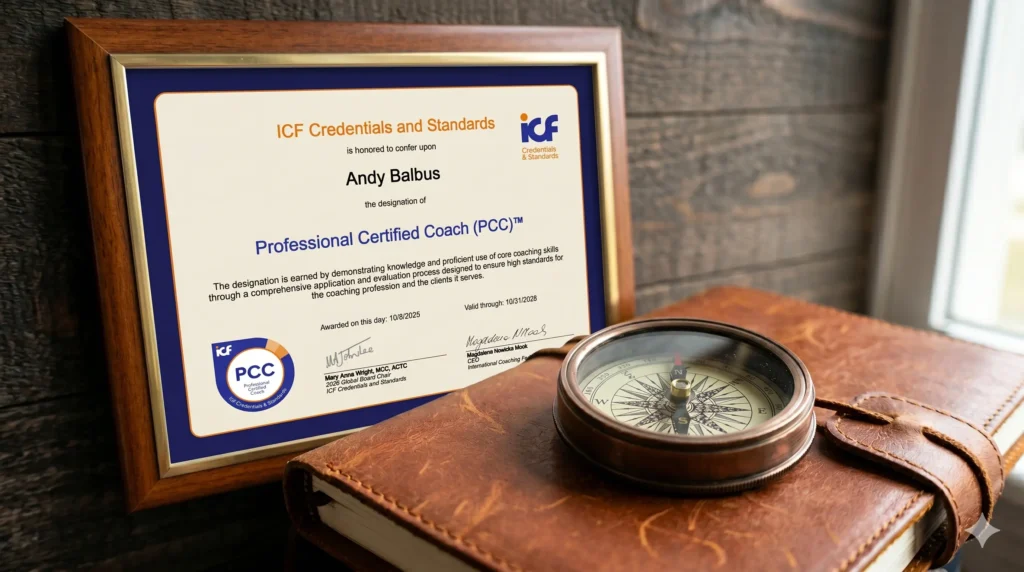
Executive leadership: 25 years of operational automotive DNA, 150 million euro of revenue accountability, an engineering site with 40 engineers built from a greenfield. Executive coaching: ICF PCC certified, more than 1,000 coaching hours.

Intercultural transformation: four years as the accountable leader in Slovakia, two years in Pune, alongside experience in Germany, China, Mexico and the United Kingdom.
The feedback practice in this article did not come from a seminar. It grew over four years with a team of 40 engineers, including the places where I had to unlearn things. More about the path is on the page about Andy Balbus and in the case studies.
Results or Excuses?
The feedback you do not give today, you will give eventually. By then it is eight months old, no longer verifiable, and it lands like a verdict. Until then that person has carried on exactly as before, because nobody told them something was not working. Gallup and Workhuman tracked more than 3,400 employees over two years: those who receive meaningful recognition are 45 percent less likely to leave.
In 30 minutes we take on the one conversation you are currently postponing, and you leave with two sentences you can open it with, phrased so that it lands on the situation rather than the person. I bring the view from leadership, coaching and cultural change at the same time.

One calendar link, no preparation required.
You can also reach me through the contact page. How the formats connect is visible in Accelerate Now, in the legacy programme for owners and in Your Power Within. For growing spans there is mentoring for team leads, and for strategic influence mentoring at director level. To dig deeper, start with open-ended questions, micromanagement, the green melon effect, the translation tax, breaking down silos and the chief firefighter syndrome. The GROW structure, the SMART method, prioritisation, uncompromising delegation, the Gemba Walk, my article on the first leadership role and the one on no time for strategy round out the set.
Systematic Leadership does not end with a phone Call.
Follow Andy for more Perspectives and Insights.


Leave a Reply