
Summary
Leading Remote Teams in India: Forcing cameras on in virtual meetings causes fatigue and lowers engagement. When leading remote teams in India, the channel matters less than the relationship. High power distance means a polite yes often hides a no. Learn to build genuine trust, ask the right questions, and establish a connection where your offshore team feels safe enough to openly disagree with you.
The channel matters less than everyone assumes. What matters is whether you know the person on the other end.
It is three in the afternoon in Germany, half past six in Pune. Six tiles sit on your screen, five of them grey with initials. You ask for the status, you get a yes, you close the call after 25 minutes. Four weeks later the milestone slips, and nobody can tell you when exactly it went off track.
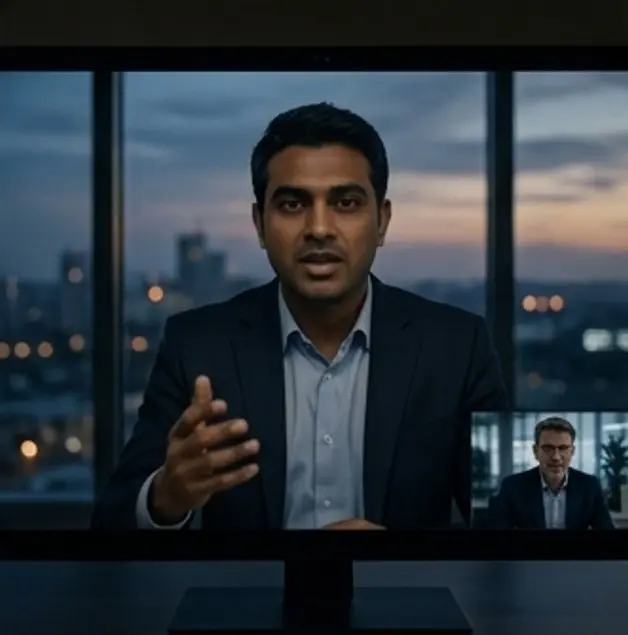
The obvious explanation is that cameras would have shown you the nuance.
That explanation is comfortable because it comes with a fix you can mandate. It is also wrong.
This article is for leaders running engineering or manufacturing teams in India who suspect something is passing them by. Anyone looking purely for a camera policy is in the wrong place. There is a rule, it sits further down, and it will disappoint you.
What the Camera Debate Taught Me About Leading in India
My first instruction was: cameras on
When remote work grew and the pandemic turned it into an obligation, I did what many leaders did. Cameras on, no discussion. My reasoning sounded solid: I wanted to see people, I wanted to read signals, I did not want to lead into grey tiles.

What I had to learn quickly
Not everyone feels comfortable on camera. Working remotely is not the same as sharing an office. A camera offers the chance to read the other person better, but that chance only exists when the situation feels right for them. Otherwise it creates stress and exhaustion, and the very advantage I wanted the camera for disappears.
My rule today: gladly, never as a demand
I would encourage every leader to make the camera the first item of the conversation rather than a policy. One sentence does it: with or without video, what works better for you today? And when someone decides against it, that decision is accepted. No follow-up question, no raised eyebrow, no mental note.
Far more important than the picture is genuine interest in the person
This is the part I had to learn, and the part I am proud of today. I did not treat the people in India as labour, I treated them as people with families, interests and histories. Relationship grew through those details. Along the way I learned a great deal about India, and about Mexico and China too, because my work never sat with one country alone.
The measuring point that told me trust had arrived
One day my Indian team member said: Andy, see… What followed was clear feedback on my idea. He disagreed with me without ever using the word no, and together we found a solution. Until then the line had run one way, from headquarters to India. From that sentence onward it was communication, and out of that communication came real collaboration.
What remains from it
Friendships from Pune have lasted many years and still hold. That is not a soft side effect, it is the core of the matter. The tool did not change the path, neither did the channel nor any camera policy. What changed it was serious interest in the people I worked with.

No sales conversation. If I am not the right person for you, you will hear that in the first five minutes.
What the Research Shows on Cameras, Trust and Culture
A camera mandate costs precisely what it is meant to deliver
Shockley and colleagues published a four-week field experiment in the Journal of Applied Psychology in 2021: 103 employees, 1,408 daily observations, camera use deliberately manipulated. People who had their camera on, or were asked to keep it on, reported more fatigue than the comparison group. The effect was markedly stronger for women and for employees newer to the organisation, which the authors trace to self-presentation pressure.
The second half of the finding is the one that matters. Daily fatigue was negatively related to voice and engagement in the meeting. Mandate the camera and you get less of what you mandated it for. My own learning curve from the pandemic does not stand alone, it has been measured.
(Source: Shockley, Gabriel, Robertson, Rosen, Chawla, Ganster & Ezerins (2021), The fatiguing effects of camera use in virtual meetings, Journal of Applied Psychology, 106(8), 1137-1155.)

The more distributed the team, the heavier trust weighs
Breuer, Hueffmeier and Hertel published a meta-analysis in 2016 covering 52 studies, 1,850 teams and data from more than 12,000 people. Team trust relates to team effectiveness at rho = .33 overall. The link between trust and performance is stronger in virtual teams than in teams that see each other daily.
For your operating model that means relationship work is not a soft extra for the end of the day, it is the lever with the highest leverage you have. Anyone leading across time zones while maintaining only the project plan is working on the smaller half of the problem. The same logic underpins psychological safety in the team.
(Source: Breuer, Hueffmeier & Hertel (2016), Does trust matter more in virtual teams?, Journal of Applied Psychology, 101(8), 1151-1177.)
Why relationship is not optional in India
The GLOBE study measured 62 societies. The Southern Asia cluster, which includes India, scores high on lived societal practices: in-group collectivism at 5.87 out of 7, power distance at 5.39 and humane orientation at 4.72. Across the clusters, Southern Asia ranks first on in-group collectivism and power distance.
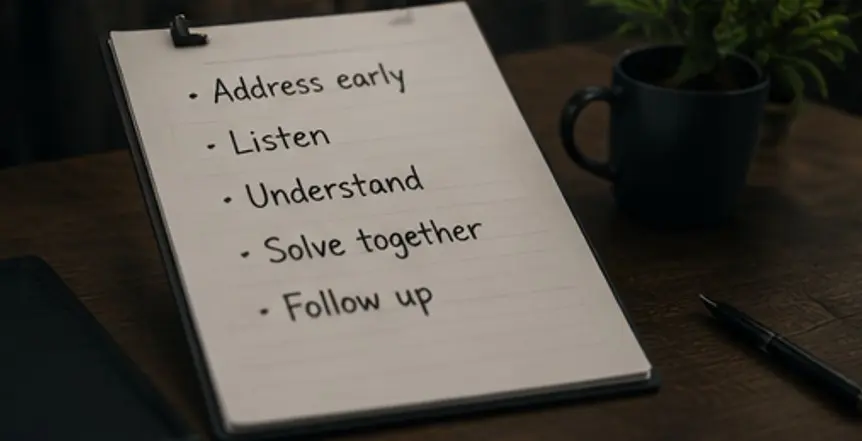
That combination explains the call described at the start. High power distance means a direct no to a superior reads as rude. High in-group collectivism means loyalty runs to the immediate group rather than to a distant principal. You know the result as the Indian yes, and switching cameras on will not remove it. It goes away when you become the person somebody can afford to contradict.
(Sources: House, Hanges, Javidan, Dorfman & Gupta (2004), Culture, Leadership, and Organizations: The GLOBE Study of 62 Societies; Gupta, Surie, Javidan & Chhokar (2002), Southern Asia cluster: where the old meets the new?, Journal of World Business, 37, 16-27.)

Voices From Practice
Priyanka Maturi took part in my programmes on cross-country cultures and in the six-week BYG workshop. Her recommendation sits here because it names what actually shifts across borders: understanding mindsets and values, rather than tightening meeting rules.
Do You Actually Know the Person on the Other End?
The mirror below is not a test. There are no points and no grading. Think of the last person you spoke to at another site and answer six questions for yourself. For every gap you see what it costs in the project, and you get a question to use in your next call.
Think of the last person you spoke to at another site.
Four Rules for Working Across Time Zones
These four rules are what remains after four years in Slovakia and two years in Pune. They do not replace ground rules for virtual teams, they sit one layer below, and every ground rule stands or falls on them.
Rule one: the channel is agreed, never ordered
The camera is your first agenda item, not your policy. Whoever wants no video today gets no video today. That single gesture costs you nothing and buys more openness than any mandate. What matters more than the picture is that you listen, and active listening works on a phone line too.
Rule two: relationship before report, in every single call
The first five minutes belong to the person, not to the project. Ask about family, about the festival coming up, about the city somebody comes from. Share something about yourself first, otherwise it reads as an interrogation. In relationship-oriented cultures this is not small talk, it is the groundwork that makes a later disagreement possible.
Rule three: the first no gets celebrated, not corrected
When somebody contradicts you for the first time after months, everything rests on your reaction.
Thank them visibly, work with the objection, and let the person experience that disagreement carries no cost. One irritated follow-up here sets you back by months and returns you to silent resistance.

Rule four: you know the second authority on site
Ask who your people turn to locally when you are unreachable. Until you know that name, there is a second person assigning work to your team that never appears in your project plan. That is how the extended workbench is created, and from there the SOP delay whose origin nobody can reconstruct afterwards.

These four rules connect with what is described on the page for intercultural mentoring and in the mentoring method. If you want to reset a distributed team formally, start with a team charter workshop as well.
You leave with a phrasing you can use, not with a proposal.
Where Relationship Alone Is Not Enough
Relationship replaces no structure. When technical and disciplinary leadership sit apart, clarify who leads whom first. When status stays green until the date slips, you are dealing with the green melon effect and with your escalation path. Where terminology is renegotiated between Germany, Slovakia and India on every call, you are paying the translation tax, and when messages from headquarters stay unanswered, look at ignored emails.
Vasanth Suratkal Kamath was President of Brose India Automotive Systems, senior to me though not my direct manager. His assessment is here because it confirms the argument of this article from the outside: listening and questioning travel across borders, channel rules do not.
FAQ: Frequently Asked Questions About Leading Remote Teams in India
Q1: Should I make cameras mandatory in video calls?
No. The field experiment by Shockley and colleagues shows more fatigue under camera mandates, and that fatigue reduces voice and engagement. Make the camera the first agreement of the call and accept whatever your counterpart chooses.
Q2: How do I spot a yes that is not one?
Not from the face, from the history. If this person has never disagreed with you, every yes is unreadable. So do not ask whether it works. Ask what they would change about your plan if the decision were theirs alone.
Q3: How much personal conversation is appropriate in India?
More than most German leaders expect, and less than would feel like a questionnaire. The measure is reciprocity: share something about yourself first. Questions about family, home town and festivals are welcome, questions about income or caste are not.
Q4: How do I schedule fairly across time zones?
By sharing the burden rather than moving it. If a recurring call sits permanently in the Indian evening, the same people always carry it. Rotate, or place the call deliberately in your early afternoon and ask which times of day are difficult on site.
Q5: What do I do when nobody speaks in the call?
Direct your question to a named person rather than to the group, and send it in writing beforehand. Under high power distance few people speak up unprompted in front of a superior. There is more on this in my article on open-ended questions.
Q6: Can more reporting compensate for missing closeness?
No, it hides it. The meta-analysis by Breuer and colleagues does show that documented collaboration softens the need for trust somewhat, yet the trust-performance link remains stronger in virtual teams than in co-located ones. Documentation complements trust, it does not substitute for it.
Q7: How often should I be on site?
Often enough that people connect a face and a shared memory with you. One visit a year sustains an existing relationship, it does not build one. If you are taking over, plan the first visit early and long enough for shared meals, not only for meetings.
Q8: What if my team in India receives work from somebody else?
Make the second authority visible and negotiate at your own level rather than through your team. The person on site cannot say no to a local leader without risking you, and the reverse holds as well. That squeeze has to be resolved between the leaders.
Q9: Do these rules work for China or Mexico too?
The stance does, the detail does not. Relationship orientation appears in many countries, the forms it takes differ considerably. I have worked in both countries and would never carry an approach from Pune unchanged into Guanajuato or Shanghai.
Q10: How do I measure whether the relationship carries?
By one signal: disagreement. As long as nobody tells you your plan will not work, the line runs one way. The first open no is your measuring point, not the engagement survey.
Q11: My team is distributed but not in India. Does this still apply?
The trust finding holds for any virtual team regardless of country, and so do the rules on cameras and relationship. What is specific to India is the combination of high power distance and high in-group collectivism, which makes open disagreement particularly unlikely.
Q12: I have no time for any of this. What is the minimum?
Five minutes per call for the person, and one honest question about pushback. If even that does not fit your calendar, your bottleneck is not the relationship but your role clarity. Then the work sits in the tasks you are still doing yourself.

About the Author: The Intersection of Three Worlds
Most providers are either a coach or a consultant. They know the matrix from projects rather than from accountability. I have worked in all three worlds.
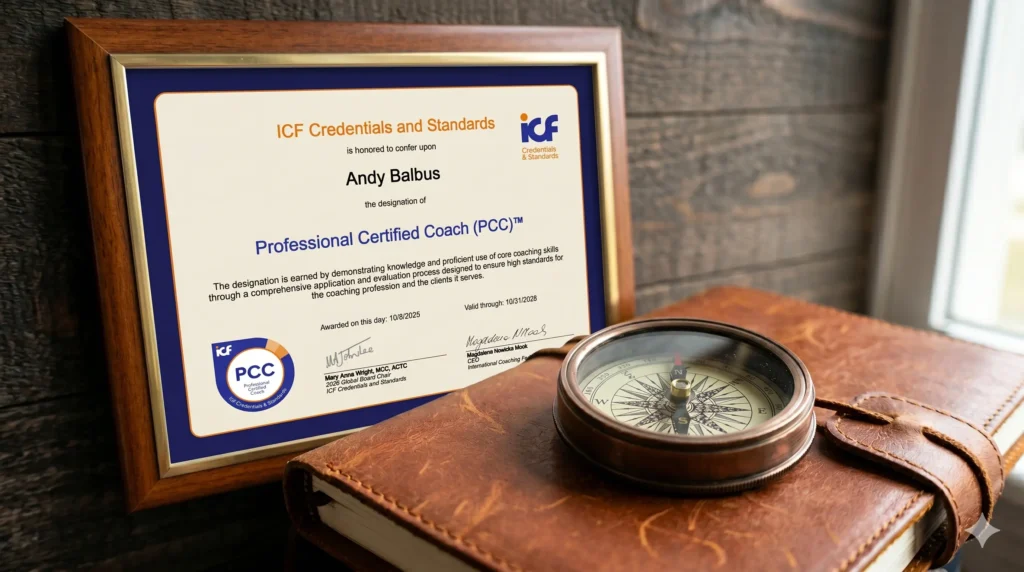
Executive leadership: 25 years of operational automotive DNA, 150 million euro of revenue accountability, an engineering site with 40 engineers built from a greenfield. Executive coaching: ICF PCC certified, more than 1,000 coaching hours.
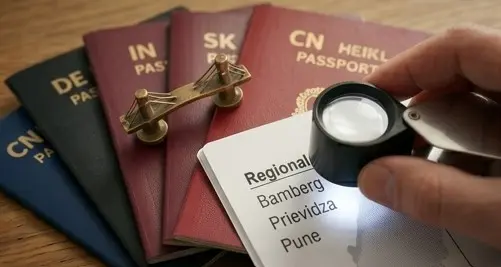
Intercultural transformation: four years as the accountable leader in Slovakia, two years in Pune, alongside experience in Germany, China, Mexico and the United Kingdom.
What stands in this article is not something I read, it is something I lived, including the mistakes at the beginning. More about the path is on the page about Andy Balbus and in the case studies. Terms from this text are defined in the leadership glossary, and the full toolkit sits in the methods overview.
Results or Excuses?
A team that never contradicts you is not in agreement. It is quiet. That quiet costs you dates first, then quality, then the best people at the site, and the most expensive part is that you never learn when it tipped. Paul J. Zak showed in Harvard Business Review what trust delivers in return: substantially less stress, more energy and higher productivity in high-trust companies.
In 30 minutes we go through your actual setup, name the one relationship that has to carry first, and you leave with a question you will genuinely ask in your next call. I bring the view from leadership, coaching and cultural change at the same time.

One calendar link, no preparation required.
You can also reach me through the contact page. How the formats connect is visible in Accelerate Now, in executive coaching, in coaching for automotive leaders, in the legacy programme for owners and in Your Power Within.
For leadership without formal authority there is mentoring without authority, for growing spans mentoring for team leads, and for strategic influence mentoring at director level. If the silos between sites have to go first, start with breaking down silos and the conflict architecture. For distributed leadership add the remote leadership method and the GROW structure for the individual conversation.
Systematic Leadership does not end with a phone Call.
Follow Andy for more Perspectives and Insights.


Leave a Reply