
Summary
Building a New Team: The most important decisions about your new team are made before the first deadline hits. Do not hand your first employees a finished workplace, but let them do the groundwork to turn them into co-creators. Set your culture, structure, and rules early, while it still costs only an afternoon. Lay a strong foundation before schedule pressure dictates your team dynamics.
The most important decisions about your team get made while nobody is there to witness them.
Building a new team looks like a task for the moment the first people start. In reality most of it is already settled by then, decided by you, without an audience and usually without a record.

This article is written for you if you are building a site, a department or a unit and still hold more vacancies than people.
It applies equally if your team is growing right now and you sense that the rules from back then no longer carry.
I lived through exactly that situation when I started in Slovakia. What I took from it now sits in the Team Charter Workshop and in the work with leaders on site described under Executive Sparring Slovakia.
Two Weeks in Which There Was No Team Yet
Arriving After Midnight
The removal firm had cleared my German flat, after which I drove through the night. I reached Bojnice after midnight, where the guesthouse landlady was remarkably friendly and offered me a coffee, which I gladly accepted. It was the last quiet moment for quite a while and, in hindsight, the start of what I describe as greenfield build-up in the leadership case studies.

The Next Morning, a Castle and Nothing Else
The first thing I saw that morning was the renovated Bojnice castle, well kept and arranged for visitors. The contrast with my own position could hardly have been sharper. At that moment I was a director without a department, which is to say entirely alone.
The Factory Gate and a Gesture I Had Not Ordered
My title allowed me to drive onto the site and park there.
Along with it came something I had not counted on: the gatekeepers saluted me. From the first second, that felt wrong to me, in a way that later echoed in loneliness at the top.
Why I Changed It Immediately
At the first available opportunity I abolished the saluting, because I am no friend of strict hierarchies to this day and the gesture struck me as plainly alien. Over time the colleagues at the gate became people I knew, we greeted each other warmly and regularly exchanged a few sentences. None of the forty engineers who came later ever saw that decision, and all of them inherited its consequence.
Then Martin Arrived
Martin was my very first employee, and something shifted with him at once. He had studied electronics and never expected that a chance to work as an embedded software developer would open up in his own home town of all places. He came to work carrying real gratitude.
His Motivation Was Not About Me
This is the part I would pass on to any leader: the gratitude was not directed at me personally but at the role, the chance and the delight at the possibility. Our connection grew only over time. At the start you inherit motivation from the opportunity, and the first weeks decide whether it survives contact with reality.
What We Did First
Martin is very structured and calm, and he drew up lists of the tools we would need. After that we designed the office layouts together with building planning, and it continued step by step from there. That was the groundwork that made it possible for many later colleagues to work at all.
Why He Became a Co-Founder
I saw the same flame in Martin that I felt myself; it was our shared undertaking and we built that team.
Without him it would have gone neither as well nor as fast, and I tell that to anybody who wants to know. He was more than a software developer, he was the co-founder of the department.

A Quiet Colleague at the Centre
Although Martin was on the quiet side, he very quickly became one of the central people in the department. I knew tasks were in good hands with him and held great trust in him from day one. He confirmed that many times over the years, which matches my conviction that trust is an investment and has to be paid in advance.
With the Three Martins the Basic Structure Stood
Out of Martin and the two other Martins came the basic structure, a software team and a hardware team, staffed with capable, competent and motivated people. That split later carried forty engineers. It was decided while there were four of us and nobody was watching.

No sales conversation. If I am not the right fit, you will hear that within the first five minutes.
What the Research Says About Starting Teams
The First Minutes Decide More Than They Should
Robert Ginnett studied cockpit crews in a NASA-funded project, crews whose members had often never worked together or even met. Those crew members reported being able to judge within the first few minutes how effective a captain would be as a leader. Applied to building a site that means your first days get read, whether you intend them to or not.

How That Judgement Was Studied
Ginnett compared six captains rated effective with four rated less effective over six months, with more than 300 hours of direct observation and 110 hours of actual flight time. The effective captains created the conditions for teamwork from the moment their crews first met, among other things by affirming the boundary of the group in the initial briefing. What happened in that briefing shaped members’ behaviour for a considerable time afterwards.
And Why Structure Outweighs the People
Ginnett describes this through the image of shells laid around the actual work. The organizational shell supplies knowledge, skill and training so a group stays able to work even as membership changes.
Our split into software and hardware was exactly that, established long before most of the people who worked inside it had arrived.
Hackman’s Estimate of Where the Influence Sits
Richard Hackman formulated the well-known 60-30-10 rule for this: 60 percent of the variation in team effectiveness depends on the degree to which the enabling conditions are in place, 30 percent on the quality of a team’s launch and just 10 percent on the leader’s hands-on, real-time coaching. Important for interpretation: Hackman explicitly calls this his best estimate rather than a measured result from a single study.
What That Distribution Means in Practice

Even taking the figures merely as an order of magnitude, the overwhelming share of leadership influence sits before the first working day and in the first weeks. The part most leaders regard as their main job, the daily accompaniment, is the smallest one. Anyone who starts structuring only after the first crisis is working inside the ten percent, which also explains why micromanagement proves so persistent.
Why the Saluting Is Not an Anecdote
Slovakia scores 100 points on Hofstede’s power distance index and sits at the top end of the scale, while Germany scores 35. In societies with high power distance it is expected that the powerful also use their power visibly, and hierarchical organizations count as normal. My decision at the gate was therefore no small matter but a visible deviation from a strong local expectation.
And a Limitation That Belongs With It
These values are country averages from a replication study, Slovakia was not part of the original IBM survey, and the initially obtained score of 104 was capped to the 0 to 100 scale in 2014. They say nothing about the Prievidza site, though a fair amount about the expectation I walked into. More on differences of that kind sits in the translation tax.

Foundation Check: Does the Structure Carry, or Do You?
Before the five steps, a position check. It consists of ten pairs with two answers each, both of which sound defensible and neither of which is obviously the better one. Two of the pairs measure the same thing from opposite sides, so contradictions become visible. Answer according to what actually happened last time.
Forced choice, ten pairs
Foundation check: does the structure carry, or do you?
Ten times two answers. Both sound defensible, neither is obviously the better one. That is precisely why there is little to gloss over here.
Answer according to what actually happened last time rather than what is supposed to happen. Nothing is stored or sent.
Five Steps for Building a New Team
1. Decide the Culture While Nobody Is Watching
Settle which taken-for-granted practice you abolish or introduce in the first week, and do it before your first people arrive. Nobody sees those decisions and everybody inherits their consequences. In my case it was the saluting; in yours it might be the question of who speaks first in a meeting.
2. Do Not Take the Groundwork Away
Let your first hires produce the tool lists, the layouts and the first procedures themselves rather than handing them a finished workplace. Whoever does the groundwork becomes a co-creator, whoever finds a furnished desk becomes an employee. That costs you nothing beyond the willingness not to have the beginning already perfect.
3. Set the Structure While It Is Still Cheap
A split into clearly named areas can be decided by four people in an afternoon and is barely changeable once there are forty. Settle early which units exist and what each one stands for. How to hand over responsibility cleanly inside that sits on the uncompromising delegation method page.
4. Do Not Spend the Inherited Motivation
Your first people arrive for the chance rather than for you, and that advance is finite.
Ask actively in the first weeks what matters to them about the work instead of assuming it. How such conversations run without smuggling in the answer sits in active listening and in open-ended questions.

5. Write the Charter Before Pressure Writes It
Record the ground rules while no incident calls for them, because after the first deadline squeeze they emerge anyway, usually badly. That is exactly what the Team Charter Workshop is built for, and the article on team charter rules shows what it looks like in substance.
You leave with a formulation, not with a proposal.
Voices From Practice
Early-Career Mentorship & Setting Boundaries
Marianna Kopásková joined that department straight out of university, and I was her first manager after her studies. Her feedback belongs here because it describes what is at stake for young engineers inside a newly built unit.
Building Inclusive, High-Motivation Teams Across Sites
Prashant Chaudhari worked with me across sites and names precisely what building is about: an environment in which people work included and motivated.
Scalable Leadership Foundations & Cultural Sensitivity
Tanaya Deole assesses the organisational level and therefore the question of whether a way of working carries beyond individual people. She appears here because a foundation is measured on exactly that.
FAQ: Frequently Asked Questions on Building a New Team
Q1: Where do I start when nobody is there yet?
With the settlements nobody sees later and everybody inherits: how people treat each other, which areas exist, who decides what. Those points can be clarified alone or in a pair in one afternoon and are barely changeable afterwards.
Q2: Would it not make more sense to prepare everything so new people can work immediately?
Only in appearance. Whoever finds a fully furnished workplace becomes an employee, whoever writes the tool list becomes a co-creator. My first employee became co-founder of the department through exactly that groundwork.
Q3: How long does this window last?
Until the first real deadline pressure, which usually means weeks rather than months. Ground rules emerge afterwards regardless, only under pressure and without participation. That is why the best moment for a charter is the one where nothing calls for it yet.
Q4: What if I am already in the middle of building?
Then run the launch late rather than writing it off. A deliberately staged restart with the existing team works, it simply costs more effort than the first opportunity would have. What that looks like after a change is described in the article on stabilizing a team after restructuring.
Q5: Why do you stress that the motivation was not about you?
Because it is the most sober and most useful observation from that period. At the start people come for the chance rather than for the leader. That advance is finite, and what happens in the first weeks decides whether it turns into attachment.
Q6: How important is the first hire really?
Very important, because that person shapes the groundwork and therefore the working style of every later colleague. In my case it would have gone neither as well nor as fast without him. Select that position by the ability to build structures rather than by the most urgent gap.
Q7: What does high power distance mean for building abroad?
You meet an expectation that leadership visibly exercises power. On Hofstede’s index Slovakia scores 100 and Germany 35. Anyone deviating from that deliberately should know it gets noticed, and should explain the new practice actively rather than assume it.
Q8: Should I reduce hierarchy while building?
Not across the board. Clear ownership helps particularly at the start, because otherwise every decision gets renegotiated. What I abolished were status gestures, not the clarity about who is responsible for what.
Q9: How do I stop early rules from constraining us later?
By settling from the outset when the rules get reviewed, after six months for instance or on reaching a certain size. Rules with an expiry date turn into rituals less often. How that holds through growth is covered in the article on the team storming phase.
Q10: How do I recognise that the foundation carries?
By decisions getting made without you and still landing the way you would want. While every small matter crosses your desk, you are substituting presence for missing structure, and that stops scaling beyond a certain size.
Q11: When is outside support worth it?
When you have to build, deliver and find your own role at the same time, often in an unfamiliar culture. A neutral counterpart separates urgent from important faster in that position. The frame for it is Executive Sparring Slovakia with executive coaching alongside.

About the Author
Andy Balbus spent 25+ years in the automotive industry, most recently as Director Electronics in Prievidza with forty engineers and as Senior Manager in Pune, carrying a project budget of 15 million euros and revenue accountability of 150 million euros.
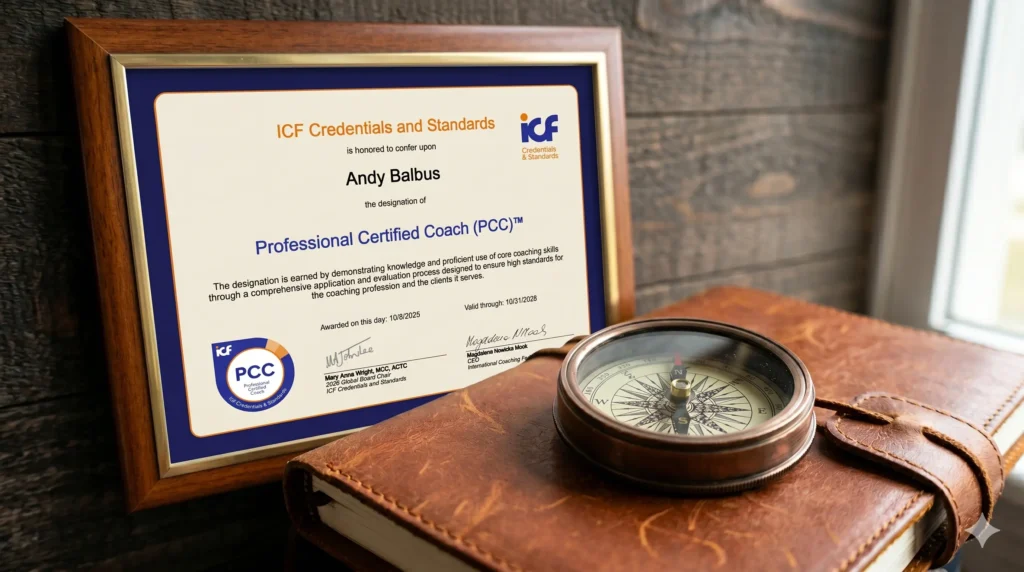
As an ICF PCC certified coach with more than 1,000 coaching hours he works with leaders across the DE-SK-IN matrix.
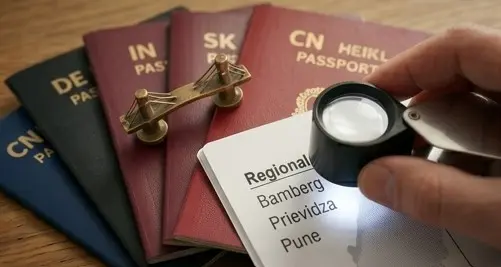
Three worlds that rarely meet in one person: building an electronics department from the first tool list to a competence centre, professional coaching training and four years in Slovakia plus two years in Pune as an accountable executive. What a foundation feels like when you poured it yourself is something he knows from the time he spent as a director without a department, and that is the perspective you get in the conversation linked below.
Results or Excuses
While the first programme has yet to start, a settlement costs you an afternoon. Once the first deadline wobbles, the same settlement costs a special meeting, several participants and the remainder of your advance of trust. Letting this window pass means negotiating rules later under pressure that nobody would have argued about beforehand. In thirty minutes we settle which three decisions are due at your end, which of them still has to carry in two years and what you start with this week.

One calendar link, no preparation required.
More on how I work sits on the page about Andy Balbus, in the leadership case studies and in the glossary. Related reading: setting boundaries as a leader, breaking down silos, goal setting for engineering teams, emotional self-regulation and customer retention during succession. To develop your key people, mentoring from expert to leader, mentoring for team lead scaling and the industrial conflict architecture are the practical next steps.
Systematic Leadership does not end with a phone Call.
Follow Andy for more Perspectives and Insights.


Leave a Reply