
Summary
Virtual Team Ground Rules: The debate over keeping cameras on or off distracts from the real challenge of remote work. Blanket attendance policies ignore individual needs and tasks, lowering productivity. Instead of forcing engagement through screens, leaders must focus on establishing clear ground rules. Learn how to create visibility, define expected response times, and build an environment where distributed teams collaborate effectively across borders.
Whether the camera is on decides very little. The rules underneath decide everything.
Ground rules for virtual teams get reduced in most organizations to a single question: camera on or camera off. That debate is popular because it can be held quickly and ordered easily. What it replaces, though, is precisely the work that matters, namely reaching agreement on how this team with these tasks collaborates across distance.

This article is written for you if your team works across sites or time zones and you sense that agreements take longer to bite than they used to.
It applies equally if your organization has just issued an attendance policy and you now have to apply one rule to very different people.
My position up front, and it is inconvenient for both camps: no general concept works for one hundred percent of employees. What does work are agreements that fit the task and the person, and that is exactly what the Team Charter Workshop is built for. The attitude layer underneath sits on the remote leadership method page.
Want to go deeper than just turning cameras on or off? In this panel discussion (From Mandate to Mindset), we explore why office mandates often fail and how coaching approaches actually build trust in hybrid teams.
🎥 Watch the full recording on Youtube
What I Learned About Distributed Work
Why I Start With the Person Rather Than the Policy
Before I decide who works from home, who sits in the office and what a hybrid model looks like, I look at the person. That includes their task, their dependencies and their objectives. The sequence sounds laborious and it is the only one that produces no rework later.

The Hardware Developer as an Example
Take a developer of electronic circuits. Part of the job is reading requirement specifications, which amounts to perhaps a few days across eighteen months of project runtime. For those days, undisturbed work at home is possible and for some people more effective than any desk in the building.
Most of That Role Cannot Happen at Home
The remaining time depends on equipment.
It takes soldering irons, power supplies, material boxes and an ESD-safe environment, in special cases even cleanroom conditions. Replicating that at home means building the engineer a workshop, which is expensive and laborious.
During the Pandemic We Did Exactly That
Through Covid we sent equipment to our engineers so they could keep working without coming into contact with other people. It works when you accept the effort involved. Whether it makes sense is a separate question, because what made it necessary was the pandemic and not the organization of work.
What India Taught Me About Home Office
Working undisturbed at home means something different in Pune than in Coburg. Engineers live in extended family households with grandparents, parents, a spouse and often children. The apartments are not equipped for somebody to close a door and have quiet. Planning Indian sites around German assumptions about home office means planning around reality.
The Question Nobody Asks
When many people are present in one apartment, trade secrets do not belong in the home office.

Nobody can guarantee where such information ends up, and that is a question of environment rather than of trust. Ground rules for distributed teams therefore have to settle which content gets handled on site only.
Then Came the Reverse, Which Surprised Me
My Indian contacts who came to Germany reported something else entirely. They felt uncomfortable, lonely and isolated, and the much-praised quiet was not relaxing for them but unpleasant. That breaks the German equation of home office, quiet and concentration. A full house can work too. It depends on the person.
Two People on My Team, Two Opposite Outcomes

One developer on my team worked in deep concentration for hours at home and became more effective through the isolation than he had been in the office. His collaboration with the overseas sites ran excellently too, and honestly: why should somebody who spends half the day on calls with other countries sit in an open-plan office? Another person on the same team could not work at home at all, because too many distractions got in the way. Even the open-plan office had been a challenge for her.
Why Both Camps Are Wrong
Anyone saying everyone back to the office and anyone saying everyone into home office shares the same problem: no sensitivity for people, for their needs and for their particularities. Home office is neither better nor worse than presence. The only useful question is whether it fits the task and the person.
What Follows for Ground Rules
A leader invests time, engages with each individual and shapes the fitting working environment together with them. Those conversations are the actual content of a charter for distributed teams. The camera question appears in it, though far down the list, as described in the article on team charter rules.

No sales conversation. If I am not the right fit, you will hear that within the first five minutes.
What the Research Says About Cameras and Location
The Camera Question Has Been Answered
Shockley and colleagues published a four-week field experiment in the Journal of Applied Psychology covering 1,408 daily observations from 103 employees, with camera use deliberately varied. The finding: with the camera on, fatigue rose, and that fatigue then reduced voice and engagement inside the meeting. Supplemental analyses indicate the effect carries into the following day.

And It Argues Against a Camera Policy
The effect was stronger for women and for newer members of the organization, which the authors attribute to self-presentation pressure. The study therefore contradicts the widespread assumption that cameras increase participation. Ordering cameras on to force engagement achieves the opposite among exactly the people whose voice is already quietest in a newly formed team.
The Best Evidence That It Depends on the Person
Bloom and colleagues ran a nine-month field experiment at Ctrip in Shanghai, splitting volunteers into home and office groups by birth date. Performance at home rose by 13 percent, of which 9 percent came from more minutes worked per shift and 4 percent from more calls per minute, attributed to the quieter environment. Work satisfaction went up and attrition halved.
The Part That Supports My Position
After the experiment everyone could choose again, and roughly half switched sides.

Those who had performed worse at home, or who suffered from the missing social contact, returned to the office. Through that self-selection the long-run effect rose to 22 percent, close to double. Put differently, the gain came from the fit between person and environment rather than from home working itself.
An Eligibility Condition That Confirms the India Point
One condition for taking part deserves attention: volunteers needed an independent workspace at home. The study therefore presupposed exactly the requirement that many Indian living situations cannot meet. Transferring its results to a site in Pune without checking that condition means transferring a number without its foundation.
The Price Almost Nobody Mentions
One finding from the same study rarely gets quoted: at equal performance, the promotion rate of the home working group fell. Visibility and performance are evidently two different things, and a charter for distributed teams has to close that gap explicitly. How unequal visibility plays out otherwise is described in the green melon effect and in extended workbench syndrome.
Ground Rules Check for Distributed Teams
Ten questions about your actual agreements rather than your intentions. The check measures five layers and shows you where your distributed collaboration currently loses time.
Ground Rules Check
How well do your distributed team ground rules hold?
Ten questions across five layers, three minutes, a measurable result with a concrete next step.
Answer for what is actually agreed rather than for what you intend to do. The camera question deliberately sits near the end of this check.
Question 1 of 10
Five Steps to Ground Rules That Hold Across Distance
1. Settle the Task Before the Person
Walk through every role on your team and separate what is genuinely tied to a location. Laboratory, test rig, ESD environment and cleanroom are facts rather than negotiating positions. Everything else is open, and that openness is your actual design space.
2. Talk to Each Individual Rather Than to the Team
Hold one conversation per person about living situation, capacity to concentrate, dependencies and objectives. This is the most time-consuming step and the only one that produces fit. How to run those conversations without smuggling in the answer sits in the article on open-ended questions and on the active listening method page.
3. Agree Availability and Response Times Instead of Camera Policies
Define the window in which an answer is expected, which channel carries which urgency, and who decides in somebody’s absence. That is the rule that genuinely saves time. For the camera, a simple agreement suffices: useful at a first encounter, during conflict and with new team members, otherwise each person decides.
4. Regulate Information Protection Explicitly
Settle which documents and topics get handled on site only, and justify it through the environment rather than through distrust.
That rule protects your people as much as your company, because nobody should end up accountable for something they cannot secure architecturally.

5. Create Visibility Deliberately
Since performance at home demonstrably does not translate into visibility on its own, your charter needs a mechanism for it. Contributions get named, results get attributed and development conversations happen on the same rhythm for everyone. What happens otherwise is described in the article on breaking down silos and on the uncompromising delegation page.
You leave with a formulation, not with a proposal.
Voices From Practice
Cross-Border Operations and Time-Zone Alignment
Prashant Chaudhari worked with me at Brose and comments on exactly the layer at stake here: alignment across borders and time zones. His feedback belongs at this point, because distributed collaboration is won or lost there.
Psychological Safety and Honesty in Virtual Teams
Ioana Diaconescu describes what disappears fastest in a virtual room and proves hardest to recover. Her feedback belongs here because honesty is the real currency of distributed teams rather than video transmission.
Navigating Cultural Mindsets in Global Collaboration
Priyanka Maturi took part in a programme on collaboration across country borders. She appears here because distributed teams are rarely only distributed in space, they are almost always distributed culturally as well.
FAQ: Frequently Asked Questions on Virtual Team Ground Rules
Q1: Should cameras be mandatory in meetings?
On the evidence, no. Cameras raise fatigue, and that fatigue lowers voice and engagement, particularly for women and for newer members of the organization. What works is an agreement rather than a policy: cameras at a first encounter, during conflict and with new team members, otherwise left to each person.
Q2: What belongs in a charter for distributed teams?
Five points are enough: response times per channel, decision rights during absence, rules for handling sensitive content, a mechanism for visibility, and the question of which meetings require presence. Everything beyond that is negotiable and belongs inside the team, as described in the Team Charter Workshop.
Q3: Does a charter workshop even work virtually?
Yes, with two adjustments. The work gets split across several shorter sessions, and every contribution gets made visible in writing so quiet participants do not disappear. Distributed teams need a charter more urgently than co-located ones anyway, because they lack the informal alignment that happens in a corridor.
Q4: How do I handle people who cannot work at home?
You treat it as a fact rather than as an attitude problem. Some people need the separation between living and working, and that has nothing to do with discipline. In the Ctrip study, about half the volunteers switched sides after the experiment, and precisely that self-selection almost doubled the benefit.
Q5: What about sites in India, where living situations differ?
German assumptions do not apply there. Engineers often live in extended family households with no lockable workspace. Home office can still work, though it needs different rules, above all on handling sensitive content. The executive sparring India page goes into these differences.
Q6: Is quiet not always better for concentrated work?
No. My Indian contacts experienced German home office quiet as lonely and uncomfortable rather than relaxing. In the Ctrip study, participants explicitly returned to the office because of loneliness. Environment works individually rather than by textbook.
Q7: How do I stop home office from costing somebody their career?
By making visibility a leadership task. In the Ctrip study, the promotion rate of the home working group fell at equal performance. Attribute results explicitly to people, name contributions in rounds with your own manager, and hold development conversations on the same rhythm for everyone.
Q8: What do I do when the organization imposes a blanket attendance rule?
Then you design inside the frame. Almost every policy leaves open which days and which tasks are affected, and that remainder is your space. How to hold a position towards the line is described in the article on setting boundaries.
Q9: How do I recognise that our virtual collaboration is failing?
Through three signals: decisions emerge in side channels, meetings end without named ownership, and individual people go silent for weeks. The third is the most serious, because it gets mistaken for agreement, as described in the article on the team storming phase.
Q10: Do hybrid teams need different rules from fully distributed ones?
Yes, and stricter ones. Hybrid rounds create two classes of participant the moment part of the group sits in a room and part dials in. The most effective rule is that everybody uses the same format as soon as one person is remote.
Q11: When is external facilitation worth it?
Once the attendance question has become emotionally charged inside the team. At that point you are a party to it, and any wording from you reads as a decision already taken. The formats for it are the Team Charter Workshop and Accelerate Now.

About the Author
Andy Balbus spent 25 years in the automotive industry, most recently as Director Electronics in Prievidza with forty engineers and as Senior Manager in Pune, carrying a project budget of 15 million euros and revenue accountability of 150 million euros.
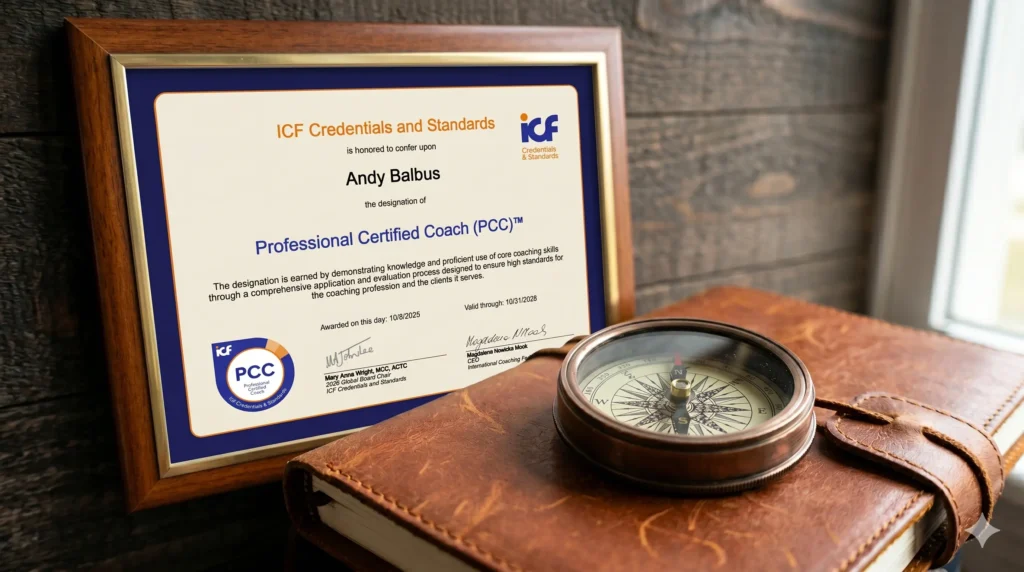
As an ICF PCC certified coach with more than 1,000 coaching hours he works with leaders across the DE-SK-IN matrix.
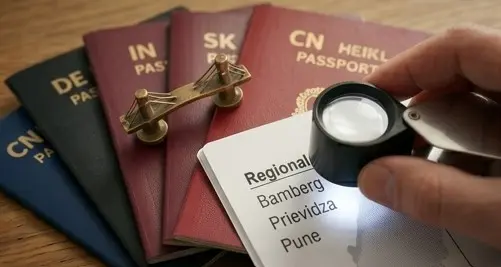
Three worlds that rarely meet in one person: operational accountability with distributed teams, professional coaching training and four years in Slovakia plus two years in Pune as an accountable executive. How differently home office looks in Coburg and in Pune he experienced in both places, and that is the perspective you get in the conversation linked below.
Results or Excuses
The camera debate costs you nothing beyond goodwill. Missing agreements on response times, decision paths and visibility cost you deadlines and eventually people who get noticed somewhere else. Postponing this clarification by another quarter means negotiating it later under pressure, with a team that has long since built its own rules. In thirty minutes we draft the three rules that genuinely save you time, and settle which person your current working setup does not fit.

One calendar link, no preparation required.
More on how I work sits on the page about Andy Balbus, in the leadership case studies and in the glossary. Related reading: stabilizing a team after restructuring, functional vs disciplinary leadership, the translation tax, the Indian yes and team commitment. For leading across time zones, intercultural mentoring, the industrial conflict architecture, Eisenhower prioritization and the article on escalation management are the practical next steps.
Systematic Leadership does not end with a phone Call.
Follow Andy for more Perspectives and Insights.


Leave a Reply